
Authored by the expert who managed and guided the team behind the Philippines Property Pack
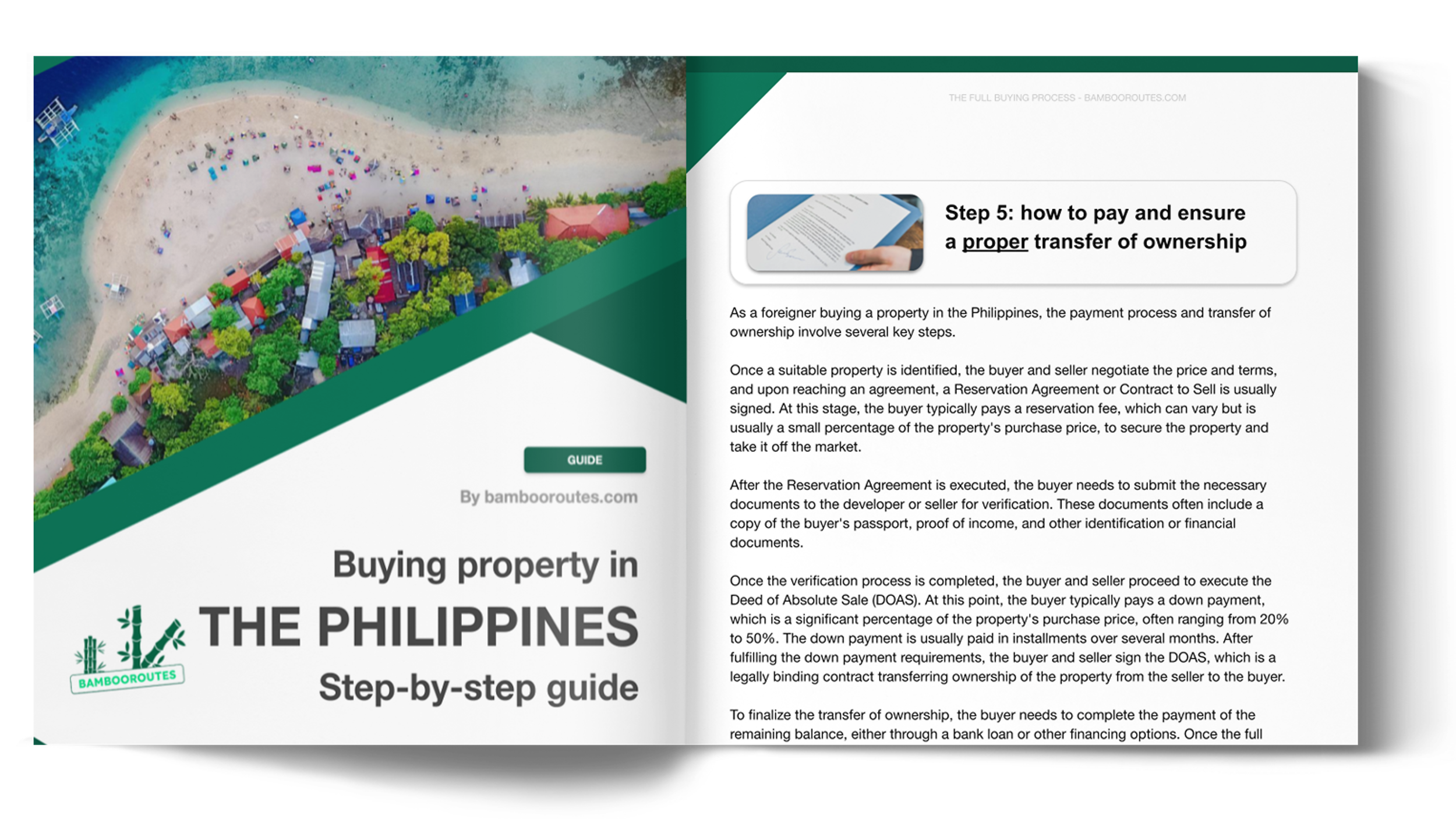
Get all the data you need about the real estate market in Negros Island
This blog post explains what a foreigner can legally buy, own, lease, finance, and rent out in Negros Island in 2026.
We constantly update this blog post because Philippine property rules, mortgage rates, tax practice, and local Negros Island checks can change.
The main point is simple: a foreigner can usually own a condominium unit in Negros Island, but cannot directly own private land in their own name.
And if you’re planning to buy a property in this place, you may want to download our pack covering the real estate market in Negros Island.

What can I legally buy and truly own as a foreigner in Negros Island?
What property types can foreigners legally buy in Negros Island right now?
In Negros Island in 2026, a foreigner can legally buy and truly own a condominium unit or apartment unit with its own condominium title, while houses, villas, beach homes, townhouses, farm homes, and subdivision homes usually involve land that the foreigner cannot directly own.
The most important rule for a foreign buyer in Negros Island is that the condominium project must still be within the foreign ownership limit, and the buyer must receive a Condominium Certificate of Title in the foreign buyer’s name.
This matters in Bacolod and Dumaguete because those cities are the most realistic places to find condominium stock in Negros Island, while many homes in Dauin, Valencia, Sipalay, Silay, Talisay, and coastal Negros areas are marketed as houses or villas but are legally land-based properties.
So, when a Negros Island listing says condo, apartment, house, villa, townhouse, beach house, or lot, the foreign buyer should first ask what title type will actually be transferred, because the legal answer depends on the title, not on the marketing word.
Finally, please note that our pack about the property market in Negros Island is specifically tailored to foreigners.
Can I own land in my own name in Negros Island right now?
No, a foreign individual generally cannot own private land in their own name in Negros Island in 2026, because Philippine land ownership rules apply to Negros Island exactly as the rules apply nationwide.
The clean legal alternative is usually to buy a condominium unit, lease land under a written and registered lease, or invest through a properly structured Philippine company that satisfies the Filipino ownership requirement.
For a normal residential buyer in Negros Island, the safest practical structure is usually direct condo ownership, because spouse ownership, nominee ownership, and informal family arrangements can leave the foreign buyer without real control over the land.
By the way, we cover everything there is to know about the land buying process in Negros Island here.
As of 2026, what other key foreign-ownership rules or limits should I know in Negros Island?
As of 2026, the most important extra rule in Negros Island is that a foreign buyer should avoid nominee land purchases, because paying for land titled under another person’s name does not make the foreign buyer the legal landowner.
For condominiums in Negros Island, the usual foreign quota is that foreign ownership in the condominium corporation or project must stay within the legal ceiling, so the buyer should ask for written confirmation before signing.
For registration, the foreign buyer should expect BIR tax processing, Registry of Deeds registration, a valid identity file, and usually a Philippine Tax Identification Number before the transfer can be completed smoothly.
The notable 2026 update is Republic Act No. 12252, signed in 2025, which strengthened long-term private land lease rules for foreign investors, but this investment-oriented lease law should not be confused with ordinary foreign ownership of residential land in Negros Island.
What’s the biggest ownership mistake foreigners make in Negros Island right now?
The biggest ownership mistake foreigners make in Negros Island right now is paying for a house and lot, beach home, retirement villa, or hillside residence while the land title goes into a Filipino nominee’s name.
The likely real-world consequence is painful, because the foreign buyer may have paid most of the money but may still have no legal land title, weak control, and limited protection if the relationship changes.
Other classic Negros Island pitfalls include buying tax declaration only property, skipping Registry of Deeds checks, ignoring zoning in coastal or agricultural areas, and assuming that a pretty beach listing is automatically legal for residential or rental use.
Get fresh and reliable information about the market in Negros Island
Don't base significant investment decisions on outdated data. Get updated and accurate information.

Which visa or residency status changes what I can do in Negros Island?
Do I need a specific visa to buy property in Negros Island right now?
A foreigner does not normally need a special visa to buy a legally eligible condominium unit in Negros Island in June 2026, and buying on a tourist visa can be possible if the property, documents, and funds are compliant.
The most common administrative problem for a non-resident buyer in Negros Island is not the visa itself, but getting a clean document file, bank processing, tax registration, and signing authority ready before closing.
In practice, a foreign buyer should expect to need a Philippine Tax Identification Number for BIR processing, title transfer, future tax filings, and any rental income reporting in Negros Island.
A typical foreign buyer document set includes passport, visa or entry record, TIN, proof of funds, civil status documents when relevant, signed sale documents, and a consularized Special Power of Attorney if the buyer is not signing in the Philippines.
Does buying property help me get residency and citizenship in Negros Island in 2026?
As of 2026, buying a condominium or other residential property in Negros Island does not automatically give a foreigner Philippine residency, permanent residence, or citizenship.
The Philippines has investor, retiree, work, spouse, student, and other visa pathways, but an ordinary residential purchase in Bacolod, Dumaguete, Dauin, Valencia, or Sipalay is not itself a golden visa.
For permanent residence or citizenship, the buyer should look at family, retirement, work, investment, quota, or naturalization routes, because property ownership in Negros Island is only one lifestyle factor and not the main legal test.
Can I legally rent out property on my visa in Negros Island right now?
Your visa status does not normally stop you from earning passive rental income from a legally owned condominium in Negros Island, but active short-stay rental management can raise tax, business permit, and local licensing issues.
A foreign owner does not always need to live in the Philippines to rent out a Negros Island property, but the owner will need someone reliable to handle tenants, receipts, repairs, taxes, and condominium rules.
The key details are that rental income from Negros Island property is taxable in the Philippines, short-stay rentals can need local permits, and condo buildings may restrict Airbnb-style use even when national law allows ownership.
Get to know the market before buying a property in Negros Island
Better information leads to better decisions. Get all the data you need before investing a large amount of money.
How does the buying process actually work step-by-step in Negros Island?
What are the exact steps to buy property in Negros Island right now?
The usual purchase sequence in Negros Island is to choose the property, verify the legal title type, check foreign eligibility, reserve or negotiate, review documents, sign the sale contract, pay taxes and fees, register the transfer, receive the new title, and update local tax and condominium records.
A foreign buyer does not always need to be physically present for every step in Negros Island, because a properly prepared Special Power of Attorney can often let a trusted representative sign and process documents.
The step that usually makes the deal legally serious is the signed and notarized sale document or contract, although the buyer should not treat the purchase as fully secured until taxes are paid and the title transfer is registered.
A realistic timeline in Negros Island is often 30 to 90 days for a simple condo resale, while land lease structures, estate issues, missing papers, bank loans, or provincial title problems can take longer.
We have a document entirely dedicated to the whole buying process our pack about properties in Negros Island.
Is it mandatory to get a lawyer or a notary to buy a property in Negros Island right now?
A notary is practically needed for documents that will be registered in Negros Island, while a lawyer is not always legally required for a simple developer condo purchase but is strongly recommended for any foreign buyer.
The notary mainly authenticates and notarizes the signing document, while the lawyer checks ownership, foreign buyer legality, taxes, title problems, lease terms, spouse risks, and what happens if the deal goes wrong.
The engagement should clearly include review of the CCT or TCT, seller identity, annotations, tax declaration, real property tax clearance, condominium foreign quota, payment sequence, and Registry of Deeds filing plan.
Make a profitable investment in Negros Island
Better information leads to better decisions. Save time and money. Download our data.
What checks should I run so I don’t buy a problem property in Negros Island?
How do I verify title and ownership history in Negros Island right now?
To verify title and ownership history in Negros Island, use the Land Registration Authority and the correct Registry of Deeds for the property location, not only the seller’s photocopy or broker file.
The key document is the latest certified true copy of the Condominium Certificate of Title for a condo, or the latest certified true copy of the Transfer Certificate of Title or Original Certificate of Title for land.
A realistic ownership history check in Negros Island should usually look back at least 10 to 20 years, and longer if the property was inherited, subdivided, consolidated, mortgaged, or held by an old family estate.
A red flag that should pause the purchase is any mismatch between the seller and the title, unresolved inheritance, adverse claim, court notice, mortgage annotation, missing owner consent, or tax declaration only property with no registered title.
You will find here the list of classic mistakes people make when buying a property in Negros Island.
How do I confirm there are no liens in Negros Island right now?
The standard way to check for liens in Negros Island is to read the annotations on the latest certified true copy of title and match that title check with tax, condo, seller, and court-related clearances.
A common encumbrance to ask about in Negros Island is a mortgage annotation, but buyers should also watch for adverse claims, notices of lis pendens, long leases, easements, family disputes, and unpaid real property taxes.
The best written proof is a recent certified true copy of title showing the current annotations, supported by real property tax clearance, condo dues clearance when relevant, and seller warranties in the deed.
How do I check zoning and permitted use in Negros Island right now?
To check zoning and permitted use in Negros Island, ask the local city or municipal planning office where the property sits, because zoning is local and not decided only at national level.
The document or map reference to request is usually a zoning certification, locational clearance, zoning map extract, or Comprehensive Land Use Plan reference for the relevant city or municipality.
A common Negros Island pitfall is buying a property marketed as a residential retreat or rental villa when the land is agricultural, coastal, hazard-exposed, access-limited, or not cleared for the intended rental use.
Don't buy the wrong property, in the wrong area of Negros Island
Buying real estate is a significant investment. Don't rely solely on your intuition. Gather the right information to make the best decision.
Can I get a mortgage as a foreigner in Negros Island, and on what terms?
Do banks lend to foreigners for homes in Negros Island in 2026?
As of 2026, some Philippine banks can lend to foreigners for homes in Negros Island, but approval is selective and is usually easier for condo buyers, residents, strong local earners, or buyers with a Filipino spouse or co-borrower.
A realistic foreign-buyer LTV range in Negros Island is often around 50% to 70% for a strong condo case, while non-residents and weaker collateral cases may be closer to 50% or may be rejected.
The most common eligibility factor is whether the foreign buyer has stable income that the bank can verify, because a bank will care more about repayment strength and acceptable collateral than about the buyer’s interest in Negros Island.
You can also read our latest update about mortgage and interest rates in The Philippines.
Which banks are most foreigner-friendly in Negros Island in 2026?
As of 2026, the most practical foreigner-friendly mortgage names for Negros Island are usually BDO, BPI, and Metrobank, with Security Bank or RCBC sometimes worth checking depending on the buyer profile and the project.
The feature that makes these banks more practical is not a special foreigner promise, but broader branch coverage, developer accreditation, overseas banking experience, and clearer home loan processing systems.
For non-residents buying in Negros Island, lending is possible in some cases but far from automatic, so the buyer should expect stricter income proof, larger down payment, more documents, and slower approval.
We actually have a specific document about how to get a mortgage as a foreigner in our pack covering real estate in Negros Island.
What mortgage rates are foreigners offered in Negros Island in 2026?
As of 2026, a realistic mortgage interest-rate range for a qualified foreign residential borrower in Negros Island is about 6.5% to 9.5% per year, depending on the bank, loan term, fixed period, collateral, and borrower profile.
Fixed-rate periods usually cost more for longer certainty, while variable or short fixed-rate loans can start cheaper but can become more expensive when Philippine interest rates rise.
Get fresh and reliable information about the market in Negros Island
Don't base significant investment decisions on outdated data. Get updated and accurate information.
What will taxes, fees, and ongoing costs look like in Negros Island?
What are the total closing costs as a percent in Negros Island in 2026?
The typical buyer-side closing cost budget in Negros Island in 2026 is around 3% to 5% of the purchase price for a standard resale condominium where VAT is not separately charged.
A realistic low-to-high range for most ordinary Negros Island purchases is about 3% to 6%, but a new developer sale with VAT passed separately can push the total cash need much higher.
The usual closing-cost categories are documentary stamp tax, local transfer tax, registration fees, notarial fees, legal fees, due diligence costs, condo admin charges, bank fees when financed, and small processing expenses.
The biggest single buyer-side item is usually documentary stamp tax or VAT when VAT applies, while legal and notarial costs feel larger on smaller Negros Island transactions.
What annual property tax should I budget in Negros Island in 2026?
As of 2026, a simple annual property tax budget for a standard owner-occupied Negros Island home is roughly ₱12,000 to ₱36,000, about $200 to $620, or about €190 to €580 for a mid-range property.
Annual property tax in Negros Island is based on assessed value rather than the purchase price, with local government rates, assessment levels, and the Special Education Fund levy affecting the final bill.
How is rental income taxed for foreigners in Negros Island in 2026?
As of 2026, a practical planning reserve for foreigner rental income tax in Negros Island is often around 20% to 30% of net rental profit until a Philippine accountant confirms the exact tax status.
A foreign owner usually needs BIR registration or reporting, proper receipts or invoices where required, possible withholding by the tenant, and annual or periodic filing depending on residence status and rental structure.
What insurance is common and how much in Negros Island in 2026?
As of 2026, a typical annual insurance budget for a standard Negros Island home is roughly ₱5,000 to ₱30,000, about $85 to $520, or about €80 to €480, depending on value and risk cover.
The most common property insurance coverage is fire and allied perils, often extended to include typhoon, flood, earthquake, and other natural events when the owner wants stronger protection.
The biggest pricing factor in Negros Island is exposure to coastal, flood, typhoon, earthquake, and access risk, so a beach or hillside property can cost more to insure than a simple inland Bacolod condo.
Get to know the market before buying a property in Negros Island
Better information leads to better decisions. Get all the data you need before investing a large amount of money.
What sources have we used to write this blog article?
Whether it’s in our blog articles or the market analyses included in our property pack about Negros Island, we always rely on the strongest methodology we can, and we don’t throw out numbers at random.
We also aim to be fully transparent, so below we’ve listed the authoritative sources we used, and explained how we used them and the methods behind our estimates.
| Source | Why this source matters | How we used it |
|---|---|---|
| 1987 Philippine Constitution, Official Gazette | It is the highest legal source for Philippine land ownership rules. | We used it to confirm that private land is generally reserved for Filipinos and qualified Philippine entities. We applied that national rule directly to Negros Island residential land. |
| Republic Act No. 4726, Condominium Act | It is the main Philippine statute governing condominium ownership. | We used it to explain why foreigners can own condominium units in Negros Island. We also used it to separate unit ownership from land ownership. |
| Republic Act No. 7899 | It amended key parts of the Condominium Act. | We used it to cross-check the foreign ownership ceiling in condominium projects. We also used it to explain why project-level quota checks matter before signing. |
| Republic Act No. 7652, Investors’ Lease Act | It is the original law on private land leases by foreign investors. | We used it to distinguish legal land leasing from illegal foreign land ownership. We also used it carefully because ordinary home buyers are not always investment lease cases. |
| Republic Act No. 12252 | It is the 2025 update to the investor land lease framework. | We used it for the latest 2026 lease-law context. We did not present it as a simple right for foreigners to own Negros Island residential land. |
| Land Registration Authority | It is the national authority for land registration and titles. | We used it for title, registration, and certified copy checks. We also used its Registry of Deeds structure to make Negros Island due diligence practical. |
| LRA Registry of Deeds Directory | It helps buyers identify the correct land registry office. | We used it to explain where title checks should be made. We also used it because Bacolod, Negros Occidental, and Negros Oriental can involve different offices. |
| Bureau of Immigration visa pages | It is the official source for Philippine visa categories. | We used it to separate visa status from property ownership rights. We also used it to explain why buying property does not automatically create residency. |
| BIR taxation of non-residents | BIR is the official tax authority for foreign income taxation. | We used it to explain rental income and non-resident tax issues. We also used it to avoid relying on private tax summaries for the main tax logic. |
| BIR Documentary Stamp Tax | It is the official source for documentary stamp tax information. | We used it to build closing-cost estimates. We also combined it with registration and local transfer tax logic for buyer budgeting. |
| Local Government Code, Republic Act No. 7160 | It governs local taxes and local government powers. | We used it for annual real property tax logic. We also used it to explain why Bacolod, Dumaguete, and municipalities can produce different bills. |
| Philippine Statistics Authority, Negros Island Region | PSA is the official statistics and geographic classification authority. | We used it to define Negros Island Region for 2026. We also used it to keep the article aligned with the current regional structure. |
| Bangko Sentral ng Pilipinas key rates | BSP is the official central bank source for interest-rate context. | We used it to anchor mortgage-rate estimates. We also used it because bank mortgage offers depend partly on the wider Philippine rate environment. |
| BDO Home Loan | BDO is one of the largest mortgage lenders in the Philippines. | We used it as a practical bank reference for home loan availability. We also used it as one benchmark for foreign buyer mortgage discussions. |
| Bacolod City Comprehensive Land Use Plan 2017 to 2026 | It is an official local planning source for the largest Negros city. | We used it as the clearest zoning example for Negros Island. We also used it to show why buyers must check local planning rules. |
| AXA Philippines property insurance | It shows common property insurance cover in the Philippines. | We used it to identify typical fire and allied perils coverage. We also used it to explain why typhoon, flood, and earthquake extensions matter in Negros Island. |
Make a profitable investment in Negros Island
Better information leads to better decisions. Save time and money. Download our data.
Related blog posts