
Authored by the expert who managed and guided the team behind the Philippines Property Pack
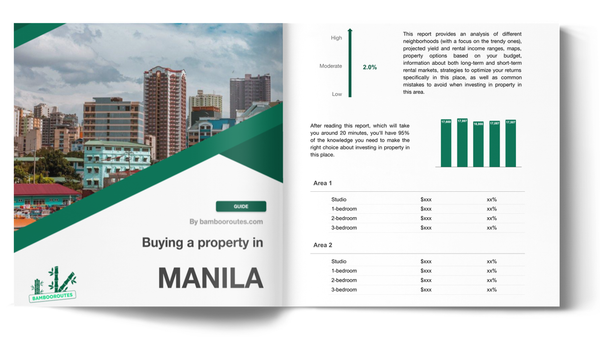
Get all the data you need about the real estate market in Manila
We constantly update this blog post so foreign buyers can follow the latest Manila property ownership rules without reading legal texts for hours.
As of June 2026, Manila remains one of the clearest Philippine markets for foreign condo buyers, but not for foreign land buyers.
The key is simple: foreigners can usually buy condominium units in Manila, but they cannot directly own private residential land in their own name.
And if you’re planning to buy a property in this place, you may want to download our pack covering the real estate market in Manila.

What can I legally buy and truly own as a foreigner in Manila?
What property types can foreigners legally buy in Manila right now?
Foreigners can legally buy residential condominium units in Manila, including studio condos, one-bedroom condos, larger condo apartments, and some legally structured condo townhouses.
The main condition is that the Manila condominium project must stay within the 40% foreign-ownership limit, so the building quota matters before a buyer pays a reservation fee.
This is why a foreign buyer in Malate, Ermita, Binondo, Paco, Sampaloc, Santa Cruz, or near the university belt should ask for written confirmation that the foreign quota is still open.
House-and-lot homes, ordinary townhouses with land, and detached residential properties in Manila are different because the land portion usually cannot be owned directly by a foreign individual.
Finally, please note that our pack about the property market in Manila is specifically tailored to foreigners.
Can I own land in my own name in Manila right now?
No, a foreign individual generally cannot own private residential land in Manila in their own name, except in narrow cases such as hereditary succession.
The clean legal alternative is usually to buy a Manila condominium unit with a Condominium Certificate of Title, because the buyer owns the unit rather than a separate private land title.
Some foreign buyers also use long leases for land-linked property, but a lease is not ownership and should be reviewed by a Philippine lawyer before money changes hands.
As of 2026, what other key foreign-ownership rules or limits should I know in Manila?
As of 2026, foreign buyers in Manila should also check pre-selling rules, developer authority, condominium registration, tax registration, and the exact title document before signing.
For condos in Manila, the important quota is the national condominium rule that foreigners may own up to 40% of the condominium project.
For registration, a foreign buyer normally needs a Philippine Tax Identification Number, valid identity documents, tax forms, and Registry of Deeds transfer documents.
The notable recent change is Republic Act 12252, which expanded long private-land lease rights for foreign investors, but it did not create ordinary foreign freehold land ownership in Manila.
What’s the biggest ownership mistake foreigners make in Manila right now?
The biggest mistake is using a Filipino spouse, partner, friend, employee, or nominee to hold Manila land while believing a private side agreement makes the foreigner the real owner.
The likely consequence is severe because the foreign buyer may lose control of the property and may not be able to enforce the private arrangement as expected.
Other classic Manila pitfalls include ignoring the foreign condo quota, skipping CCT checks, missing unpaid condo dues, overlooking a mortgage annotation, and assuming short-term rentals are allowed by the building.
Get fresh and reliable information about the market in Manila
Don't base significant investment decisions on outdated data. Get updated and accurate information.

Which visa or residency status changes what I can do in Manila?
Do I need a specific visa to buy property in Manila right now?
You do not usually need a specific visa to buy a legally permitted condominium unit in Manila in June 2026, and buying on a tourist status is generally possible.
The common administrative blocker is not the visa itself, but the buyer’s ability to get a TIN, sign documents correctly, move funds, and satisfy bank or developer identity checks.
In practice, a foreign buyer should expect to need a Philippine Tax Identification Number before final tax filing and title transfer in Manila.
A typical document set includes a passport, visa or entry record, TIN proof, address proof, civil-status documents if relevant, payment evidence, and a notarized or apostilled Special Power of Attorney if the buyer signs abroad.
Does buying property help me get residency and citizenship in Manila in 2026?
As of 2026, buying a condo in Manila does not automatically give a foreigner residency or citizenship in the Philippines.
The main property-linked route is the SRRV Classic structure, where eligible retirees may convert a visa deposit into a condominium unit under the principal retiree’s name.
For SRRV Classic, the PRA checklist refers to a condominium unit worth at least US$50,000, while permanent residence and citizenship remain separate legal paths with their own requirements.
Can I legally rent out property on my visa in Manila right now?
Your visa status usually does not stop you from renting out a legally owned Manila condo, but rental income from Manila is taxable in the Philippines.
You do not need to live in the Philippines to rent out a Manila condo, but most foreign owners use a property manager or attorney-in-fact for tenants, repairs, payments, and filings.
Foreign owners should also check building rules, tenant registration, move-in permits, condo dues, withholding tax, BIR registration, and whether Airbnb-style stays are allowed.
We cover everything there is to know about buying and renting out in Manila here.
Get to know the market before buying a property in Manila
Better information leads to better decisions. Get all the data you need before investing a large amount of money.
How does the buying process actually work step-by-step in Manila?
What are the exact steps to buy property in Manila right now?
The standard Manila buying sequence is to choose a legally buyable property, check the foreign quota, verify title and seller authority, sign the contract, secure a TIN, pay taxes, get the BIR Certificate Authorizing Registration, register with the Registry of Deeds, and receive the new CCT.
You do not always need to be physically present in Manila because a properly notarized and apostilled Special Power of Attorney can allow a representative to sign, but being present is safer for inspection and banking.
The step that usually makes the deal binding is the signed and accepted contract, such as the Contract to Sell or Deed of Absolute Sale, depending on the transaction structure.
A realistic Manila timeline is about 30 to 90 days for many resale condo transfers, while pre-selling purchases can take much longer because title issuance happens after project completion.
We have a document entirely dedicated to the whole buying process our pack about properties in Manila.
Is it mandatory to get a lawyer or a notary to buy a property in Manila right now?
A notarized deed is normally needed for registration in Manila, while hiring your own lawyer is not always legally mandatory but is strongly recommended for foreign buyers.
The notary confirms the formal signing of documents, while the lawyer checks whether the Manila property, title, tax position, seller authority, and foreign-buyer structure are safe.
The lawyer’s scope should clearly include title verification, foreign quota confirmation, tax review, lien checks, condo-dues clearance, and review of the contract before payment.
Make a profitable investment in Manila
Better information leads to better decisions. Save time and money. Download our data.
What checks should I run so I don’t buy a problem property in Manila?
How do I verify title and ownership history in Manila right now?
To verify title and ownership history in Manila, use the Registry of Deeds under the Land Registration Authority and request official title records rather than relying on seller copies.
For a condo, the key document is the latest certified true copy of the Condominium Certificate of Title, while a land-linked property would involve a Transfer Certificate of Title.
A practical look-back period is at least the current title plus the immediately previous transfer, and longer if the property is inherited, corporate-owned, old, or disputed.
A red flag that should pause the purchase is any annotation for a mortgage, adverse claim, lis pendens, court case, restriction, or seller authority issue that is not clearly resolved in writing.
You will find here the list of classic mistakes people make when buying a property in Manila.
How do I confirm there are no liens in Manila right now?
The standard way to check liens in Manila is to read the annotations on the certified title and match them with seller, bank, condo corporation, and tax-clearance documents.
The common encumbrance to ask about is a bank mortgage, because many resale Manila condos are still financed when the seller starts marketing the unit.
The best written proof is a clean certified true copy of the title, supported by bank release documents, real property tax clearance, condo-dues clearance, and utility clearance where relevant.
How do I check zoning and permitted use in Manila right now?
To check zoning and permitted use in Manila, use the City of Manila zoning office, Manila ordinances, the zoning map, and the building’s occupancy and condominium rules.
The key reference is Manila Ordinance No. 8119 and the applicable zoning map or locational-clearance record for the exact address.
A common Manila pitfall is assuming that a residential condo in a mixed-use area automatically allows dormitory use, office use, clinic use, or Airbnb-style transient rental.
Don't buy the wrong property, in the wrong area of Manila
Buying real estate is a significant investment. Don't rely solely on your intuition. Gather the right information to make the best decision.
Can I get a mortgage as a foreigner in Manila, and on what terms?
Do banks lend to foreigners for homes in Manila in 2026?
As of 2026, some banks do lend to foreigners for homes in Manila, but approval is easier for buyers with a legal condo purchase, local ties, strong income, and clean documentation.
A realistic loan-to-value range for many foreign buyers in Manila is about 50% to 70%, with stronger borrowers sometimes doing better and non-residents often doing worse.
The most common eligibility requirement is proof that the foreign buyer can repay safely, usually through local income, long-stay status, a Filipino spouse or co-borrower, Philippine banking history, or strong overseas income accepted by the bank.
You can also read our latest update about mortgage and interest rates in The Philippines.
Which banks are most foreigner-friendly in Manila in 2026?
As of 2026, the most practical first calls for a foreign mortgage buyer in Manila are usually BDO, Metrobank, and HSBC Philippines, with BPI, Security Bank, and RCBC also worth checking depending on the buyer profile.
The useful feature is not one magic foreigner policy, but project accreditation, international banking experience, developer relationships, and willingness to review non-Filipino income documents.
For non-residents, Manila banks may still lend in selected cases, but many buyers without local residency should expect stricter checks, lower LTV, more cash equity, or a request for a local co-borrower.
We actually have a specific document about how to get a mortgage as a foreigner in our pack covering real estate in Manila.
What mortgage rates are foreigners offered in Manila in 2026?
As of 2026, a realistic mortgage-rate range for a qualified foreign condo buyer in Manila is about 6.75% to 8.75% per year, depending on the bank, fixing period, income profile, and down payment.
Fixed-rate periods usually cost a little more than the lowest promotional variable or repricing rates, but they give the buyer more payment certainty in Manila’s 2026 rate environment.
Get fresh and reliable information about the market in Manila
Don't base significant investment decisions on outdated data. Get updated and accurate information.
What will taxes, fees, and ongoing costs look like in Manila?
What are the total closing costs as a percent in Manila in 2026?
The typical total closing-cost budget for a Manila condo resale in 2026 is about 8% to 10% of the taxable transaction value if the buyer economically absorbs most items.
A realistic range for standard Manila transactions is about 3% to 6% for many new developer purchases and about 7% to 11% for many resale purchases, depending on what the contract assigns to each side.
The usual Manila closing-cost categories are capital gains tax, documentary stamp tax, local transfer tax, registration fees, notarial fees, legal fees, broker fees if applicable, and small administrative charges.
The biggest single category is usually the 6% capital gains tax, even when the contract says the seller formally pays it because the cost is often reflected in the negotiated price.
If you want to go into more details, we also have a blog article detailing all the property taxes and fees in Manila.
What annual property tax should I budget in Manila in 2026?
As of 2026, a standard owner-occupied Manila condo often needs an annual property-tax budget of about ₱6,000 to ₱30,000, or roughly US$100 to US$500, or about €85 to €430.
Annual real property tax in Manila is assessed on assessed value rather than the full purchase price, so the effective cost is usually much lower than the headline city tax rate may suggest.
How is rental income taxed for foreigners in Manila in 2026?
As of 2026, a simple working estimate for foreigner rental-income tax exposure in Manila is about 25% to 30%, but the exact treatment depends on residency, tax status, withholding, deductions, and treaty position.
A foreign owner usually needs BIR registration, proper receipts or documentation, rental-income reporting, and withholding or filing compliance depending on how the lease is structured.
What insurance is common and how much in Manila in 2026?
As of 2026, a standard owner-level Manila condo insurance policy often costs about ₱3,000 to ₱20,000 per year, or roughly US$50 to US$330, or about €40 to €285.
The most common coverage is fire insurance, often combined with contents, improvements, liability, and sometimes mortgage-related insurance if the buyer uses bank financing.
The biggest factor that changes the premium is the insured value and risk profile of the building, especially age, fire protection, flood exposure, construction quality, and location in dense Manila districts.
Get to know the market before buying a property in Manila
Better information leads to better decisions. Get all the data you need before investing a large amount of money.
What sources have we used to write this blog article?
Whether it’s in our blog articles or the market analyses included in our property pack about Manila, we always rely on the strongest methodology we can, and we don’t throw out numbers at random.
We also aim to be fully transparent, so below we’ve listed the authoritative sources we used, and explained how we used them and the methods behind our estimates.
| Source | Why we trust it | How we used it |
|---|---|---|
| 1987 Philippine Constitution, Lawphil | It is the legal base for who may own private land in the Philippines. | We used it to confirm that foreigners cannot directly own private residential land in Manila. We also used it to separate land ownership from condominium ownership. |
| Republic Act 4726, Condominium Act | It is the main law for condominium ownership in the Philippines. | We used it to explain why foreigners can buy Manila condo units. We also used it for the 40% foreign-ownership limit. |
| Republic Act 12252 | It is the current law on private-land leases for foreign investors. | We used it to explain the lease option carefully. We did not treat it as a general right for foreigners to own Manila land. |
| Land Registration Authority, Registry of Deeds | It supervises the registries that handle Philippine property titles. | We used it for CCT, TCT, and title-verification steps. We also used it to explain why certified title checks matter in Manila. |
| Property Registration Decree, PD 1529 | It sets key Philippine land-registration and title rules. | We used it for title history, annotations, liens, and registration logic. We also used it to explain why the title is stronger than a brochure or seller promise. |
| Bureau of Internal Revenue tax-code portal | It is the official tax-law portal of the Philippine tax authority. | We used it for transfer-tax and rental-income context. We also used it to keep the tax discussion linked to official BIR materials. |
| BIR primary registration | It explains taxpayer registration directly from the tax authority. | We used it to explain why a foreign buyer often needs a TIN. We also used it for the administrative steps before closing. |
| BIR taxation of non-residents | It is the official source for non-resident tax treatment. | We used it for Manila rental-income treatment. We also used it to avoid giving one tax answer for every foreign buyer. |
| Local Government Code, RA 7160 | It is the legal base for local property tax and transfer taxes. | We used it to estimate annual property tax and city-level tax items. We converted the assessed-value system into a simple Manila owner budget. |
| Manila Ordinance No. 8119 | It is Manila’s comprehensive land-use and zoning ordinance. | We used it for zoning and permitted-use checks. We also used it to flag mixed-use risks in Manila neighborhoods. |
| Bureau of Immigration visas | It is the official source for Philippine visa categories. | We used it to separate visa status from property ownership. We also used it to explain why owning a condo does not create automatic residence. |
| Philippine Retirement Authority SRRV | It is the official retirement-visa source in the Philippines. | We used it for the SRRV pathway. We also cross-checked the property-linked route with PRA documents. |
| PRA condominium conversion checklist | It is an official checklist for using a condo under SRRV Classic. | We used it for the US$50,000 condo threshold. We only applied it to SRRV, not ordinary property ownership. |
| Bangko Sentral ng Pilipinas key rates | It is the central bank’s current policy-rate source. | We used it to anchor 2026 mortgage-rate estimates. We also used its exchange-rate context for simple peso conversions. |
| BSP lending rates by loan type | It is central-bank data on actual lending-rate ranges. | We used it to estimate practical housing-loan rates in Manila. We avoided relying only on bank marketing pages. |
| Colliers Q1 2026 residential report | It is a major real-estate consultancy report on Metro Manila housing. | We used it for 2026 Manila condo-market context. We treated it as market evidence, not legal authority. |
Make a profitable investment in Manila
Better information leads to better decisions. Save time and money. Download our data.
Related blog posts