
Authored by the expert who managed and guided the team behind the Philippines Property Pack
Get all the data you need about the real estate market in Central Luzon
This blog post about foreign property ownership in Central Luzon is written for foreign buyers who want a simple 2026 answer before buying a home.
We constantly update this blog post because property rules, visa practice, mortgage rates, taxes and local market conditions in Central Luzon can change.
Central Luzon has many house-and-lot listings, subdivision homes and growth corridors, so foreign buyers must understand land rules before paying any reservation fee.
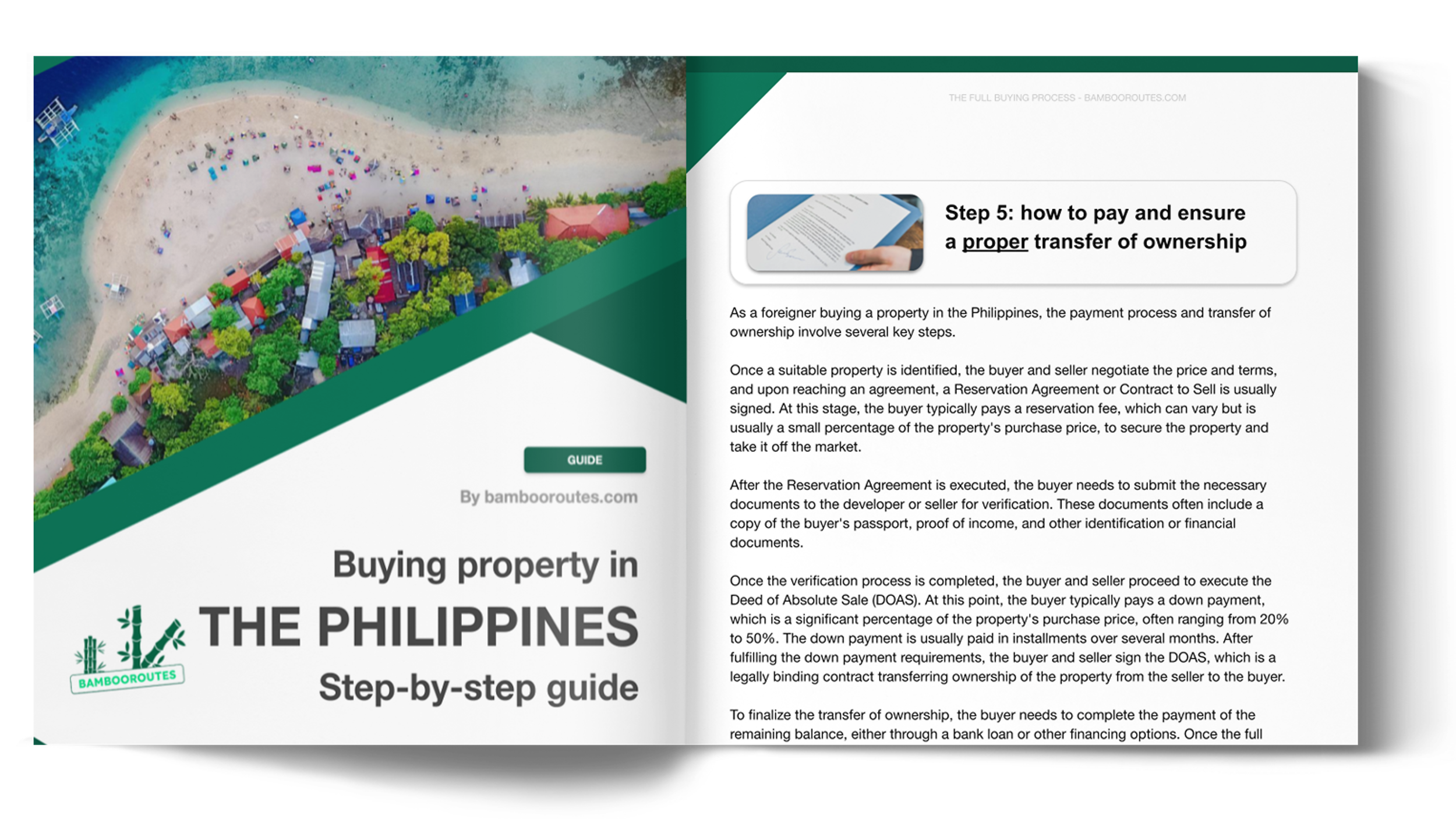
And if you’re planning to buy a property in this place, you may want to download our pack covering the real estate market in Central Luzon.

What can I legally buy and truly own as a foreigner in Central Luzon?
What property types can foreigners legally buy in Central Luzon right now?
Foreigners can legally buy condominium units and condo-style apartments in Central Luzon when the project has room under the foreign ownership quota.
The main legal limit is simple: a foreigner can usually own the condo unit, but a foreigner cannot own the private land under a house, townhouse, villa or subdivision lot.
This matters a lot in Central Luzon because many attractive homes in Pampanga, Bulacan, Tarlac, Bataan, Zambales, Nueva Ecija and Aurora are land-based house-and-lot products.
In practice, the safer foreigner-friendly choices are condos in places such as Angeles City, Clark, Mabalacat, San Fernando, Malolos, Marilao, Olongapo and Subic-linked areas.
Finally, please note that our pack about the property market in Central Luzon is specifically tailored to foreigners.
Can I own land in my own name in Central Luzon right now?
No, a foreign individual cannot directly own private residential land in Central Luzon in their own name in 2026.
The clearest legal alternative is usually a long-term lease, because a lease can give use rights without pretending that the foreign buyer owns the land.
A foreigner may also inherit land through legal hereditary succession, but this is a narrow exception and not a normal buying strategy for Central Luzon homes.
By the way, we cover everything there is to know about the land buying process in Central Luzon here.
As of 2026, what other key foreign-ownership rules or limits should I know in Central Luzon?
As of 2026, the other key rule is that ownership proof must match the legal structure, so a receipt, private agreement or partner promise is not enough.
For condos in Central Luzon, foreigners must stay within the project-level foreign ownership cap, which is commonly understood as 40% of the condominium corporation or project.
For registration, a foreign buyer usually needs a Philippine TIN, properly signed documents, tax payment processing and Registry of Deeds registration before the new title path is complete.
There is no 2026 rule that suddenly lets foreigners own Central Luzon residential land directly, so buyers should ignore marketing claims that suggest the land ban has disappeared.
What’s the biggest ownership mistake foreigners make in Central Luzon right now?
The biggest mistake is paying for a house-and-lot in Central Luzon and assuming that payment alone gives the foreign buyer land ownership.
The real-world consequence can be serious because the land title may sit in another person’s name, while the foreign buyer has weak control and poor protection.
Other classic Central Luzon pitfalls include nominee deals, unclear inherited land, missing developer licenses, unpaid condo dues, old tax declarations and pre-selling projects without a clean title path.
Get fresh and reliable information about the market in Central Luzon
Don't base significant investment decisions on outdated data. Get updated and accurate information.

Which visa or residency status changes what I can do in Central Luzon?
Do I need a specific visa to buy property in Central Luzon right now?
You do not need a special property-buying visa to buy a legally foreign-ownable condo in Central Luzon in June 2026, and a visitor can often sign documents.
The most common administrative blocker for non-residents is not the visa itself, but missing local tax registration, banking documents or a correctly executed Special Power of Attorney.
A foreign buyer should expect to need a Philippine Taxpayer Identification Number before final tax filing, title transfer or later rental-income compliance.
A typical foreign buyer document set includes passport, TIN, proof of address, marital-status documents, signed deed, payment proof and an apostilled or consularized Special Power of Attorney if someone signs for the buyer.
Does buying property help me get residency and citizenship in Central Luzon in 2026?
As of 2026, buying a normal residential property in Central Luzon does not automatically give a foreign buyer Philippine residency or citizenship.
The Philippines has residence routes such as the SRRV retirement visa and the SIRV investor visa, but these are separate visa programs and not simple condo-for-residency programs.
For longer stays, buyers normally look at retirement, marriage-based, employment, investor or quota visa routes, while citizenship remains a separate naturalization process.
Can I legally rent out property on my visa in Central Luzon right now?
Your visa status can matter if you personally operate a rental business in Central Luzon, but passive ownership of a legally owned condo is usually treated differently from local work.
You do not need to live in the Philippines to rent out a Central Luzon condo, but many foreign owners use a local property manager for tax, tenant and building matters.
Foreign owners must still check BIR tax registration, condo rules, local permits, barangay requirements and short-stay restrictions, especially in Angeles, Clark, Subic, Olongapo and San Fernando.
We cover everything there is to know about buying and renting out in Central Luzon here.
Get to know the market before buying a property in Central Luzon
Better information leads to better decisions. Get all the data you need before investing a large amount of money.
How does the buying process actually work step-by-step in Central Luzon?
What are the exact steps to buy property in Central Luzon right now?
The standard Central Luzon condo process is to choose a legal unit, check the foreign quota, verify title and developer documents, sign the sale papers, pay taxes, register the deed and update the CCT.
You usually do not need to be physically present for every step if you use a properly prepared Special Power of Attorney that works for Philippine signing and registration.
The step that usually makes the deal binding is the signed Contract to Sell or Deed of Absolute Sale, depending on whether the unit is pre-selling, financed or fully paid.
A realistic timeline is about one to three months for a clean resale condo, while pre-selling projects and problem titles in Central Luzon can take much longer.
We have a document entirely dedicated to the whole buying process our pack about properties in Central Luzon.
Is it mandatory to get a lawyer or a notary to buy a property in Central Luzon right now?
A notarized deed is normally needed for registration, but hiring a private lawyer is not always legally mandatory for every simple Central Luzon purchase.
The notary mainly authenticates the document, while the lawyer checks whether the title, seller, taxes, quota and contract terms are safe for a foreign buyer.
The lawyer’s scope should clearly include title review, foreign quota verification, seller authority, unpaid obligations, tax allocation and the exact path to the new Condominium Certificate of Title.
Make a profitable investment in Central Luzon
Better information leads to better decisions. Save time and money. Download our data.
What checks should I run so I don’t buy a problem property in Central Luzon?
How do I verify title and ownership history in Central Luzon right now?
The official starting point is the Land Registration Authority or the relevant Registry of Deeds for the city or province where the Central Luzon property is registered.
The key document is a fresh Certified True Copy of Title, which may be a CCT for a condo or a TCT for land-based property.
A realistic ownership look-back is usually at least the current title and the last transfer, with deeper checks when the property came from inheritance, subdivision or corporate ownership.
A red flag that should pause the purchase is any mismatch between the seller’s identity and the title, especially with old family land in Pampanga, Bulacan, Tarlac or Nueva Ecija.
You will find here the list of classic mistakes people make when buying a property in Central Luzon.
How do I confirm there are no liens in Central Luzon right now?
The standard way is to review a fresh Certified True Copy of Title and read every annotation before signing or releasing major payment.
A common Central Luzon issue is a registered mortgage, unpaid real property tax, unpaid condo dues or a developer balance that is not obvious in the listing.
The best written proof is the clean title copy plus current tax clearance and written condo or association clearance when the property is part of a building or subdivision.
How do I check zoning and permitted use in Central Luzon right now?
The practical authority is the city or municipal planning office where the Central Luzon property sits, because zoning is handled locally.
The usual proof is a zoning certification, locational clearance or official zoning map reference from the relevant local government unit.
A common pitfall is assuming that a condo or house near Clark, Balibago, Subic Bay, Marilao or Malolos can automatically be used for short-term rentals or business activity.
Don't buy the wrong property, in the wrong area of Central Luzon
Buying real estate is a significant investment. Don't rely solely on your intuition. Gather the right information to make the best decision.
Can I get a mortgage as a foreigner in Central Luzon, and on what terms?
Do banks lend to foreigners for homes in Central Luzon in 2026?
As of 2026, Philippine banks can lend to foreigners for homes in Central Luzon, but approvals are selective and easier for documented residents or strong borrowers.
A realistic loan-to-value range for qualified foreign borrowers is often about 50% to 70%, with stronger cases possible for prime condos and weaker cases closer to cash buying.
The most common eligibility factor is proof of stable income, and banks usually prefer local income, Philippine residence, a Filipino spouse or a developer-accredited condo project.
You can also read our latest update about mortgage and interest rates in The Philippines.
Which banks are most foreigner-friendly in Central Luzon in 2026?
As of 2026, the most practical banks to test first in Central Luzon are usually BDO, BPI and Security Bank, especially through accredited developer channels.
The feature that helps foreign buyers most is not a public foreigner label, but a clear home-loan process, developer accreditation and willingness to review documented foreign income.
Non-resident lending is possible in some cases, but buyers without Philippine residence, local income or a strong local banking file should expect stricter checks and lower leverage.
We actually have a specific document about how to get a mortgage as a foreigner in our pack covering real estate in Central Luzon.
What mortgage rates are foreigners offered in Central Luzon in 2026?
As of 2026, a practical mortgage-rate estimate for foreign buyers in Central Luzon is about 6.5% to 9.5% per year for peso housing loans.
Fixed-rate loans usually cost more for longer fixing periods, while variable or shorter-fixing loans can start lower but expose the borrower to repricing risk.
Get fresh and reliable information about the market in Central Luzon
Don't base significant investment decisions on outdated data. Get updated and accurate information.
What will taxes, fees, and ongoing costs look like in Central Luzon?
What are the total closing costs as a percent in Central Luzon in 2026?
The typical buyer-side closing-cost budget in Central Luzon in 2026 is about 4% to 5% of the property price for a standard resale condo.
A realistic low-to-high range is about 3% to 6%, excluding seller-side capital gains tax unless the sale contract shifts that cost to the buyer.
The main fee categories are documentary stamp tax, local transfer tax, registration fees, notarial fees, legal fees, title processing, bank fees and tax-declaration updates.
The biggest buyer-side contributor is usually documentary stamp tax, while VAT can become the biggest cash issue on some new developer sales if it is not already included.
If you want to go into more details, we also have a blog article detailing all the property taxes and fees in Central Luzon.
What annual property tax should I budget in Central Luzon in 2026?
As of 2026, a simple annual property-tax budget for a standard Central Luzon home is about ₱12,000 to ₱36,000, or roughly $200 to $600, or €190 to €560.
Annual real property tax is assessed on assessed value, not simply on the purchase price, and local rates vary by province, city and municipality.
How is rental income taxed for foreigners in Central Luzon in 2026?
As of 2026, a foreign owner should budget roughly 20% to 35% tax exposure on Central Luzon rental income, depending on residence status and tax classification.
The owner usually needs local tax registration, proper receipts or filings, and sometimes withholding or business tax compliance if the rental becomes business-like.
What insurance is common and how much in Central Luzon in 2026?
As of 2026, a basic annual home-insurance budget in Central Luzon is about ₱3,000 to ₱9,000, or roughly $50 to $150, or €45 to €140.
The most common coverage is fire insurance, often with extra protection for earthquake, typhoon, flood, contents and liability when the owner wants broader cover.
The biggest pricing factor in Central Luzon is location risk, especially flood exposure in parts of Bulacan and Pampanga, typhoon exposure and earthquake sensitivity.
Get to know the market before buying a property in Central Luzon
Better information leads to better decisions. Get all the data you need before investing a large amount of money.
What sources have we used to write this blog article?
Whether it’s in our blog articles or the market analyses included in our property pack about Central Luzon, we always rely on the strongest methodology we can … and we don’t throw out numbers at random.
We also aim to be fully transparent, so below we’ve listed the authoritative sources we used, and explained how we used them and the methods behind our estimates.
| Source | Why this source is reliable | How we used it |
|---|---|---|
| 1987 Philippine Constitution, Article XII | This is the highest legal source for Philippine land ownership rules. | We used it to confirm that foreign individuals cannot directly own private land. We applied it to Central Luzon house-and-lot, townhouse, villa and subdivision land. |
| Republic Act No. 4726, Condominium Act | This is the main law governing condominium ownership in the Philippines. | We used it to explain why foreigners can own qualifying condo units. We also used it for the foreign ownership cap that matters in Central Luzon condo projects. |
| Board of Investments, Investors’ Lease Act | The Board of Investments publishes the official investor lease rule. | We used it to separate land ownership from long-term lease rights. We treated it cautiously because it is mainly an investment lease tool. |
| Bureau of Immigration, Visa Categories | This is the official source for Philippine visa categories. | We used it to separate entry status from property ownership rights. We also used it to explain why a tourist stay does not create land ownership rights. |
| Philippine Retirement Authority, SRRV | The PRA administers the official retirement visa program. | We used it to explain retirement residence options for foreign buyers. We did not treat SRRV as a way to own private residential land. |
| Board of Investments, SIRV | BOI is the official agency behind the investor visa requirements. | We used it to check investment residency logic. We separated business investment routes from normal residential property buying in Central Luzon. |
| Bureau of Internal Revenue, Documentary Stamp Tax | BIR is the national tax authority for Philippine property transfer taxes. | We used it to estimate transfer-tax costs in standard purchase scenarios. We also used it to build the buyer-side closing-cost range. |
| BIR Form 1904 | This official form covers tax registration for one-time taxpayers and foreign nationals. | We used it to explain why foreign buyers often need a Philippine TIN. We also used it for document expectations when a representative signs. |
| Land Registration Authority eSerbisyo | LRA is the official land-title registration authority. | We used it to explain Certified True Copy title checks. We applied it to CCTs, TCTs and title annotations in Central Luzon. |
| Land Registration Authority FAQs | This gives practical official guidance on title copies and due diligence. | We used it to explain how buyers verify title records. We also used it to show why a seller photocopy is not enough. |
| Bureau of Local Government Finance, Schedule of Market Values | BLGF tracks local valuation data used by local governments. | We used it to estimate annual property-tax budgets. We applied it to Central Luzon provinces and highly urbanizing cities. |
| Local Government Code of the Philippines | This law explains local tax powers and local government fees. | We used it to support local transfer tax and property-tax logic. We then simplified the formula into buyer-friendly budget ranges. |
| Bangko Sentral ng Pilipinas, Key Rates | BSP is the central bank and the main source for rate context. | We used it to anchor June 2026 mortgage-rate estimates. We then compared that context with bank home-loan pages. |
| BDO Home Loan | BDO is one of the largest housing-loan providers in the Philippines. | We used it to understand mainstream bank home-loan practice. We compared it with other banks before estimating foreign-borrower terms. |
| BPI Housing Loan | BPI is a major Philippine bank with a national mortgage channel. | We used it to cross-check bank process and loan availability. We included it among the practical banks for Central Luzon buyers to test. |
| Security Bank Home Loan | Security Bank publishes clear home-loan terms and loan-to-value examples. | We used it to check mortgage ranges and borrower conditions. We then adapted those ranges for foreign buyers and Central Luzon collateral risk. |
Make a profitable investment in Central Luzon
Better information leads to better decisions. Save time and money. Download our data.
Related blog posts
- Is now a good time to invest in property in Central Luzon?