
Authored by the expert who managed and guided the team behind the Vietnam Property Pack
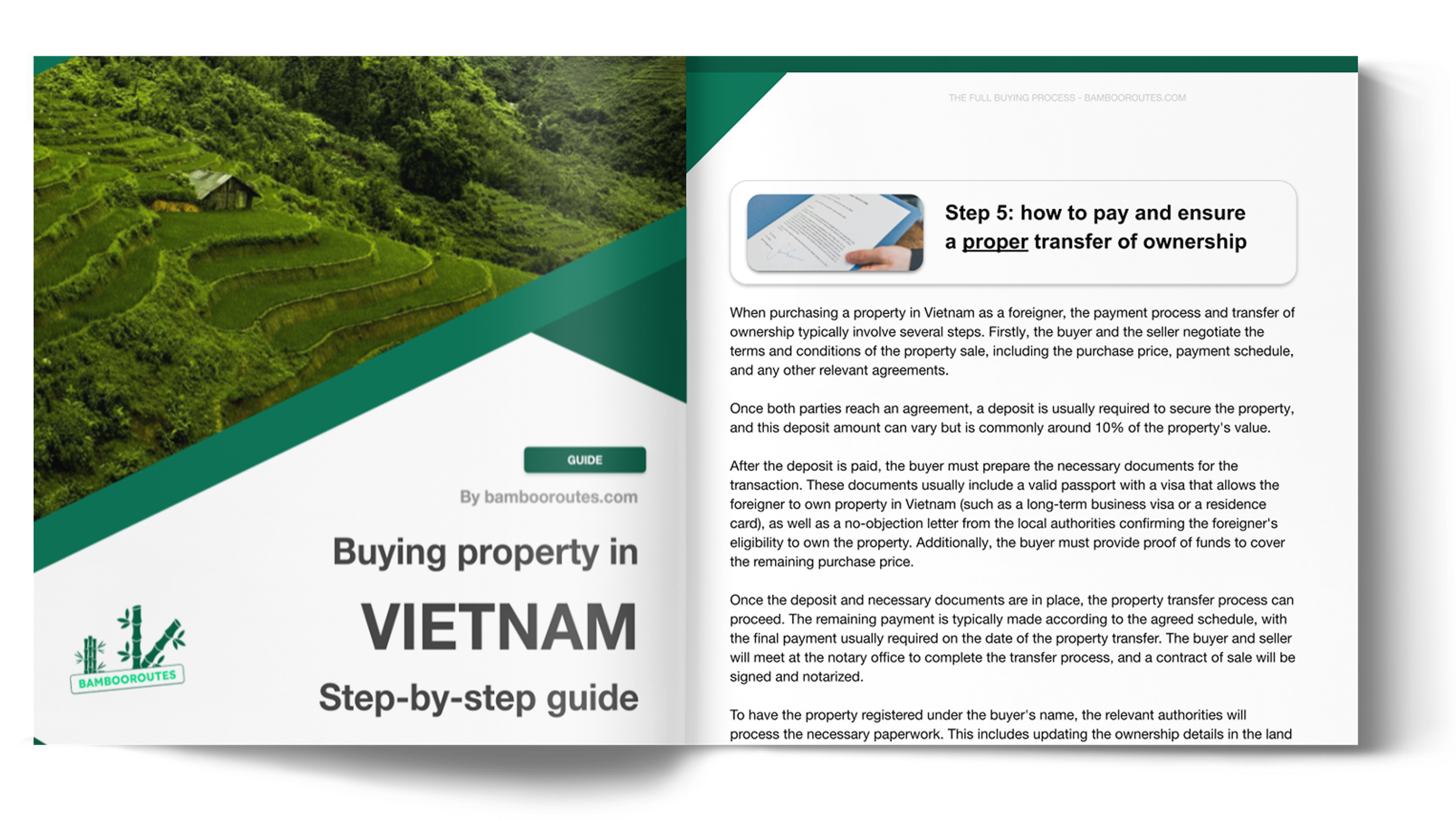
Everything you need to know before buying real estate is included in our Vietnam Property Pack
Quang Ninh is drawing more foreign buyers than ever, thanks to Ha Long Bay's world-famous scenery and the province's fast-growing infrastructure.
But buying property here as a foreigner comes with specific rules, quotas, and paperwork that differ from what you might expect back home.
This guide breaks down exactly what you can legally own in Quang Ninh in January 2026, how to avoid costly mistakes, and what the process actually looks like step by step.
And if you're planning to buy a property in this place, you may want to download our pack covering the real estate market in Quang Ninh.
Insights
- Foreigners in Quang Ninh can only own up to 30% of apartments in any single building, and once that quota fills up, no more units become available to non-Vietnamese buyers in that tower.
- Ha Long City apartments currently range from 30 to 70 million VND per square meter (roughly $1,200 to $2,800 USD), with waterfront projects commanding the highest premiums in Quang Ninh.
- Van Don district attracted over $14.6 billion in foreign investment commitments, making it one of the fastest-growing property corridors in northern Vietnam.
- Quang Ninh's border areas near Mong Cai and certain coastal zones around Co To are classified as defense-restricted, meaning foreigners cannot purchase homes in projects located there.
- Foreign ownership in Quang Ninh is limited to 50 years from the date your pink book is issued, though this can be extended once for another 50 years under current rules.
- Tourism-branded "condotels" in Ha Long often lack true residential legal status, which can block you from getting a proper ownership certificate as a foreigner.
- Vietnam does not have a large annual property tax bill like Western countries, so your main ongoing costs in Quang Ninh will be building management fees and maintenance funds.
- International banks like HSBC, Standard Chartered, and UOB do lend to foreigners in Vietnam, but approval typically requires local income documentation and residency status.
- Closing costs for buyers in Quang Ninh typically run between 2% and 6.5% of the purchase price, depending on whether you're buying a new build or a resale unit.

What can I legally buy and truly own as a foreigner in Quang Ninh?
What property types can foreigners legally buy in Quang Ninh right now?
As of early 2026, foreign individuals can legally buy apartments, townhouses, villas, and houses in Quang Ninh, but only if those properties are part of commercial housing projects that have been approved for foreign ownership.
The main condition is that your purchase must fall within the foreign ownership quota, which caps foreigners at 30% of apartments in any building and 250 houses in any ward-equivalent area with a population of around 10,000 people.
In Quang Ninh specifically, most foreigner-eligible options are concentrated in Ha Long City's newer apartment towers, Van Don's master-planned developments, and some new urban projects in Quang Yen, Dong Trieu, and Uong Bi.
What you cannot buy as a foreigner is a standalone house in an older village or neighborhood that sits outside of an approved commercial project, or any property in areas designated for national defense and security.
Finally, please note that our pack about the property market in Quang Ninh is specifically tailored to foreigners.
Can I own land in my own name in Quang Ninh right now?
No, foreign individuals cannot own land in their own name in Quang Ninh or anywhere else in Vietnam, because all land in Vietnam belongs to the entire people and is managed by the State.
What foreigners actually receive when buying property in Quang Ninh is ownership of the building or apartment unit itself, while the land component is handled through the project's land-use rights structure, meaning you own your home but not the ground beneath it.
Your ownership is documented on a Certificate of Land Use Rights and Ownership of Houses (commonly called the "pink book"), which confirms your legal right to the residential unit and its associated land relationship according to Vietnamese law.
By the way, we cover everything there is to know about the land buying process in Quang Ninh here.
As of 2026, what other key foreign-ownership rules or limits should I know in Quang Ninh?
As of early 2026, the most important rule beyond property types is that foreign ownership in Quang Ninh is time-limited to 50 years from the date your pink book is issued, though you can apply for a single 50-year extension before your term expires.
For apartments specifically, the 30% foreign ownership quota applies to each individual building, and if a complex has multiple blocks sharing a common base, the cap is calculated separately for each block rather than the whole development.
Every foreign buyer in Quang Ninh must complete the standard registration process through local land registration offices, and all payments for property purchases must go through a licensed credit institution in Vietnam rather than cash transactions.
One notable recent change is that Decree 95/2024, which took effect in August 2024, required the Ministry of Defense and Ministry of Public Security to formally identify restricted zones within six months, making it clearer which Quang Ninh projects are off-limits to foreigners.
What's the biggest ownership mistake foreigners make in Quang Ninh right now?
The single biggest mistake foreigners make in Quang Ninh is buying a tourism-branded unit marketed as a "condo" or "condotel" in Ha Long or the marina areas without realizing that the property lacks true residential legal status and therefore cannot be registered as a standard pink book ownership.
If you make this mistake, you may end up with a unit that cannot be legally transferred to another foreigner, is harder to resell, and may be subject to different land-use terms that expire sooner or carry commercial obligations.
Other classic pitfalls in Quang Ninh include not checking whether the foreign quota in your chosen building is already full, buying in a border zone near Mong Cai or a restricted coastal area without verification, and relying on developer promises about "guaranteed rental yields" without confirming the property's actual residential classification.
Get fresh and reliable information about the market in Quang Ninh
Don't base significant investment decisions on outdated data. Get updated and accurate information.

Which visa or residency status changes what I can do in Quang Ninh?
Do I need a specific visa to buy property in Quang Ninh right now?
In January 2026, there is no specific visa requirement to buy property in Quang Ninh. You simply need to be a foreigner who is legally permitted to enter Vietnam, which means you can start the purchase process even while on a tourist visa or e-visa.
The most common administrative hurdle for buyers without local residency is the paperwork timing, since notarizations, translations, and registration steps can take weeks, which may be difficult to complete within a short tourist stay.
You do not need a Vietnam tax code to view properties or sign a reservation, but you will likely need one later if you rent out the property, sell it, or if the registration office requires it during the final steps.
A foreign buyer in Quang Ninh typically needs to present a valid passport with a Vietnamese entry stamp, proof of legal entry status, and for resales a notarized sale contract, while developers usually guide you through the specific documents required for new builds.
Does buying property help me get residency and citizenship in Quang Ninh in 2026?
As of early 2026, buying property in Quang Ninh does not automatically grant you residency or citizenship in Vietnam, because the country does not have a formal residency-by-investment program tied to real estate purchases.
Long-term residency in Vietnam typically comes through other pathways, such as employment-based permits, investor visas tied to registered business capital, family sponsorship if you're married to a Vietnamese citizen, or retirement arrangements where available.
Citizenship (naturalization) is a completely separate legal process governed by Vietnam's nationality law, which has its own conditions around language, continuous residence, and renunciation of previous nationality that are unrelated to property ownership.
We give you all the details you need about the different pathways to get residency and citizenship in Quang Ninh here.
Can I legally rent out property on my visa in Quang Ninh right now?
Your visa status in Quang Ninh does not directly prevent you from renting out a property you legally own, but you must comply with Vietnam's tax rules on rental income regardless of what visa you hold or where you physically reside.
You do not need to live in Vietnam to rent out your Quang Ninh property, and many foreign owners manage rentals remotely through local property managers who handle tenant relations, building requirements, and tax filings on their behalf.
Other important details include that some Ha Long apartment buildings have internal rules restricting short-term rentals, and because Quang Ninh is a major tourism province, there is stricter attention to guest registration requirements that your property manager should handle.
We cover everything there is to know about buying and renting out in Quang Ninh here.
Get to know the market before buying a property in Quang Ninh
Better information leads to better decisions. Get all the data you need before investing a large amount of money.
How does the buying process actually work step-by-step in Quang Ninh?
What are the exact steps to buy property in Quang Ninh right now?
The standard sequence in Quang Ninh starts with confirming the unit is foreigner-eligible (checking project approval, quota availability, and restricted-zone status), then paying a reservation deposit, conducting legal due diligence, signing the main sale contract, paying taxes and registration fees, and finally receiving your pink book.
You do not have to be physically present for every step in Quang Ninh, since many buyers use a Power of Attorney to authorize a representative for certain stages, but most prefer to be present in person for contract signing and notarization to reduce risk.
The deal typically becomes legally binding in Quang Ninh when you sign and notarize the main sale contract, which for resales happens at a public or private notary office and for new builds follows the developer's contract execution process.
From accepted offer to final pink book issuance, the timeline in Quang Ninh usually ranges from 2 to 6 months depending on whether you're buying a new build (which may require construction completion) or a resale with clean paperwork.
We have a document entirely dedicated to the whole buying process our pack about properties in Quang Ninh.
Is it mandatory to get a lawyer or a notary to buy a property in Quang Ninh right now?
Notarization is effectively mandatory for most resale property transfers in Quang Ninh, as Vietnamese law requires notarized contracts for the transaction to be registered and the ownership certificate transferred, while new builds from developers follow a different contract structure but still require formal documentation.
The key difference is that a notary in Quang Ninh certifies the transaction and verifies identities according to a standardized legal process, while a lawyer (which is not legally required but strongly recommended) reviews the property's legal status, checks for issues the notary won't investigate, and protects your interests as a buyer.
One key item to include in your lawyer's scope for a Quang Ninh purchase is verification that the specific unit falls within the foreign ownership quota and is not located in a defense-restricted zone, since these are the two most common deal-killers for foreigners in this province.
Make a profitable investment in Quang Ninh
Better information leads to better decisions. Save time and money. Download our data.
What checks should I run so I don't buy a problem property in Quang Ninh?
How do I verify title and ownership history in Quang Ninh right now?
The official authority for verifying title in Quang Ninh is the local Land Registration Office (under the Department of Natural Resources and Environment), where ownership records are maintained and where your new ownership will eventually be registered.
The key document you should request is the seller's original pink book (Certificate of Land Use Rights, Ownership of Houses and Other Land-Attached Assets), which confirms the current owner's name, the unit details, and the property's residential status.
A realistic look-back period for ownership history checks in Quang Ninh is typically 10 to 15 years or back to the original developer sale, whichever gives you a clearer picture of how the property has changed hands.
One clear red flag that should stop or pause your purchase is finding that the property has unresolved disputes, inheritance claims that were never properly settled, or multiple transfers in a short period without clear explanations.
You will find here the list of classic mistakes people make when buying a property in Quang Ninh.
How do I confirm there are no liens in Quang Ninh right now?
The standard way to confirm there are no liens in Quang Ninh is to request documentation from the seller showing any mortgage has been discharged, and to verify this status through the Land Registration Office records or through your lawyer's due diligence.
The most common type of lien to ask about specifically in Quang Ninh is a bank mortgage, since many sellers originally purchased with financing and the property may still be collateral until the loan is fully repaid and released.
The best written proof of lien status is a certificate or confirmation from the Land Registration Office showing no registered encumbrances, combined with a bank discharge letter if a mortgage previously existed.
How do I check zoning and permitted use in Quang Ninh right now?
The authority to check zoning and permitted use in Quang Ninh is the provincial Department of Construction and the local People's Committee, which maintain planning documents and can confirm whether a specific project is zoned for residential use.
The key document that confirms zoning classification is the project's approved planning certificate or land-use decision, which should show the property is designated for residential (not tourism-service or commercial) purposes.
The most common zoning pitfall foreigners miss in Quang Ninh is buying a unit marketed as residential in Ha Long's waterfront or resort corridors without confirming the land-use classification, only to discover later that it's legally categorized as tourism-service property with different ownership terms.
Don't buy the wrong property, in the wrong area of Quang Ninh
Buying real estate is a significant investment. Don't rely solely on your intuition. Gather the right information to make the best decision.
Can I get a mortgage as a foreigner in Quang Ninh, and on what terms?
Do banks lend to foreigners for homes in Quang Ninh in 2026?
As of early 2026, yes, some banks operating in Vietnam do lend to foreigners for home purchases in Quang Ninh, but approval is selective and depends heavily on your income documentation, residency status, and the property type you're buying.
Foreign borrowers in Quang Ninh most commonly see loan-to-value ratios between 50% and 70%, meaning you should expect to put down at least 30% to 50% as a down payment, with higher deposits often required for buyers without local income.
The single most important eligibility factor is typically having stable, documented income (preferably Vietnam-sourced), along with a work permit or Temporary Residence Card, since banks need confidence you can service the loan throughout its term.
You can also read our latest update about mortgage and interest rates in Vietnam.
Which banks are most foreigner-friendly in Quang Ninh in 2026?
As of early 2026, the three most foreigner-friendly banks for mortgages in Quang Ninh are HSBC Vietnam, Standard Chartered Vietnam, and UOB Vietnam, all of which have established processes for handling foreign documentation and income verification.
What makes these banks more foreigner-friendly is their standardized compliance systems for verifying international documents, their experience with expatriate income structures, and their English-language service capabilities that smooth the application process.
These banks may lend to non-residents in some cases, but approval is significantly easier if you have local residency such as a work permit or Temporary Residence Card, and most successful foreign borrowers in Vietnam have some form of local income or employment tie.
We actually have a specific document about how to get a mortgage as a foreigner in our pack covering real estate in Quang Ninh.
What mortgage rates are foreigners offered in Quang Ninh in 2026?
As of early 2026, foreigners in Quang Ninh typically see mortgage interest rates starting around 6.5% to 9% during promotional periods (usually the first 6 to 24 months), then adjusting to 9% to 12.5% for the remaining loan term.
The difference between fixed and variable rates in Vietnam is that promotional "teaser" rates are often quasi-fixed for a short period, after which your rate floats based on market conditions and the bank's reference rate, so your long-term cost is effectively variable even if the initial period feels fixed.
Get fresh and reliable information about the market in Quang Ninh
Don't base significant investment decisions on outdated data. Get updated and accurate information.
What will taxes, fees, and ongoing costs look like in Quang Ninh?
What are the total closing costs as a percent in Quang Ninh in 2026?
As of early 2026, total closing costs for buyers in Quang Ninh typically run between 2% and 6.5% of the purchase price, depending on whether you're buying a resale unit or a new build from a developer.
For resale apartments and houses, expect closing costs of roughly 2% to 4.5%, while new builds often run 3% to 6.5% because they commonly include a 2% maintenance fund contribution due at handover.
The specific fee categories that make up closing costs in Quang Ninh include registration fees (typically 0.5% of the property value), notarization fees, administrative certification costs, and for apartments the maintenance fund contribution.
The single largest contributor to closing costs is usually the registration fee at 0.5%, though for new builds the 2% maintenance fund can be even bigger, and note that the 2% transfer tax (personal income tax) is legally the seller's obligation but is sometimes negotiated between parties.
If you want to go into more details, we also have a blog article detailing all the property taxes and fees in Quang Ninh.
What annual property tax should I budget in Quang Ninh in 2026?
As of early 2026, Vietnam does not have a large annual property tax on market value like many Western countries, so your main ongoing costs in Quang Ninh will be building management fees (for apartments) and maintenance fund contributions rather than a traditional property tax bill.
The way property-related charges work in Quang Ninh is primarily through building management fees charged monthly by your condo or community association, plus any local land-related charges that are typically small and embedded in local frameworks rather than appearing as a separate annual tax notice.
How is rental income taxed for foreigners in Quang Ninh in 2026?
As of early 2026, rental income for foreigners in Quang Ninh is typically taxed at a combined rate of around 10% on gross rent (5% VAT plus 5% personal income tax), though the exact structure can vary based on your revenue level and registration method.
The basic filing requirement is that you (or your property manager) must register the rental activity, declare the income, and pay the applicable taxes, which is commonly handled through a simplified lump-sum method for individual landlords renting out residential property.
What insurance is common and how much in Quang Ninh in 2026?
As of early 2026, annual home insurance premiums in Quang Ninh typically range from 0.1% to 0.5% of the insured property value, which translates to roughly 2 to 10 million VND ($80 to $400 USD or 75 to 370 EUR) per year for a standard apartment, depending on coverage level.
The most common type of insurance coverage owners carry in Quang Ninh is property and contents insurance, which protects against fire, natural disasters, and theft, with building-level insurance often already arranged by the apartment complex management.
The biggest factor that makes insurance premiums higher or lower in Quang Ninh specifically is coastal exposure, since properties near Ha Long Bay or in waterfront developments face greater storm and flood risk, which insurers price into their coverage.
Get to know the market before buying a property in Quang Ninh
Better information leads to better decisions. Get all the data you need before investing a large amount of money.
What sources have we used to write this blog article?
Whether it's in our blog articles or the market analyses included in our property pack about Quang Ninh, we always rely on the strongest methodology we can and we don't throw out numbers at random.
We also aim to be fully transparent, so below we've listed the authoritative sources we used, and explained how we used them and the methods behind our estimates.
| Source | Why it's authoritative | How we used it |
|---|---|---|
| Vietnam Housing Law 2023 | It's the enacted national law defining what foreigners can legally own in Vietnam. | We used it to anchor what property types foreigners may buy and what ownership restrictions apply. We treated it as the highest-level rule for eligibility and ownership duration. |
| Decree 95/2024/ND-CP | It's the Government's implementing decree that makes the Housing Law operational. | We used it to confirm foreign-ownership quotas and restricted-area rules. We also relied on it for practical details about how caps are calculated per building and per ward. |
| Vietnam Land Law 2024 | It's the national law governing land ownership and land-use rights in Vietnam. | We used it to explain why foreigners don't own land and what "owning a home" actually means legally. We also referenced it for pink book certification logic. |
| PwC Vietnam Land Law Briefing | It's a major professional firm summarizing the law with careful citations. | We used it to cross-check effective dates and foreign ownership treatment. We treated it as a triangulation source rather than primary legal authority. |
| Quang Ninh Master Plan (Decision 80/QD-TTg) | It's a Prime Minister-level decision framing provincial development and land use. | We used it to tailor advice to Quang Ninh's reality including tourism corridors and new urban zones. We also used it to explain why zoning checks matter more in this province. |
| Quang Ninh Province Portal | It's the province's official portal for public information and procedures. | We used it as the authoritative local government entry point for zoning and planning questions. We referenced it to keep guidance province-specific rather than generic. |
| Vietnam Immigration Law | It's the official consolidated text on visas, residence permits, and lawful entry. | We used it to explain which visa statuses exist and what they change for property buying. We kept visa guidance aligned with the actual legal framework. |
| Vietnam E-Visa Portal | It's the official e-visa application system run by Vietnam's immigration authority. | We used it to support the tourist or short-stay entry pathway explanation. We clarified that legal presence on an e-visa doesn't automatically change ownership rights. |
| Decree 10/2022/ND-CP on Registration Fees | It's the Government decree setting the registration fee framework for property. | We used it to support the registration fee component in buyer closing costs. We relied on it to avoid guessing on one of the biggest line items foreigners overlook. |
| Circular 111/2013/TT-BTC | It's Ministry of Finance guidance used nationwide for personal income tax. | We used it to explain how real estate transfer tax is commonly applied. We referenced it for the "who pays what" discussion in closing costs. |
| Circular 257/2016/TT-BTC | It's the Ministry of Finance rulebook for notarization fee schedules. | We used it to justify why notarization is a real, predictable cost item. We referenced it when estimating closing-cost ranges for typical transactions. |
| HSBC Vietnam Home Loans | It's a major international bank operating in Vietnam with published mortgage products. | We used it to confirm that banks do offer mortgages to foreigners subject to underwriting. We referenced it as an example of foreigner-accessible financing. |
| Standard Chartered Vietnam Mortgages | It's a major international bank with published mortgage products and process notes. | We used it to corroborate that banks may take time and require full documentation. We informed the "mortgage as a foreigner is possible but not easy" framing. |
| UOB Vietnam Home Finance | It's a major regional bank with a published home finance product in Vietnam. | We used it to triangulate that multiple banks actively advertise home finance. We supported our mortgage rate estimate range by comparing advertised starting rates. |
Make a profitable investment in Quang Ninh
Better information leads to better decisions. Save time and money. Download our data.
Related blog posts