
Authored by the expert who managed and guided the team behind the Philippines Property Pack
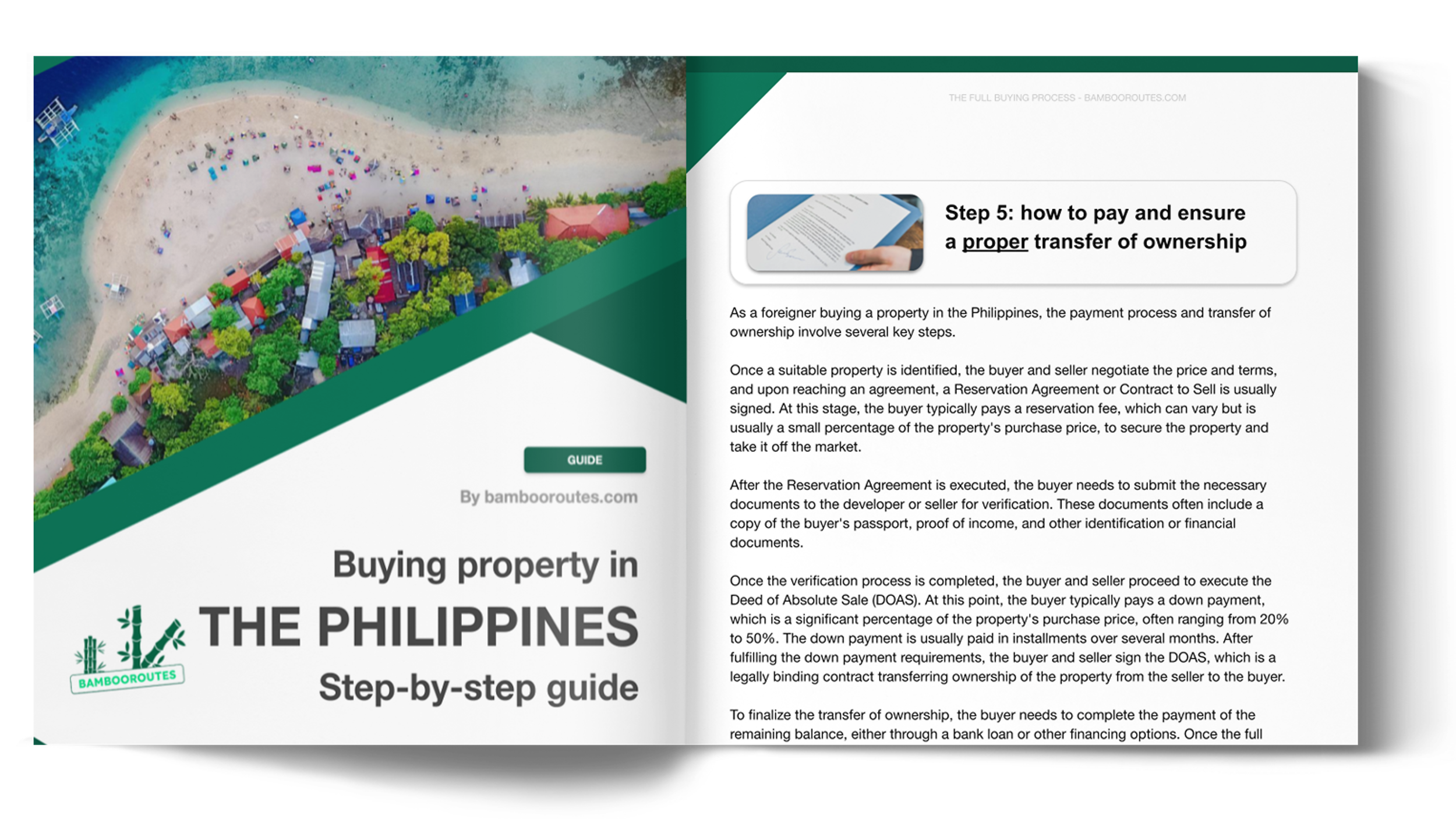
Everything you need to know before buying real estate is included in our The Philippines Property Pack
As a foreign buyer looking at the Philippines in early 2026, you're entering a market that favors buyers, with over 30,000 unsold condo units in Metro Manila and developers offering attractive payment terms and discounts.
The key to success here is understanding that the Philippines isn't one property market but several distinct ones: oversupplied condo corridors where you can negotiate hard, resilient prime districts where vacancy stays low, and infrastructure-linked fringe areas with future upside.
We constantly update this blog post to reflect the latest market shifts, pricing data, and infrastructure developments.
And if you're planning to buy a property in this place, you may want to download our pack covering the real estate market in the Philippines.

What's the Current Real Estate Market Situation by Area in the Philippines?
Which areas in the Philippines have the highest property prices per square meter in 2026?
As of early 2026, the three most expensive residential areas in the Philippines are Rockwell Center in Makati (reaching up to ₱600,000 per square meter for ultra-luxury units), BGC or Bonifacio Global City in Taguig (₱280,000 to ₱500,000 per square meter), and Makati CBD's Legazpi and Salcedo Villages (₱300,000 to ₱450,000 per square meter).
In these premium neighborhoods, you should expect to pay between ₱280,000 and ₱600,000 per square meter depending on the specific building, floor level, and view, with Rockwell Center commanding the absolute highest prices in the entire country.
Each of these areas commands premium prices for distinct reasons:
- Rockwell Center (Makati): master-planned enclave with strict access controls, low-density living, and zero POGO exposure history.
- BGC core grid (Taguig): modern infrastructure, walkable streets, international schools, and expatriate-friendly services.
- Legazpi and Salcedo Villages (Makati CBD): proximity to Ayala Avenue headquarters, mature retail like Greenbelt, and decades of proven prestige.
Which areas in the Philippines have the most affordable property prices in 2026?
As of early 2026, the most affordable condo areas in Metro Manila include Sampaloc and Santa Mesa near the university belt (₱90,000 to ₱150,000 per square meter), parts of the Bay Area in Pasay and Paranaque (₱120,000 to ₱190,000 per square meter), outer Quezon City along Commonwealth (₱100,000 to ₱160,000 per square meter), and Caloocan or Valenzuela in the north (₱70,000 to ₱130,000 per square meter).
In these more affordable areas, you can expect to pay between ₱70,000 and ₱190,000 per square meter, which means a 40 square meter studio could cost as little as ₱2.8 million in the cheapest locations.
The trade-offs vary by area: Sampaloc and Santa Mesa offer proximity to universities but have older building stock and traffic congestion; the Bay Area has newer towers but suffers from vacancy rates above 50% that pressure both rents and resale values; outer Quezon City provides space but requires long commutes unless you work nearby; and Caloocan or Valenzuela offer the lowest entry prices but come with limited premium tenant demand and slower capital appreciation.
You can also read our latest analysis regarding housing prices in the Philippines.
Get fresh and reliable information about the market in the Philippines
Don't base significant investment decisions on outdated data. Get updated and accurate information.

Which Areas in the Philippines Offer the Best Rental Yields?
Which neighborhoods in the Philippines have the highest gross rental yields in 2026?
As of early 2026, the neighborhoods in the Philippines with the highest gross rental yields include the Manila university belt around Sampaloc and Espana (6% to 8%), Mandaluyong's Pioneer and Boni corridor (5.5% to 7.5%), the Quezon City Eastwood adjacency near Libis (5.5% to 7.5%), and the Ortigas fringe including Kapitolyo in Pasig (5.5% to 7%).
Across Metro Manila as a whole, typical gross rental yields range from 4% to 7%, with the national average sitting around 5.5% according to Q3 2025 data, which represents a modest improvement from 5.1% at the start of 2025.
These higher-yield neighborhoods outperform because of specific demand drivers:
- University belt (Sampaloc, Espana): steady student and young worker demand keeps occupancy stable despite older buildings.
- Pioneer and Boni corridor (Mandaluyong): renters can commute to three CBDs (BGC, Makati, Ortigas), creating deep tenant demand.
- Eastwood adjacency (Quezon City): IT park employment and mixed-use township create a self-contained renter ecosystem.
- Kapitolyo (Pasig): lifestyle gentrification and proximity to both Ortigas and BGC attract mid-range professionals.
Finally, please note that we cover the rental yields in the Philippines here.
Get to know the market before buying a property in the Philippines
Better information leads to better decisions. Get all the data you need before investing a large amount of money.
Which Areas in the Philippines Are Best for Short-Term Vacation Rentals?
Which neighborhoods in the Philippines perform best on Airbnb in 2026?
As of early 2026, the top-performing Airbnb neighborhoods in the Philippines include BGC in Taguig (business travelers and visiting families willing to pay premium nightly rates), Makati Poblacion and Rockwell adjacency (nightlife, dining, and expat visitors), Cebu IT Park in Lahug (steady business and domestic travel), and Mactan resort zones in Lapu-Lapu City (direct tourist demand near beaches and the airport).
In Metro Manila, top-performing Airbnb properties typically generate between ₱80,000 and ₱150,000 monthly revenue, while Cebu City averages around ₱100,000 to ₱130,000 monthly for well-managed listings, based on AirDNA data showing Manila averaging $3,424 and Cebu City averaging $3,466 in monthly revenue.
Each neighborhood succeeds for different reasons:
- BGC (Taguig): multinational corporate visitors and embassy-related travelers pay premium rates for walkable, secure locations.
- Poblacion (Makati): nightlife and dining scene attracts younger tourists and digital nomads seeking short stays.
- Cebu IT Park (Lahug): BPO business travel creates weekday demand that other tourist areas lack.
- Mactan resort zones (Lapu-Lapu): direct beach and resort access captures leisure tourists arriving through Mactan airport.
By the way, we also have a blog article detailing whether owning an Airbnb rental is profitable in the Philippines.
Which tourist areas in the Philippines are becoming oversaturated with short-term rentals?
The areas becoming most oversaturated with short-term rentals in the Philippines include the Bay Area condo corridor in Pasay and Paranaque (near MOA and Entertainment City), parts of Makati's older condo stock where multiple units in the same tower compete, and certain beachfront developments in Boracay where supply has outpaced sustainable tourist demand.
In the Bay Area specifically, there are thousands of active short-term rental listings competing in buildings where condo vacancy already exceeds 50%, creating intense price competition among hosts trying to fill units.
The clearest sign of oversaturation is when you see heavy discounting during low season (June to October in most Philippine markets) combined with building administrations tightening STR rules because of resident complaints, which signals that too many owners have tried the same exit strategy in the same building.
Make a profitable investment in the Philippines
Better information leads to better decisions. Save time and money. Download our data.
Which Areas in the Philippines Are Best for Long-Term Rentals?
Which neighborhoods in the Philippines have the strongest demand for long-term tenants?
The neighborhoods in the Philippines with the strongest long-term tenant demand include Makati CBD (Legazpi and Salcedo Villages), Rockwell Center, BGC's core grid in Taguig, and the Ortigas Center fringe including Kapitolyo in Pasig.
In these high-demand neighborhoods, well-priced units typically rent within 20 to 40 days, compared to 60 to 90 days or more in oversupplied areas, and vacancy rates stay below 15% versus the Metro Manila average of around 26%.
Each neighborhood attracts a distinct tenant profile:
- Legazpi and Salcedo Villages (Makati): corporate executives, banking professionals, and long-term expats working on Ayala Avenue.
- Rockwell Center (Makati): affluent families and senior executives seeking security, walkability, and lifestyle amenities.
- BGC core (Taguig): multinational employees, embassy staff, and young professional couples with dual incomes.
- Kapitolyo and Ortigas fringe (Pasig): mid-level professionals who want lifestyle options without BGC or Makati prices.
What makes these neighborhoods especially attractive to long-term tenants is the combination of walkability to offices, reliable building management, access to quality retail and dining, and in the case of BGC and Rockwell, proximity to international schools that matter for expatriate families.
Finally, please note that we provide a very granular rental analysis in our property pack about the Philippines.
What are the average long-term monthly rents by neighborhood in the Philippines in 2026?
As of early 2026, average monthly rents for studio and 1-bedroom condos in the Philippines range from about ₱20,000 to ₱90,000 depending heavily on location, with Rockwell and BGC at the top and university belt or fringe areas at the bottom.
For entry-level apartments in the most affordable neighborhoods like Sampaloc, Santa Mesa, or outer Quezon City, you can expect monthly rents between ₱12,000 and ₱25,000 for a studio or small 1-bedroom unit.
In mid-range neighborhoods like Ortigas Center, Mandaluyong (Pioneer or Boni), and parts of Pasig, typical rents for a decent 1-bedroom condo fall between ₱28,000 and ₱55,000 per month.
In the most expensive neighborhoods like Rockwell Center, BGC core, and Makati CBD, you should budget ₱45,000 to ₱90,000 monthly for a well-located studio or 1-bedroom, with larger units and premium buildings commanding even more.
You may want to check our latest analysis about the rents in the Philippines here.
Don't buy the wrong property, in the wrong area of the Philippines
Buying real estate is a significant investment. Don't rely solely on your intuition. Gather the right information to make the best decision.
Which Are the Up-and-Coming Areas to Invest in the Philippines?
Which neighborhoods in the Philippines are gentrifying and attracting new investors in 2026?
As of early 2026, the neighborhoods in the Philippines that are gentrifying and attracting investor attention include Kapitolyo in Pasig (lifestyle-driven transformation with restaurants and cafes), Poblacion in Makati (nightlife and creative scene pulling in younger renters), the Quezon City Commonwealth corridor near Vertis North (mixed-use growth tied to MRT-7), and the C5-Katipunan corridor in Quezon City (spillover demand from BGC and Eastwood).
These gentrifying neighborhoods have typically seen annual price appreciation of 3% to 6% in recent years, with some specific buildings or micro-locations outperforming when they capture the right tenant demand and maintain good building management.
Which areas in the Philippines have major infrastructure projects planned that will boost prices?
The areas in the Philippines with major infrastructure projects expected to boost property prices include the NSCR corridor running from Clark through Metro Manila to Calamba in Laguna, the LRT-1 Cavite Extension corridor through Paranaque, Las Pinas, and Bacoor, the MRT-7 corridor from Quezon City to San Jose del Monte in Bulacan, and the planned MRT-4 route connecting Taytay in Rizal to Ortigas.
The North-South Commuter Railway (NSCR) is the largest project, currently moving through active PPP procurement phases, while the LRT-1 Cavite Extension is already under construction and nearing completion, and MRT-7 has reached over 80% completion with partial operations expected by 2027.
Historically in the Philippines, areas near newly completed rail stations have seen price appreciation of 10% to 25% within three to five years of opening, though the actual gains depend heavily on walkability to the station and the quality of last-mile transport options.
You'll find our latest property market analysis about the Philippines here.

We made this infographic to show you how property prices in the Philippines compare to other big cities across the region. It breaks down the average price per square meter in city centers, so you can see how cities stack up. It’s an easy way to spot where you might get the best value for your money. We hope you like it.
Which Areas in the Philippines Should I Avoid as a Property Investor?
Which neighborhoods in the Philippines with lots of problems I should avoid and why?
The neighborhoods in the Philippines that investors should generally avoid include the Bay Area condo corridor in Pasay and Paranaque (Aseana and Entertainment City edge), isolated "future growth" projects far from any current job center or transit, and any building regardless of location with poor condo corporation management, chronic maintenance issues, or restrictive rental rules.
Each problem area has specific issues:
- Bay Area (Pasay-Paranaque): vacancy exceeding 50% means severe rent pressure and slow resale, even for newer buildings.
- Far-flung "future growth" projects: no current tenant demand means you rely entirely on speculative appreciation that may never arrive.
- Buildings with weak management: elevator breakdowns, water issues, and poor security drive away quality tenants and hurt resale.
For these areas to become viable, you would need to see vacancy drop below 20% in the Bay Area (which could take years given ongoing supply), actual infrastructure completion rather than just announcements for fringe projects, and complete management turnover in poorly-run buildings, which rarely happens without legal battles.
Buying a property in the wrong neighborhood is one of the mistakes we cover in our list of risks and pitfalls people face when buying property in the Philippines.
Which areas in the Philippines have stagnant or declining property prices as of 2026?
As of early 2026, the areas in the Philippines with stagnant or declining property prices include high-vacancy condo submarkets like the Bay Area corridor, parts of Ortigas Center with heavy new supply, and older condo buildings in any location where maintenance has been deferred and the building shows its age.
These struggling areas have experienced effective price declines of 5% to 15% over the past two to three years when you account for the discounts, promos, and extended payment terms that developers and resellers now offer to move inventory, even if headline asking prices appear stable.
The underlying causes differ by area:
- Bay Area corridor: POGO tenant exodus left thousands of units empty, and new supply keeps arriving faster than absorption.
- Ortigas heavy-supply pockets: multiple large projects completed simultaneously, flooding the market with similar product.
- Aging buildings anywhere: deferred maintenance and outdated amenities push tenants toward newer towers, collapsing both rents and resale values.
Get the full checklist for your due diligence in the Philippines
Don't repeat the same mistakes others have made before you. Make sure everything is in order before signing your sales contract.

Which Areas in the Philippines Have the Best Long-Term Appreciation Potential?
Which areas in the Philippines have historically appreciated the most recently?
The areas in the Philippines that have historically appreciated the most over the past five to ten years include Rockwell Center in Makati, BGC's core grid in Taguig, Makati CBD (Legazpi and Salcedo Villages), and select parts of Ortigas Center that avoided the worst oversupply.
Here are the approximate appreciation figures for each area:
- BGC (Taguig): land prices rose from roughly ₱200,000 per square meter in 2008 to about ₱2.2 million today, representing over 1,000% total appreciation.
- Rockwell Center (Makati): prime units have seen 8% to 12% annual appreciation over the past decade, outpacing inflation significantly.
- Makati CBD core: roughly 41% real (inflation-adjusted) price growth over the past decade, meaning prices approximately doubled in peso terms.
- Ortigas resilient pockets: 4% to 6% annual appreciation in well-managed buildings, though oversupplied areas lagged badly.
The main driver behind above-average appreciation in these areas is scarcity combined with persistent institutional demand: these neighborhoods have limited remaining developable land, multinational tenants who need housing nearby, and building management that maintains quality over time.
By the way, you will find much more detailed trends and forecasts in our pack covering there is to know about buying a property in the Philippines.
Which neighborhoods in the Philippines are expected to see price growth in coming years?
The neighborhoods in the Philippines expected to see the strongest price growth in coming years include the MRT-7 corridor from Commonwealth in Quezon City to San Jose del Monte in Bulacan, the LRT-1 Cavite Extension corridor through Paranaque and Bacoor, station-adjacent areas along the NSCR spine in Bulacan and Laguna, and Taytay and Cainta in Rizal if the MRT-4 project moves forward on schedule.
Here are projected growth rates for each area:
- MRT-7 corridor (QC to Bulacan): 5% to 8% annual appreciation expected as partial operations begin in 2027.
- LRT-1 Cavite Extension corridor: 4% to 7% annual growth as stations open and commute times drop.
- NSCR station areas (Bulacan/Laguna): 6% to 10% upside potential, but heavily dependent on actual completion timelines.
- Taytay/Cainta (Rizal): 3% to 6% annual appreciation as an option play, with upside if MRT-4 construction begins.
The single most important catalyst for future price growth in these neighborhoods is the actual completion and opening of rail stations, because property markets price in infrastructure benefits only when commuters can actually use the new transit, not when projects are merely announced.
We made this infographic to show you how property prices in the Philippines compare to other big cities across the region. It breaks down the average price per square meter in city centers, so you can see how cities stack up. It’s an easy way to spot where you might get the best value for your money. We hope you like it.
What Do Locals and Expats Really Think About Different Areas in the Philippines?
Which areas in the Philippines do local residents consider the most desirable to live?
The areas that local Filipino residents consider most desirable to live include Makati's Legazpi and Salcedo Villages for professionals, Rockwell Center for affluent families seeking security and walkability, BGC for those wanting modern urban living, and Alabang for families prioritizing space and international schools in a suburban setting.
Each area appeals for specific reasons:
- Legazpi and Salcedo Villages (Makati): established prestige, walkable to Greenbelt and Ayala Avenue, and mature neighborhood feel.
- Rockwell Center (Makati): gated security, curated retail, and a family-oriented community with low density.
- BGC core (Taguig): modern infrastructure, parks, bike lanes, and a planned city environment rare in Metro Manila.
- Alabang (Muntinlupa): larger homes, international schools, and a suburban feel while remaining connected to the city.
These locally-preferred areas typically house upper-middle-class to wealthy Filipino families, corporate executives, business owners, and established professionals, most of whom are owner-occupiers rather than renters.
Local preferences generally align with what foreign investors should target for rental properties, because the same qualities that make neighborhoods desirable to affluent locals (security, walkability, good management) also attract the expatriate and corporate tenants who pay premium rents.
Which neighborhoods in the Philippines have the best reputation among expat communities?
The neighborhoods with the best reputation among expat communities in the Philippines include BGC in Taguig, Makati's Legazpi and Salcedo Villages, and Rockwell Center, all of which offer the walkability, international services, and English-friendly environments that expatriates prioritize.
Expats prefer these neighborhoods for specific reasons:
- BGC (Taguig): International School Manila nearby, walkable streets, western retail and dining, and modern apartments.
- Legazpi and Salcedo Villages (Makati): proximity to embassy clusters, established expat community, and easy access to international-standard healthcare.
- Rockwell Center (Makati): family-friendly security, Power Plant Mall retail, and a self-contained environment that minimizes traffic exposure.
The typical expat profile in these neighborhoods includes multinational executives and their families, embassy staff, international school teachers, and long-term foreign professionals working in finance, consulting, or regional headquarters roles.
Which areas in the Philippines do locals say are overhyped by foreign buyers?
The areas that locals commonly say are overhyped by foreign buyers include parts of the Bay Area condo corridor (particularly Entertainment City and MOA-adjacent developments), some newer BGC towers with premium pricing but limited differentiation, and generic "investment condos" in fringe locations marketed heavily overseas.
Locals believe these areas are overvalued for specific reasons:
- Bay Area corridor: impressive skylines and casino proximity attract foreign attention, but locals know vacancy exceeds 50% and rents have collapsed.
- Premium BGC towers: foreign buyers pay headline prices while locals negotiate 10% to 15% discounts in the current buyer's market.
- Fringe "investment condos": marketed overseas with inflated yield projections that locals know are unrealistic given actual tenant demand.
What foreign buyers typically see that locals don't value as highly is the "newness" and modern aesthetics of these developments, because locals understand that building management quality and location fundamentals matter more than shiny lobbies for long-term investment returns.
By the way, we've written a blog article detailing the experience of buying a property as a foreigner in the Philippines.
Which areas in the Philippines are considered boring or undesirable by residents?
The areas that residents commonly consider boring or undesirable include far-flung subdivisions in Cavite or Bulacan with no nearby commercial or lifestyle amenities, isolated condo towers in industrial zones that lack walkable retail or dining, and older districts in Manila proper with heavy traffic and limited green space.
Residents find these areas undesirable for specific reasons:
- Remote Cavite and Bulacan subdivisions: hours-long commutes to Metro Manila jobs, and nothing to do locally except stay home.
- Industrial-zone condos: designed for POGO workers who have now left, with no organic community or lifestyle infrastructure.
- Congested Manila districts: dense traffic, limited parking, aging infrastructure, and few parks or open spaces for families.
Don't lose money on your property in the Philippines
100% of people who have lost money there have spent less than 1 hour researching the market. We have reviewed everything there is to know. Grab our guide now.
What sources have we used to write this blog article?
Whether it's in our blog articles or the market analyses included in our property pack about the Philippines, we always rely on the strongest methodology we can, and we don't throw out numbers at random.
We also aim to be fully transparent, so below we've listed the authoritative sources we used, and explained how we used them and the methods behind our estimates.
| Source | Why It's Authoritative | How We Used It |
|---|---|---|
| Bangko Sentral ng Pilipinas (BSP) RPPI | Official central bank house price index based on supervised bank loan data. | We used it to anchor the macro direction of Philippine property prices. We then mapped specific submarkets using brokerage research and rental datasets. |
| Colliers Philippines | Top global brokerage with transparent quarterly research on Metro Manila submarkets. | We used it to identify which condo submarkets are resilient versus oversupplied. We also used it to support vacancy rates, rent trends, and supply pipeline projections. |
| Global Property Guide | Independent research platform tracking rental yields and price trends across countries. | We used it to validate rental yield ranges across Metro Manila and Cebu. We cross-referenced their methodology with our own calculations. |
| AirDNA | Widely used short-term rental data provider with standardized market metrics. | We used it to establish baseline STR performance (occupancy, ADR, monthly revenue) for Manila and Cebu. We then identified which micro-locations outperform. |
| Bureau of Internal Revenue (BIR) Zonal Values | Official government land valuations used for taxation purposes. | We used it as a reality-check on location value differences across cities and barangays. We triangulated it with brokerage prices to avoid inflated claims. |
| PPP Center | Official government platform for public-private partnership project documentation. | We used it to validate that major rail projects like NSCR are actively moving through procurement. We connected those corridors to specific residential areas. |
| Light Rail Manila Corporation (LRMC) | Concessionaire and operator publishing official project scope and station coverage. | We used it to support why Paranaque, Las Pinas, and Bacoor corridors are becoming more attractive. We also noted that station proximity only matters if walkability works. |
| NSCR Official Project Site | Official project information portal tied to DOTr and PNR. | We used it to confirm the core rail alignment from Clark to Calamba. We justified why station-adjacent residential zones can appreciate over time. |
| Philippine News Agency (PNA) | State newswire quoting government agencies directly with specific project numbers. | We used it to support infrastructure-driven investment calls with actual progress figures. We kept claims grounded by naming specific rail corridors and neighborhoods. |
| LawPhil (Condominium Act) | Standard legal reference repository for Philippine statutes. | We used it to ground what ownership actually means for foreigners (condo units, not land). We explained the practical checklist buyers should follow before paying. |
Get the full checklist for your due diligence in the Philippines
Don't repeat the same mistakes others have made before you. Make sure everything is in order before signing your sales contract.