
Authored by the expert who managed and guided the team behind the Philippines Property Pack
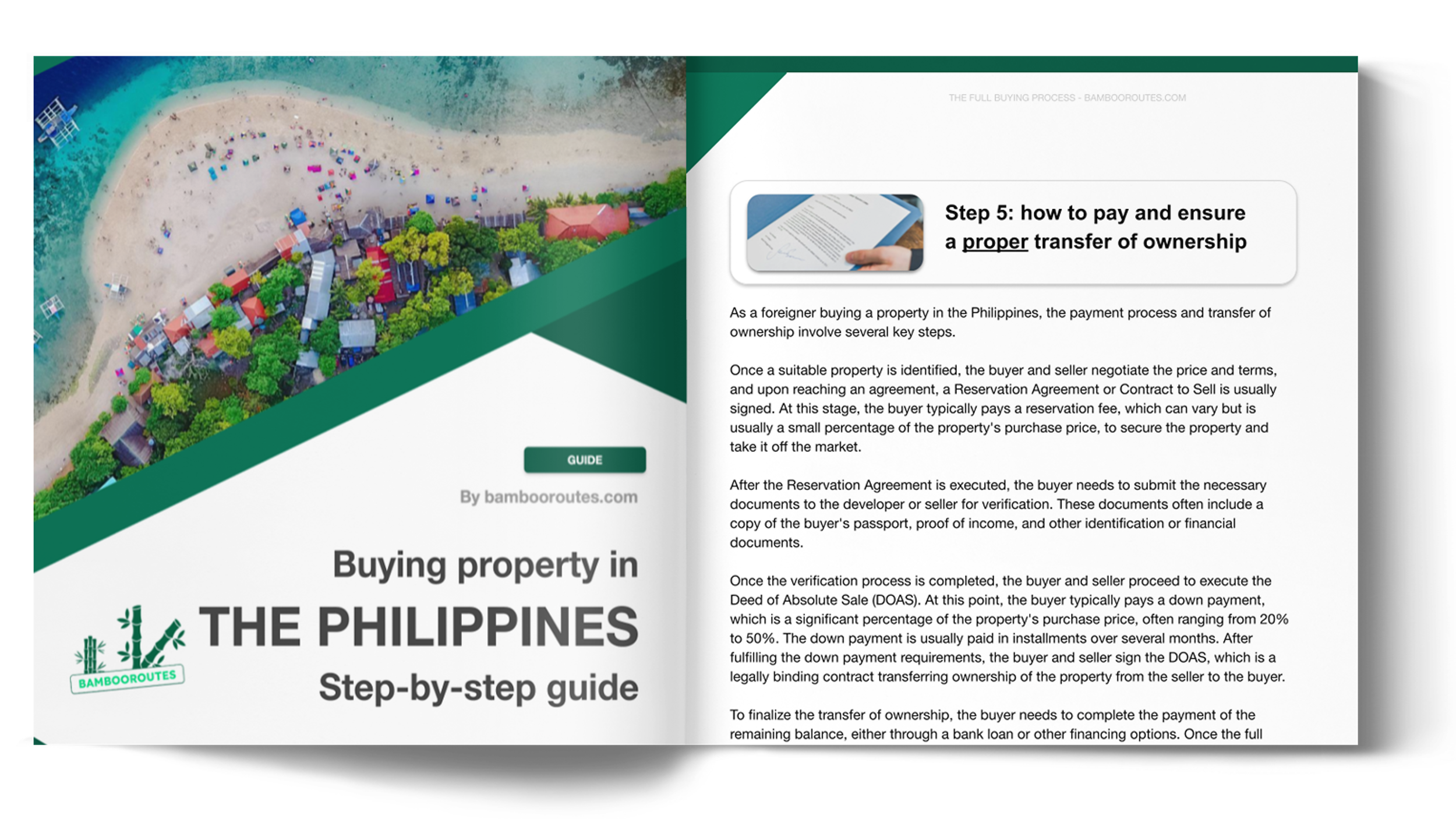
Everything you need to know before buying real estate is included in our The Philippines Property Pack
Mindoro Island in the Philippines offers a unique real estate landscape that attracts foreign buyers looking for beachfront villas, retirement homes, and investment properties.
However, the rules around foreign ownership of property in Mindoro Island are different from what you might expect, and understanding them can save you from costly mistakes.
This blog post covers everything you need to know about buying property as a foreigner in Mindoro Island in 2026, including current housing prices and legal requirements, and we constantly update this content to keep it accurate.
And if you're planning to buy a property in this place, you may want to download our pack covering the real estate market in Mindoro Island.
Insights
- Foreigners cannot own land in Mindoro Island, but they can legally own condominium units as long as foreign ownership in the building stays below 40% of total units.
- Many properties in rural Mindoro Island are sold with only a tax declaration instead of a Torrens title, which creates significantly higher legal risk for buyers.
- The 2025 amendment to the Investors' Lease Act now allows foreign investors to lease private land in Mindoro Island for up to 99 years, providing a practical alternative to ownership.
- Puerto Galera, the most popular destination for foreign buyers on Mindoro Island, has UNESCO biosphere status and stricter zoning rules that can limit what you can build or develop.
- Annual property tax in Mindoro Island typically runs between 0.2% and 0.6% of market value, which is lower than many Western countries.
- Mortgage rates for foreigners buying property in Mindoro Island in 2026 range from approximately 7.5% to 11% per year, depending on your documentation and residency status.
- Closing costs in Mindoro Island can range from 2% to 10% of the purchase price, largely depending on who negotiates to pay the capital gains tax and documentary stamp tax.
- Parts of Mindoro Island fall within Mangyan ancestral domain claims, which means some properties require additional verification through the National Commission on Indigenous Peoples.
- Buying property in Mindoro Island does not automatically grant you residency or citizenship in the Philippines, though programs like the SRRV exist for retirees.

What can I legally buy and truly own as a foreigner in Mindoro Island?
What property types can foreigners legally buy in Mindoro Island right now?
In Mindoro Island in January 2026, foreigners can legally buy condominium units, house structures without the land, and long-term leasehold rights, but they cannot buy land outright in their own name.
The single most important limitation is the Philippine Constitution's restriction on foreign land ownership, which means any deal that puts land directly in a foreigner's name is either illegal or carries serious enforcement risks.
For condominiums specifically, the building or project must maintain at least 60% Filipino ownership, so foreigners can only purchase units up to the 40% foreign ownership cap at the project level.
If you want a house and lot in Mindoro Island, the most common legal structures involve leasing the land long-term while owning the house, or having a Philippine corporation that is at least 60% Filipino-owned hold the land title.
Finally, please note that our pack about the property market in Mindoro Island is specifically tailored to foreigners.
Can I own land in my own name in Mindoro Island right now?
No, as of the first half of 2026, a foreign individual cannot legally own private land in their own name anywhere in Mindoro Island, whether it is a beachfront lot, an agricultural parcel, or a residential subdivision plot.
The most common legal alternative that foreigners use in Mindoro Island is the long-term lease structure, where you sign a lease agreement for the land (now extendable up to 99 years under the 2025 law) while owning the house or improvements built on it.
Another option is to set up or invest in a Philippine corporation that is at least 60% Filipino-owned, which can then legally hold the land title, though this adds complexity and requires careful legal structuring.
By the way, we cover everything there is to know about the land buying process in Mindoro Island here.
As of 2026, what other key foreign-ownership rules or limits should I know in Mindoro Island?
As of early 2026, one key rule that affects purchases in Mindoro Island is that many properties, especially in rural areas, are sold with only a tax declaration rather than a registered Torrens title, which creates additional risk and complexity for foreign buyers.
For condominiums in Mindoro Island, the 40% foreign ownership quota applies at the project or corporation level, meaning you need to verify that the building has not already reached its foreign ownership limit before you can purchase a unit.
Foreign buyers in Mindoro Island should also be aware that property transfers require registration with the Registry of Deeds and payment of various taxes to the Bureau of Internal Revenue, including capital gains tax and documentary stamp tax.
One notable recent change is Republic Act 12252, signed into law in 2025, which extended the maximum lease period for foreign investors from 50 years (plus renewal) to up to 99 years, giving foreigners more security when leasing land in Mindoro Island.
What's the biggest ownership mistake foreigners make in Mindoro Island right now?
The single biggest ownership mistake foreigners make in Mindoro Island is paying a large deposit or full price for a house and lot where the seller only has a tax declaration instead of a clean Torrens title, or where the land is put in a Filipino "nominee's" name through side agreements.
If you make this mistake, the real-world consequence is that you have no legally enforceable ownership, meaning you could lose the entire property if the nominee decides to sell it, passes away, or faces creditors, with little recourse in Philippine courts.
Other classic pitfalls specific to Mindoro Island include skipping verification at the Registry of Deeds, ignoring environmental and zoning restrictions in protected areas like Puerto Galera, and failing to check whether the property sits within Mangyan ancestral domain claims that could affect your rights.
Get fresh and reliable information about the market in Mindoro Island
Don't base significant investment decisions on outdated data. Get updated and accurate information.

Which visa or residency status changes what I can do in Mindoro Island?
Do I need a specific visa to buy property in Mindoro Island right now?
In Mindoro Island in January 2026, you do not need a specific visa to buy property, and you can legally sign a purchase contract and acquire a condominium unit while on a tourist visa, because the restriction is on property type rather than visa category.
However, the most common administrative requirement that can slow down buyers without local residency is the bank's request for an ACR I-Card (Alien Certificate of Registration) and proof of local income or ties when applying for a mortgage.
You will likely need a Philippine Tax Identification Number (TIN) to complete the property registration process smoothly, especially for paying transfer taxes and setting up ongoing tax compliance.
A typical document set that foreign buyers must present in Mindoro Island includes a valid passport, the ACR I-Card if staying long-term, proof of funds or bank statements, and any Special Power of Attorney if you are buying through a representative.
Does buying property help me get residency and citizenship in Mindoro Island in 2026?
As of early 2026, buying property in Mindoro Island does not automatically grant you residency or citizenship in the Philippines, because property ownership and immigration status are legally separate matters.
The Philippines does not have a golden visa or investor visa program where purchasing real estate directly qualifies you for residency, unlike some other countries in Southeast Asia.
If you want residency in the Philippines, the most common pathway for foreign property buyers is the Special Resident Retiree's Visa (SRRV), which requires a deposit starting around USD 20,000 depending on your age, and is administered by the Philippine Retirement Authority rather than through property purchase.
We give you all the details you need about the different pathways to get residency and citizenship in Mindoro Island here.
Can I legally rent out property on my visa in Mindoro Island right now?
Your visa status in Mindoro Island does not typically restrict your ability to rent out property you legally own, such as a condominium unit, because the right to earn rental income comes from property ownership rather than immigration category.
You do not need to live in the Philippines to rent out your property in Mindoro Island, and many foreign owners manage their rentals remotely through local property managers or agents.
However, foreign owners must register their rental business with the local government unit, obtain a Tax Identification Number, and comply with Bureau of Internal Revenue withholding requirements, which typically involve paying tax on gross rental income at rates that can reach 25% for non-residents.
Get to know the market before buying a property in Mindoro Island
Better information leads to better decisions. Get all the data you need before investing a large amount of money.
How does the buying process actually work step-by-step in Mindoro Island?
What are the exact steps to buy property in Mindoro Island right now?
The standard sequence to buy property in Mindoro Island involves reserving the property, conducting due diligence on the title, signing a Contract to Sell, making payments, executing the Deed of Absolute Sale, notarizing the deed, paying transfer taxes, and registering with the Registry of Deeds to receive your new title.
You do not need to be physically present for most steps in Mindoro Island, because you can execute a Special Power of Attorney (SPA) that authorizes a trusted representative to sign documents and handle registrations on your behalf.
The step that typically makes the deal legally binding for both parties in Mindoro Island is the signing of the Contract to Sell or Contract of Absolute Sale, which locks in the price and terms and creates enforceable obligations.
From accepted offer to final title transfer, the typical timeline in Mindoro Island ranges from 2 to 6 months, depending on how quickly you can complete due diligence, secure financing if needed, and process the registration through government offices.
We have a document entirely dedicated to the whole buying process our pack about properties in Mindoro Island.
Is it mandatory to get a lawyer or a notary to buy a property in Mindoro Island right now?
In Mindoro Island, using a notary is effectively mandatory because the Deed of Absolute Sale must be notarized before the Registry of Deeds will accept it for registration, while hiring a lawyer is not legally required but is strongly recommended for foreign buyers.
The key difference in Mindoro Island is that a notary's role is limited to verifying identities and authenticating the document, while a lawyer can review the contract terms, conduct title searches, check for encumbrances, and advise you on the legal structure of your purchase.
One key item that should be explicitly included in your lawyer's engagement scope when buying property in Mindoro Island is a thorough title verification at the Registry of Deeds, including checking for liens, adverse claims, and whether the property falls within any protected or ancestral domain areas.
Make a profitable investment in Mindoro Island
Better information leads to better decisions. Save time and money. Download our data.
What checks should I run so I don't buy a problem property in Mindoro Island?
How do I verify title and ownership history in Mindoro Island right now?
The official registry you should use to verify title and ownership history in Mindoro Island is the Registry of Deeds, which you can access through the Land Registration Authority eSerbisyo portal to request certified documents.
The single key document you should request to confirm ownership in Mindoro Island is a Certified True Copy (CTC) of the Transfer Certificate of Title (TCT) for land or the Condominium Certificate of Title (CCT) for condo units, which shows the registered owner and any encumbrances.
A realistic look-back period for ownership history checks that buyers commonly use in Mindoro Island is 10 to 15 years, which helps you identify any disputes, multiple transfers, or irregularities that might indicate problems.
One clear red flag that should stop or pause a purchase in Mindoro Island is finding an adverse claim, lis pendens (pending litigation), or unresolved mortgage annotation on the title, which means someone else may have a legal claim to the property.
You will find here the list of classic mistakes people make when buying a property in Mindoro Island.
How do I confirm there are no liens in Mindoro Island right now?
The standard way to confirm there are no liens or encumbrances on a property in Mindoro Island is to request a Certified True Copy of the title from the Registry of Deeds and carefully review the annotations section on the back of the document.
One common type of lien that buyers should specifically ask about in Mindoro Island is an existing mortgage or real estate mortgage, because sellers sometimes try to complete sales before fully paying off their bank loans.
The single best form of written proof that shows lien status in Mindoro Island is the Certified True Copy of the title itself, because all encumbrances, mortgages, adverse claims, and court orders must be annotated on the title to be enforceable against third parties.
How do I check zoning and permitted use in Mindoro Island right now?
The authority you should use to check zoning and permitted use for a property in Mindoro Island is the Municipal or City Planning and Development Office of the local government unit where the property is located.
The single document that typically confirms the zoning classification in Mindoro Island is the Zoning Certification or Land Use Certification issued by the local planning office, which states whether your intended use is allowed on that parcel.
One common zoning pitfall that foreign buyers frequently miss in Mindoro Island, especially around Puerto Galera, is failing to check for shoreline easements, no-build zones, or environmental restrictions that come with the area's UNESCO biosphere designation and can limit development significantly.
Don't buy the wrong property, in the wrong area of Mindoro Island
Buying real estate is a significant investment. Don't rely solely on your intuition. Gather the right information to make the best decision.
Can I get a mortgage as a foreigner in Mindoro Island, and on what terms?
Do banks lend to foreigners for homes in Mindoro Island in 2026?
As of early 2026, yes, some Philippine banks do lend to foreigners for home purchases in Mindoro Island, but the requirements are stricter than for Filipino citizens and not all banks offer this service.
The realistic loan-to-value (LTV) range that foreign borrowers most commonly see in Mindoro Island is 50% to 70%, meaning you should expect to make a down payment of at least 30% to 50% of the purchase price.
The single most common eligibility requirement that determines whether a foreigner qualifies for a mortgage in Mindoro Island is having proof of stable income, which banks prefer to be sourced locally in the Philippines or documented through verifiable international employment.
You can also read our latest update about mortgage and interest rates in The Philippines.
Which banks are most foreigner-friendly in Mindoro Island in 2026?
As of early 2026, the most foreigner-friendly banks for mortgages in Mindoro Island include BDO Unibank, BPI (Bank of the Philippine Islands), and Security Bank, all of which have published housing loan programs and experience working with foreign applicants.
The single most important feature that makes these banks more foreigner-friendly in Mindoro Island is that they have standardized application processes with clear documentation requirements and dedicated housing loan teams that can handle non-standard income verification.
These banks will sometimes lend to non-residents in Mindoro Island, but they typically require additional documentation such as proof of employment or business abroad, foreign income verification, and sometimes a larger down payment or shorter loan term.
We actually have a specific document about how to get a mortgage as a foreigner in our pack covering real estate in Mindoro Island.
What mortgage rates are foreigners offered in Mindoro Island in 2026?
As of early 2026, the typical mortgage interest rate range for foreigners buying property in Mindoro Island is approximately 7.5% to 11% per year, with the lower end available to borrowers with strong documentation and local income, and the higher end for those with less established Philippine financial profiles.
In Mindoro Island, fixed-rate mortgages are typically offered for the first 1 to 5 years at a slightly higher rate, while variable-rate mortgages adjust based on bank reference rates after the fixed period ends, potentially increasing your payments if Philippine interest rates rise.
Get fresh and reliable information about the market in Mindoro Island
Don't base significant investment decisions on outdated data. Get updated and accurate information.
What will taxes, fees, and ongoing costs look like in Mindoro Island?
What are the total closing costs as a percent in Mindoro Island in 2026?
In Mindoro Island in 2026, the typical total closing cost for a property purchase ranges from about 2% to 10% of the purchase price, depending heavily on how buyer and seller negotiate who pays which taxes.
The realistic low-to-high closing cost range that covers most standard transactions in Mindoro Island is 2% to 4% if you only pay the typical buyer-side costs, or 6% to 10% if you end up shouldering transaction taxes that are sometimes shifted to buyers.
The specific fee categories that most commonly make up total closing costs in Mindoro Island include transfer tax (paid to the local government), registration fees (paid to the Registry of Deeds), notarization fees, documentary stamp tax, and capital gains tax.
The single fee category that is usually the biggest contributor to closing costs in Mindoro Island is the capital gains tax, which is technically the seller's responsibility but is sometimes negotiated to be shouldered by the buyer and is calculated at 6% of the selling price or zonal value, whichever is higher.
What annual property tax should I budget in Mindoro Island in 2026?
As of early 2026, the typical annual property tax budget for a standard residential property in Mindoro Island ranges from about 0.2% to 0.6% of the market value, which for a PHP 5,000,000 home (approximately USD 90,000 or EUR 82,000) means roughly PHP 10,000 to PHP 30,000 per year (USD 180 to USD 540, or EUR 165 to EUR 495).
Annual property tax in Mindoro Island is assessed as a percentage of the property's assessed value, which is typically set well below market value by the local assessor's office, with the actual tax rate determined by the local government unit under the framework of the Local Government Code.
How is rental income taxed for foreigners in Mindoro Island in 2026?
As of early 2026, the typical effective tax rate on rental income for foreign property owners in Mindoro Island who are classified as non-resident aliens not engaged in trade or business is 25% of gross rental income, with no deductions allowed.
The basic requirement that foreign owners must follow for rental income in Mindoro Island is that tenants or property managers are typically required to withhold the tax at source and remit it to the Bureau of Internal Revenue, so you may receive your rent already net of the withholding tax.
What insurance is common and how much in Mindoro Island in 2026?
As of early 2026, the typical annual insurance premium for a standard home policy in Mindoro Island ranges from about 0.2% to 0.6% of the insured value, which for a PHP 5,000,000 property (approximately USD 90,000 or EUR 82,000) means roughly PHP 10,000 to PHP 30,000 per year (USD 180 to USD 540, or EUR 165 to EUR 495).
The most common type of property insurance coverage that owners carry in Mindoro Island is fire insurance, which is often required by banks if you have a mortgage, and many owners add typhoon, windstorm, and earthquake extensions given the Philippines' exposure to natural disasters.
The biggest factor that usually makes insurance premiums higher or lower for the same property type in Mindoro Island is location, because coastal properties and those in flood-prone areas near Puerto Galera or along rivers pay significantly more than inland properties on higher ground.
Get to know the market before buying a property in Mindoro Island
Better information leads to better decisions. Get all the data you need before investing a large amount of money.
What sources have we used to write this blog article?
Whether it's in our blog articles or the market analyses included in our property pack about Mindoro Island, we always rely on the strongest methodology we can ... and we don't throw out numbers at random.
We also aim to be fully transparent, so below we've listed the authoritative sources we used, and explained how we used them and the methods behind our estimates.
| Source | Why It's Authoritative | How We Used It |
|---|---|---|
| Supreme Court E-Library | Official judiciary repository hosting the Philippine Constitution. | We used it to establish the constitutional restriction on foreign land ownership. We anchored all ownership rules on this primary source. |
| LawPhil | Widely used Philippine legal repository with full statute texts. | We referenced the Condominium Act, Investors' Lease Act, Local Government Code, and IPRA. We used these to explain legal structures available to foreigners. |
| Bangko Sentral ng Pilipinas | Philippine central bank publishing official interest rate data. | We used their weekly lending rates to estimate baseline mortgage costs. We adjusted for foreigner-specific factors based on bank practices. |
| Bureau of Internal Revenue | Official tax authority explaining Philippine tax rules. | We used their pages on capital gains tax, documentary stamp tax, and non-resident taxation. We built our closing cost and rental tax estimates from these sources. |
| Land Registration Authority | Official portal for requesting and verifying title documents. | We used it to explain the title verification process for buyers. We anchored due diligence steps on what you can actually request from the Registry of Deeds. |
| Bureau of Immigration Philippines | Official immigration authority for visa and registration rules. | We used their ACR I-Card page to explain documentation requirements. We connected immigration status to practical banking and registration friction. |
| Philippine Retirement Authority | Official agency administering the SRRV residency program. | We used their SRRV page to explain residency options for foreigners. We clarified that property ownership does not directly grant residency. |
| UNESCO | International organization with formal biosphere designations. | We used their Puerto Galera Biosphere Reserve documentation. We highlighted the environmental sensitivity that affects zoning and development in that area. |
| UNCTAD Investment Policy Monitor | UN body tracking investment policy changes with citations. | We used it to corroborate the 2025 lease extension policy. We triangulated their summary with the actual RA 12252 statute text. |
| BDO Unibank | Largest Philippine bank with published housing loan products. | We reviewed their home loan requirements page. We used it to identify foreigner-friendly mortgage options in Mindoro Island. |
| Bank of the Philippine Islands | Major Philippine bank with clear housing loan documentation. | We consulted their housing loan requirements page. We used it to verify typical documentation needs for foreign borrowers. |
| Security Bank | Philippine bank with transparent mortgage requirement pages. | We reviewed their home loan requirements. We included them as a foreigner-friendly option based on their published processes. |
Make a profitable investment in Mindoro Island
Better information leads to better decisions. Save time and money. Download our data.
Related blog posts