
Authored by the expert who managed and guided the team behind the Philippines Property Pack
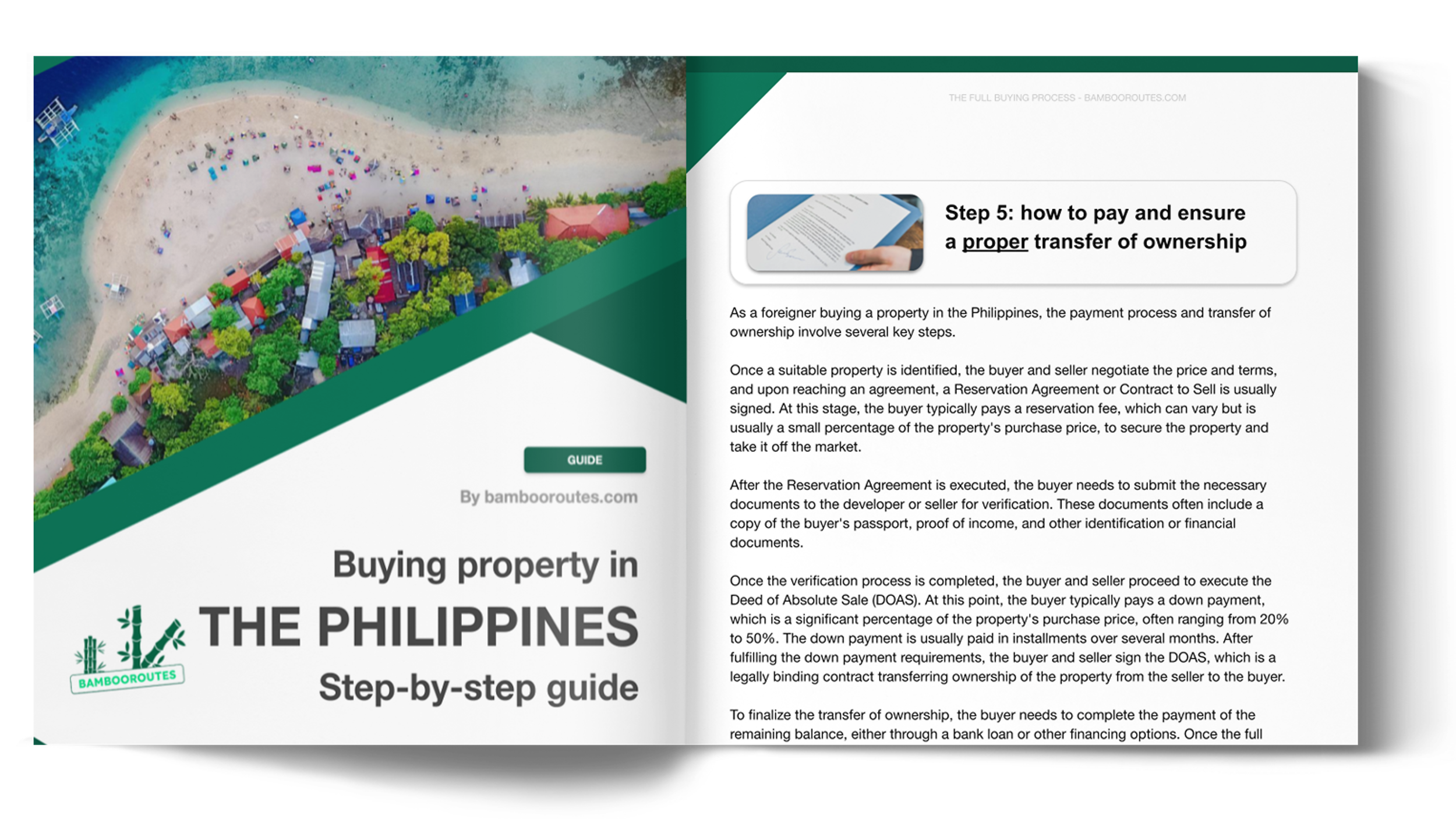
Everything you need to know before buying real estate is included in our The Philippines Property Pack
Mindoro Island offers expats a rare combination of nature, slower pace, and affordability that is hard to find elsewhere in the Philippines.
This guide covers everything you need to know about living in Mindoro Island in 2026, from cost of living and healthcare to visas and property ownership.
We constantly update this blog post to reflect the latest changes in regulations, prices, and local conditions.
And if you're planning to buy a property in this place, you may want to download our pack covering the real estate market in Mindoro Island.

Is Mindoro Island a good place to live in 2026?
Is quality of life getting better or worse in Mindoro Island in 2026?
As of early 2026, the quality of life in Mindoro Island is on a slightly improving trajectory, mainly because the regional economy is growing and basic services are expanding, though the island remains vulnerable to weather disruptions.
The factor that has improved the most in Mindoro Island over the past two to three years is the growth of the services sector and local commerce, especially around Calapan City and Puerto Galera, which has brought more shops, restaurants, and employment options to the island.
However, the most persistent challenge remains storm season disruptions, as typhoons regularly affect ferry schedules, power supply, and supply chains across Mindoro Island, making planning ahead a necessity for residents.
Are hospitals good in Mindoro Island in 2026?
As of early 2026, hospitals in Mindoro Island provide adequate care for everyday medical needs such as consultations, routine labs, and basic emergencies, but they do not match Western European or North American standards for complex or specialized procedures.
Expats on Mindoro Island most commonly use Oriental Mindoro Provincial Hospital in Calapan City for general care, while some also visit St. Luke's Medical Center in Metro Manila for advanced treatments requiring a trip off the island.
A standard doctor consultation in Mindoro Island typically costs between 400 and 900 pesos for a general practitioner (around 7 to 15 USD or 6 to 13 EUR), and between 800 and 2,000 pesos for a specialist (around 14 to 34 USD or 11 to 29 EUR).
Private health insurance is strongly recommended for expats living in Mindoro Island, especially for coverage of evacuations, tertiary care in Manila, or hospitalization, because PhilHealth alone does not fully cover high-end medical needs or out-of-network costs.
Are there any good international schools in Mindoro Island in 2026?
As of early 2026, Mindoro Island has very few schools that meet the classic international school definition with IB, IGCSE, or US/UK curriculum, making it one of the island's biggest constraints for expat families with children.
The most reputable options for expat families on Mindoro Island are strong local private schools in Calapan City, such as Divine Word College of Calapan for higher education, and for K-12, families often choose private institutions listed on the DepEd Oriental Mindoro schools directory, though true international schools are located off-island in Manila or Batangas.
Tuition fees for local private schools in Mindoro Island typically range from 25,000 to 120,000 pesos per year (around 425 to 2,000 USD or 360 to 1,700 EUR), while international schools in Manila can cost 300,000 to 1,200,000 pesos per year (around 5,000 to 20,000 USD or 4,300 to 17,000 EUR).
Waitlists for local private schools in Mindoro Island are generally shorter than in Metro Manila, but popular schools in Calapan City can have bottlenecks at key entry grades, and public schools are an option but vary widely in quality and English instruction.
Is Mindoro Island a dangerous place in 2026?
As of early 2026, Mindoro Island is generally considered a safe place to live by Philippine standards, with crime rates in the broader MIMAROPA region having declined in recent reporting periods, though standard precautions are still advisable.
The most common safety concerns expats should be aware of in Mindoro Island include petty theft in less-trafficked areas, isolated road conditions in mountainous zones, and the risk of transport or power disruptions during typhoon season rather than violent crime.
The safest neighborhoods for expats to live in Mindoro Island include the central areas of Calapan City near government offices and malls, and established tourist zones like Sabang, White Beach, Aninuan, and Talipanan in Puerto Galera, where foot traffic and tourism-oriented security are higher.
Women can generally live alone safely in Mindoro Island, especially in well-lit, walkable areas of Calapan City or busy tourist spots in Puerto Galera, though common precautions like avoiding isolated hillside rentals and keeping access to reliable transportation are recommended.
Thinking of buying real estate in Mindoro Island?
Acquiring property in a different country is a complex task. Don't fall into common traps – grab our guide and make better decisions.

How much does everyday life cost in Mindoro Island in 2026?
What monthly budget do I need to live well in Mindoro Island in 2026?
As of early 2026, a single expat in Mindoro Island typically needs between 55,000 and 95,000 pesos per month to live comfortably (around 930 to 1,600 USD or 790 to 1,360 EUR), depending on location and lifestyle choices.
For a modest but decent lifestyle in Mindoro Island, a realistic monthly budget ranges from 55,000 to 70,000 pesos for a single person (around 930 to 1,190 USD or 790 to 1,000 EUR), covering basic rent, local food, utilities, and transport without many extras.
For a more comfortable or upscale lifestyle in Mindoro Island, expect to spend between 90,000 and 150,000 pesos per month for a couple (around 1,525 to 2,540 USD or 1,290 to 2,140 EUR), which includes better housing, dining out, and occasional travel or entertainment.
Housing is typically the largest expense in Mindoro Island, with significant price variation between a basic apartment in Calapan City and beachfront rentals in Puerto Galera, followed by electricity costs that can spike when running air conditioning or backup generators during outages.
What is the average income tax rate in Mindoro Island in 2026?
As of early 2026, the effective income tax rate for a typical middle-income earner in the Philippines (and Mindoro Island) ranges from about 8% to 20%, depending on income level, because the tax system is progressive and your average rate is much lower than the top marginal bracket.
The income tax bracket range in the Philippines starts at 0% for annual income up to 250,000 pesos, then increases progressively through brackets of 15%, 20%, 25%, 30%, and up to 35% for the highest earners above 8,000,000 pesos per year.
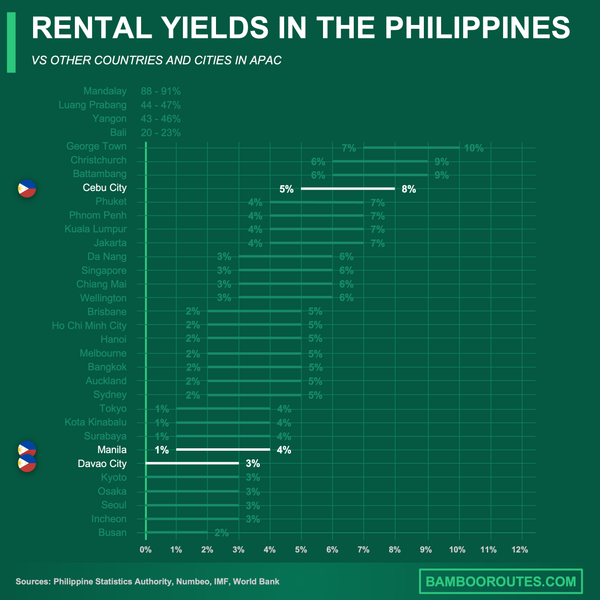
We did some research and made this infographic to help you quickly compare rental yields of the major cities in the Philippines versus those in neighboring countries. It provides a clear view of how this country positions itself as a real estate investment destination, which might interest you if you’re planning to invest there.
What kind of foreigners actually live in Mindoro Island in 2026?
Where do most expats come from in Mindoro Island in 2026?
As of early 2026, the top countries of origin for expats living in Mindoro Island include the United States, South Korea, China, Australia, and various Western European nations, reflecting the island's appeal to both retirees and tourism-linked long-stayers.
The approximate total number of registered foreign residents in Mindoro Island is difficult to pinpoint exactly, but estimates suggest several hundred to a few thousand, concentrated mainly in Puerto Galera's tourism zones and Calapan City.
The main reason expats from these origin countries are drawn to Mindoro Island is the combination of low cost of living, proximity to world-class diving in Puerto Galera, and the relatively easy access to Manila by ferry and land transport.
The expat population in Mindoro Island is predominantly a mix of retirees taking advantage of the SRRV visa program, small business owners in tourism and hospitality, and a smaller number of digital nomads and working professionals.
Where do most expats live in Mindoro Island in 2026?
As of early 2026, the top neighborhoods where expats concentrate in Mindoro Island are Sabang, White Beach, Aninuan, and Talipanan in Puerto Galera, as well as the central areas of Calapan City near the port and provincial offices.
These neighborhoods attract expats in Mindoro Island mainly because they offer a combination of reliable services, established tourism infrastructure, and community density, along with easy access to diving, beaches, and basic amenities like grocery stores and restaurants.
Emerging areas starting to attract more expats in Mindoro Island include quieter coastal barangays between Puerto Galera and Calapan, as well as San Jose in Occidental Mindoro for those seeking a more off-the-beaten-path lifestyle with lower costs.
Are expats moving in or leaving Mindoro Island in 2026?
As of early 2026, the expat migration trend in Mindoro Island appears to be relatively stable with steady churn, meaning some newcomers arrive while others leave, rather than a dramatic inflow or outflow.
The main factor driving expats to move to Mindoro Island right now is the appeal of affordable beachside living, world-class diving in Puerto Galera, and the relatively straightforward long-stay visa options like the SRRV.
The main factor causing some expats to leave Mindoro Island recently is the limited access to advanced healthcare and international schooling, which pushes families or those with complex medical needs toward larger cities like Manila or Cebu.
Compared to similar destinations in the region such as Palawan, Cebu, or Bohol, Mindoro Island sees somewhat lower expat density but benefits from its proximity to Metro Manila, making it appealing for those who want island life without being too far from urban conveniences.
Get fresh and reliable information about the market in Mindoro Island
Don't base significant investment decisions on outdated data. Get updated and accurate information with our guide.
What paperwork do I need to move to Mindoro Island in 2026?
What visa options are popular in Mindoro Island in 2026?
As of early 2026, the three most popular visa types for expats moving to Mindoro Island (and the Philippines in general) are the Special Resident Retiree's Visa (SRRV) for long-term stays, the 9(g) Pre-arranged Employment Visa for those with job offers, and the 13(a) Non-Quota Immigrant Visa for those married to Filipino citizens.
The main eligibility requirements for the SRRV, the most commonly used expat visa, include being at least 40 years old (as of September 2025), placing a refundable deposit of 15,000 to 50,000 USD depending on age and pension status, and providing a clean criminal record and health clearance.
The Philippines does not currently offer a dedicated digital nomad visa, but many remote workers use extended tourist visas (renewable up to 36 months) or qualify for the SRRV if they meet the age and deposit requirements.
The SRRV provides indefinite validity with multiple entry privileges, requiring only an annual fee of 360 USD to maintain, while tourist visa extensions must be renewed every one to two months at a Bureau of Immigration office.
How long does it take to get residency in Mindoro Island in 2026?
As of early 2026, the typical processing time to obtain an SRRV or other long-stay residency status in the Philippines is between two and six months once all documents are complete, though this can vary based on agency workload and individual circumstances.
Common factors that can delay the residency application process in Mindoro Island include incomplete documentation, slow authentication of foreign documents, backlogs at the Bureau of Immigration, or additional scrutiny for applicants from certain jurisdictions.
For expats seeking permanent residency or citizenship in the Philippines, the general pathway requires continuous legal residence for at least 10 years (or 5 years if married to a Filipino citizen) before becoming eligible to apply for naturalization.
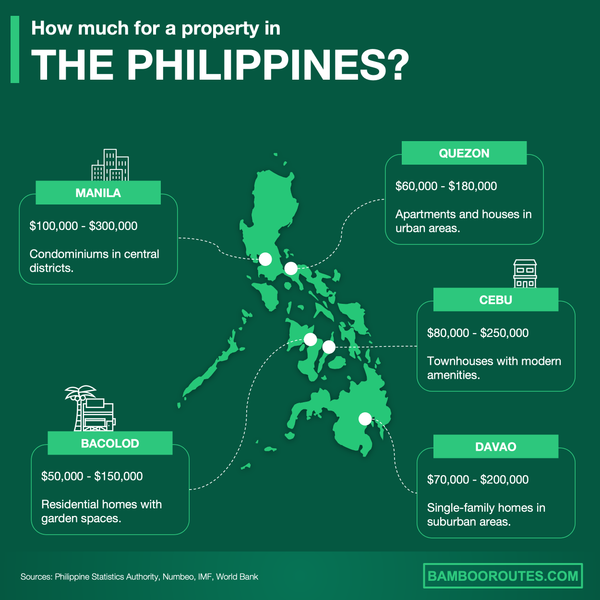
We created this infographic to give you a simple idea of how much it costs to buy property in different parts of the Philippines. As you can see, it breaks down price ranges and property types for popular cities in the country. We hope this makes it easier to explore your options and understand the market.
How hard is it to find a job in Mindoro Island in 2026?
Which industries are hiring the most in Mindoro Island in 2026?
As of early 2026, the top three industries currently hiring the most in Mindoro Island are tourism and hospitality (especially in Puerto Galera), retail and logistics centered around Calapan City as the regional gateway, and agriculture and fisheries throughout the island's rural areas.
Getting hired in Mindoro Island without speaking Filipino or Tagalog is realistic mainly in tourism-facing roles, foreign-owned businesses, or remote work positions, but most locally hired jobs require at least basic conversational skills in the local language.
The types of roles most accessible to foreign job seekers in Mindoro Island include dive instructors, resort managers, English teachers, hospitality consultants, and remote or freelance positions that do not require local employment sponsorship.
What salary ranges are common for expats in Mindoro Island in 2026?
As of early 2026, the typical salary range for expats working in Mindoro Island is between 50,000 and 150,000 pesos per month (around 850 to 2,540 USD or 715 to 2,140 EUR), with higher pay possible in senior or specialized roles.
Entry-level or mid-level expat positions in Mindoro Island, such as dive instructors or junior hospitality staff, typically pay between 30,000 and 60,000 pesos per month (around 510 to 1,020 USD or 430 to 860 EUR).
Senior or specialized expat roles in Mindoro Island, such as resort general managers, business owners, or consultants, can earn between 100,000 and 200,000 pesos per month or more (around 1,700 to 3,400 USD or 1,430 to 2,860 EUR), depending on the business.
Employers in Mindoro Island sponsor work visas less frequently than in Metro Manila, simply because fewer businesses are set up for the formal 9(g) sponsorship process, so many expats work remotely or run their own ventures instead.
Get to know the market before buying a property in Mindoro Island
Better information leads to better decisions. Get all the data you need before investing a large amount of money. Download our guide.
What's daily life really like for expats in Mindoro Island right now?
What do expats love most about living in Mindoro Island right now?
Expats in Mindoro Island love the stunning natural environment, the relaxed island pace of life, and the strong sense of community that develops in smaller towns like Puerto Galera and Calapan City.
The lifestyle benefit most frequently praised by expats in Mindoro Island is the access to world-class diving and beaches just minutes away, combined with the ability to enjoy a quieter, less commercialized version of tropical living than places like Boracay or Cebu.
The practical advantage expats appreciate most in Mindoro Island is the significantly lower cost of living compared to Metro Manila, allowing for a comfortable lifestyle on a modest budget, especially for retirees or remote workers.
The social and cultural aspect that makes Mindoro Island particularly enjoyable for expats is the warm Filipino hospitality and the tight-knit expat communities in Puerto Galera, where newcomers are quickly welcomed and integrated into local social circles.
What do expats dislike most about life in Mindoro Island right now?
The top complaints expats have about living in Mindoro Island include typhoon season disruptions that affect ferries and power, the need to travel off-island for specialized healthcare or advanced medical procedures, and limited international schooling options for families with children.
The daily inconvenience that frustrates expats the most in Mindoro Island is the unreliable power supply and internet connectivity during storms or peak periods, which can disrupt remote work and daily routines, making backup generators and mobile data essential.
The bureaucratic issue that causes the most headaches for expats in Mindoro Island is the need to periodically travel to Manila or Batangas for visa extensions, document processing, or specialized government services not available locally.
For most expats, these frustrations are manageable rather than deal-breakers, especially for those who embrace the island lifestyle and plan ahead for healthcare, schooling, and storm season contingencies.
What are the biggest culture shocks in Mindoro Island right now?
The biggest culture shocks expats experience when moving to Mindoro Island include the slower "island time" pace where schedules are flexible, the deep integration of family and community into daily decisions, and the need to plan ahead for supplies and services that are not available locally.
The social norm that surprises newcomers the most in Mindoro Island is the indirect communication style, where Filipinos often avoid direct refusals or confrontation, which can be confusing for expats accustomed to more straightforward interactions.
The aspect of daily routines that takes the longest for expats to adjust to in Mindoro Island is the reliance on ferry schedules, weather conditions, and local festivals, which can dictate travel plans and daily activities far more than clock time or office hours.

We made this infographic to show you how property prices in the Philippines compare to other big cities across the region. It breaks down the average price per square meter in city centers, so you can see how cities stack up. It’s an easy way to spot where you might get the best value for your money. We hope you like it.
Can I buy a home as a foreigner in Mindoro Island in 2026?
Can foreigners legally own property in Mindoro Island in 2026?
As of early 2026, foreign property ownership in Mindoro Island (and the Philippines generally) is restricted, meaning foreigners cannot own land outright but can own condominium units in buildings where foreign ownership does not exceed 40% of the total units.
The specific restrictions that apply to foreigners buying property in Mindoro Island include the prohibition on land ownership, which means house-and-lot purchases typically require a Filipino spouse or a long-term lease arrangement (up to 50 years, renewable for another 25).
Foreigners in Mindoro Island can legally own condominium units subject to the 40% cap, but they cannot own standalone houses with land, agricultural land, or beachfront lots unless they use approved structures like a corporation with majority Filipino ownership or marry a Filipino citizen.
By the way, we've written a blog article detailing the whole property buying process for foreigners in Mindoro Island.
What is the average price per m² in Mindoro Island in 2026?
As of early 2026, the average price per square meter for residential land in Mindoro Island ranges from about 5,000 to 20,000 pesos in provincial town areas (around 85 to 340 USD or 70 to 285 EUR), while prime tourism zones in Puerto Galera can reach 20,000 to 60,000 pesos per square meter (around 340 to 1,020 USD or 285 to 860 EUR) or higher for beachfront locations.
Property prices in Mindoro Island have trended upward over the past two to three years, driven by growing interest from domestic tourists and expats, infrastructure improvements, and speculation about a future bridge connecting Batangas to Puerto Galera, though prices remain well below Metro Manila levels.
Do banks give mortgages to foreigners in Mindoro Island in 2026?
As of early 2026, mortgages for foreigners in the Philippines (including Mindoro Island) are available but limited, typically requiring the borrower to hold a long-term visa like the SRRV or 13(a), and often a Filipino co-borrower or guarantor.
Banks in the Philippines known to offer mortgages to foreigners with the right visa status include BDO, which is the country's largest bank, and BPI, which is known for flexible terms and reliable customer support.
Typical mortgage conditions for foreigners in the Philippines include a down payment of 20% to 30%, interest rates ranging from 6% to 9.5% for the first few years (subject to repricing), and maximum loan terms of 10 to 20 years depending on the property type.
To qualify for a mortgage in Mindoro Island, foreigners typically need to provide their passport, Alien Certificate of Registration (ACR), valid long-term visa, proof of income or employment, and documents related to the property purchase.
You can also read our latest update about mortgage and interest rates in The Philippines.
Buying real estate in Mindoro Island can be risky
An increasing number of foreign investors are showing interest. However, 90% of them will make mistakes. Avoid the pitfalls with our comprehensive guide.

What sources have we used to write this blog article?
Whether it's in our blog articles or the market analyses included in our property pack about Mindoro Island, we always rely on the strongest methodology we can … and we don't throw out numbers at random.
We also aim to be fully transparent, so below we've listed the authoritative sources we used, and explained how we used them and the methods behind our estimates.
| Source | Why it's authoritative | How we used it |
|---|---|---|
| Philippine Statistics Authority via PIA | PSA is the official statistics agency of the Philippines. | We used it to understand Mindoro Island's economic context through MIMAROPA regional data. We translated those figures into practical insights about jobs and local services. |
| Bangko Sentral ng Pilipinas | BSP is the central bank and official source for inflation data. | We used it to frame purchasing power expectations and inflation trends for 2026. We applied this to estimate realistic cost of living figures. |
| Bureau of Internal Revenue | BIR is the tax authority for Philippine income tax rules. | We used it to describe income tax brackets and effective rates for expat employees. We verified all tax figures against official BIR guidance. |
| DOH MIMAROPA | DOH is mandated to regulate and license all health facilities. | We used it to verify which hospitals on Mindoro Island are officially licensed. We referenced specific facilities expats commonly use. |
| Philippine Retirement Authority | PRA administers the SRRV long-stay retiree visa program. | We used it to outline visa deposit requirements and eligibility criteria. We cited official PRA deposit tiers rather than hearsay numbers. |
| Bureau of Immigration | BI is the issuing authority for all Philippine visas. | We used it to describe the 9(g) work visa and other immigration pathways. We kept paperwork guidance aligned with official BI categories. |
| DepEd Oriental Mindoro | DepEd is the national education regulator with official school lists. | We used it to confirm what K-12 schools exist locally on Mindoro Island. We explained why true international schools are limited on-island. |
| PAGASA | PAGASA is the national weather agency for cyclone information. | We used it to explain typhoon seasonality and weather risks on Mindoro Island. We applied this to practical advice about storm preparedness. |
| Philippine News Agency | PNA is the state newswire citing official police statistics. | We used it to anchor safety discussions in reported crime data for MIMAROPA. We avoided anecdotal claims by referencing measured trends. |
| BIR Zonal Values | Zonal values are official BIR reference valuations for property tax. | We used it as the most defensible price-per-m² proxy for Mindoro Island. We triangulated with live listings to sanity-check our ranges. |
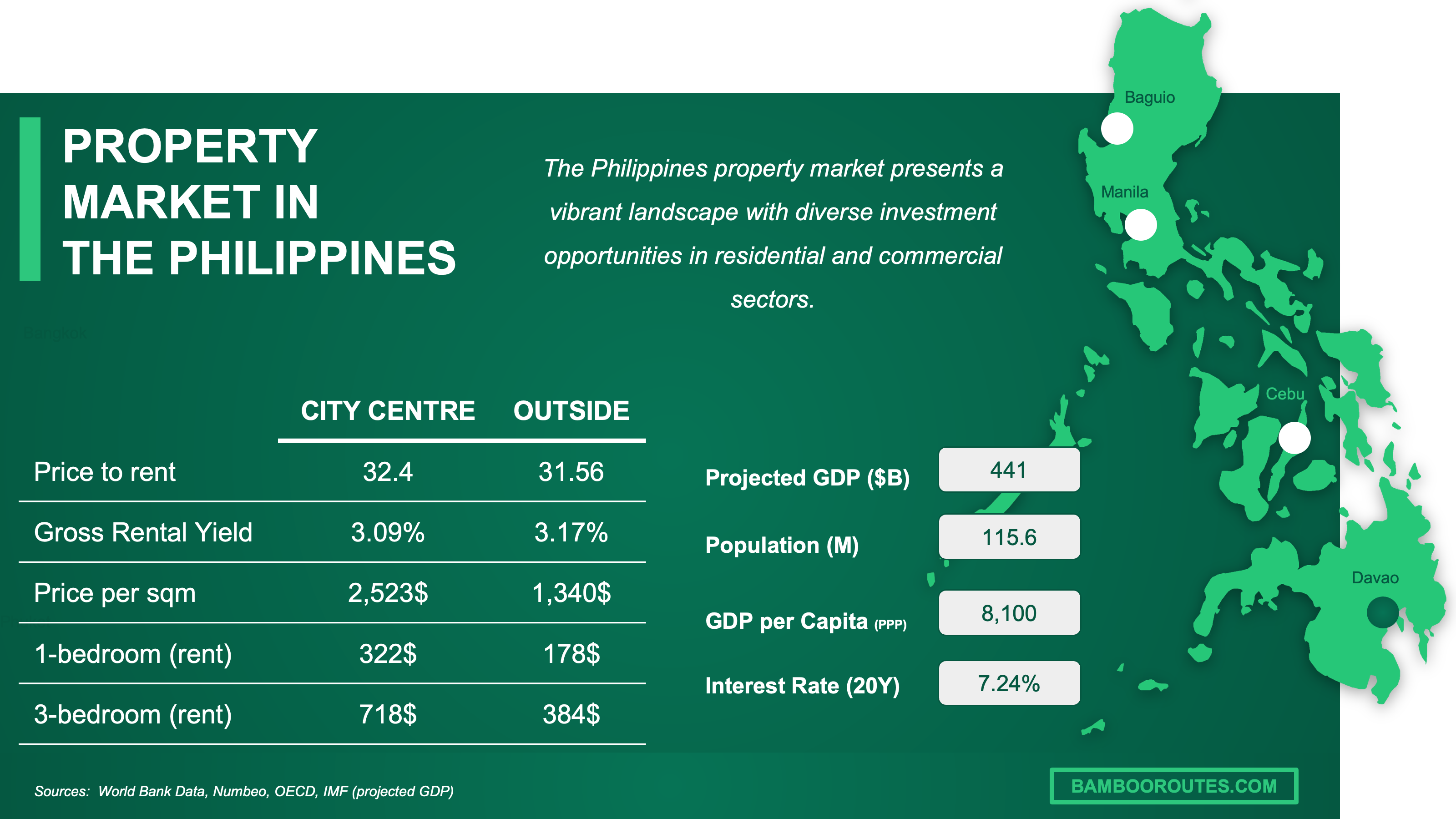
We have made this infographic to give you a quick and clear snapshot of the property market in the Philippines. It highlights key facts like rental prices, yields, and property costs both in city centers and outside, so you can easily compare opportunities. We’ve done some research and also included useful insights about the country’s economy, like GDP, population, and interest rates, to help you understand the bigger picture.
Related blog posts