
Authored by the expert who managed and guided the team behind the Myanmar Property Pack
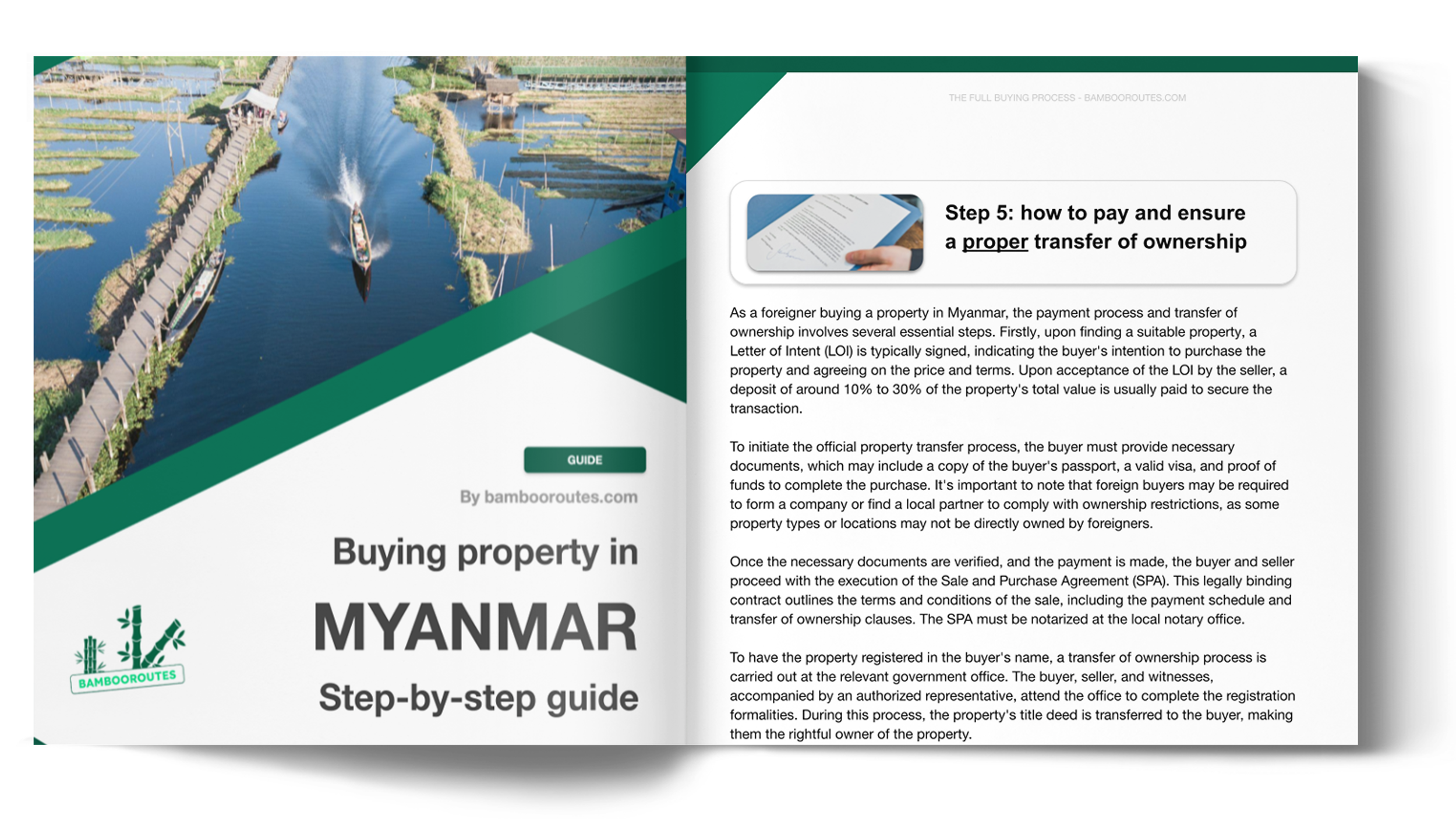
Everything you need to know before buying real estate is included in our Myanmar Property Pack
If you're thinking about retiring in Myanmar, you're probably wondering how much money you actually need to live there comfortably.
This guide breaks down the real costs of living in Myanmar in 2026, from the minimum survival budget to luxury retirement, with current housing prices and practical budget breakdowns.
We constantly update this blog post to reflect the latest data on Myanmar's cost of living, exchange rates, and property prices.
And if you're planning to buy a property in this place, you may want to download our pack covering the real estate market in Myanmar.

How much money do I need to retire in Myanmar right now?
What's the absolute minimum monthly budget to survive in Myanmar?
The absolute minimum monthly budget for a foreign retiree to survive in Myanmar in 2026 is around 4,000,000 MMK, which works out to approximately $800 USD or 770 EUR at current exchange rates.
This basic budget in Myanmar covers a simple local-standard apartment rental (around $150 to $300), local food with some imported basics, utilities including internet and phone, basic transportation, and routine healthcare at private clinics.
Living on this minimum budget in Myanmar means accepting frequent power outages without backup generators, limited imported goods, staying in basic housing outside expat-preferred neighborhoods, and having little buffer for emergencies or inflation spikes that are common in the country.
What lifestyle do I get with $2,000/month in Myanmar in 2026?
As of early 2026, a budget of $2,000 per month (around 10,000,000 MMK) in Myanmar gives you a comfortable expat-lite lifestyle in Yangon, or a very comfortable life in smaller cities like Mandalay or Bagan.
On $2,000 per month in Myanmar, you can afford a good one-bedroom or modest two-bedroom apartment in popular Yangon townships like Sanchaung, Kamaryut, Yankin, or Bahan, typically costing between $400 and $900 USD (385 to 865 EUR) depending on whether the building has reliable backup power.
This budget allows you to eat out regularly at both local restaurants and mid-range international spots, use air conditioning freely, enjoy reliable internet, and participate in social activities like joining expat groups, visiting pagodas, or exploring weekend markets without constantly watching your wallet.
The main limitation at $2,000 per month in Myanmar is that you'll need to be selective about imported goods and may not have the cushion to handle major medical emergencies locally, meaning you'd still need to plan for potential medical travel to Bangkok or Singapore for serious health issues.
What lifestyle do I get with $3,000/month in Myanmar in 2026?
As of early 2026, a budget of $3,000 per month (around 15,000,000 MMK) in Myanmar provides a comfortable-plus lifestyle with meaningful upgrades in housing quality, dining options, and financial peace of mind.
At $3,000 per month in Myanmar, you can rent a higher-quality condo or serviced apartment in desirable Yangon neighborhoods like Bahan, Golden Valley, Yankin, or Mayangone, typically ranging from $900 to $1,400 USD (865 to 1,345 EUR), often including reliable generator backup and better amenities.
This budget opens up regular dining at international restaurants, more imported groceries, weekend trips to Inle Lake or Ngapali Beach, and the ability to use taxis or ride-hailing services freely without thinking twice about the cost.
The key upgrade from $2,000 to $3,000 per month in Myanmar is the ability to absorb inflation spikes and unexpected costs without immediately downgrading your lifestyle, plus you can afford a solid international health insurance plan that covers regional medical evacuation.
What lifestyle do I get with $5,000/month in Myanmar in 2026?
As of early 2026, $5,000 per month (around 25,000,000 MMK) in Myanmar provides a high-end expat lifestyle in Yangon, while $10,000 per month (around 50,000,000 MMK) delivers true luxury with premium services and complete convenience.
At $5,000 per month, you can access top-tier serviced apartments in Yangon's most desirable areas like Bahan or Golden Valley at $1,500 to $2,500 USD (1,440 to 2,400 EUR), while $10,000 per month opens up premium serviced residences, full-time household help, and the option to maintain multiple residences.
In the $5,000 to $10,000 per month range in Myanmar, you gain access to international-quality dining whenever you want, a personal driver on demand, comprehensive health insurance with Singapore or Bangkok hospital networks, frequent regional travel, and the ability to simply pay your way around Myanmar's infrastructure challenges like power outages and water reliability.
How much for a "comfortable" retirement in Myanmar in 2026?
As of early 2026, a comfortable retirement in Myanmar requires a monthly budget of around 12,500,000 to 17,500,000 MMK, which translates to $2,500 to $3,500 USD or 2,400 to 3,365 EUR.
Given Myanmar's high inflation and exchange rate volatility, you should add a safety buffer of at least 35% on top of your regular monthly spending, which means adding around $900 to $1,200 USD (865 to 1,150 EUR) to your planned budget each month.
A comfortable retirement budget in Myanmar covers expenses that a basic budget cannot, including housing in buildings with reliable backup power, solid international health insurance, a meaningful emergency fund, more imported food and personal care items, and the flexibility to handle sudden price increases without stress.
How much for a "luxury" retirement in Myanmar in 2026?
As of early 2026, a luxury retirement in Myanmar requires a monthly budget of 30,000,000 to 50,000,000 MMK, which translates to $6,000 to $10,000 USD or 5,765 to 9,610 EUR.
A luxury retirement budget in Myanmar covers premium serviced apartments or high-end condos at $2,000 to $4,000 USD (1,920 to 3,845 EUR) per month, full-time household staff, a private driver, top-tier international health insurance with evacuation coverage, and unlimited access to imported goods and international-standard services.
The most popular neighborhoods for luxury retirees in Myanmar are Bahan (especially the Golden Valley area), Yankin, and Mayangone in Yangon, where you'll find the highest-quality buildings with the most reliable infrastructure and proximity to international clinics, embassies, and upscale restaurants.
The main advantage of a luxury budget in Myanmar beyond comfort is the ability to completely insulate yourself from the country's infrastructure challenges, including power outages, water reliability issues, and healthcare limitations, by paying for premium buildings, backup systems, and immediate access to regional medical centers in Bangkok or Singapore.

We have made this infographic to give you a quick and clear snapshot of the property market in Myanmar. It highlights key facts like rental prices, yields, and property costs both in city centers and outside, so you can easily compare opportunities. We’ve done some research and also included useful insights about the country’s economy, like GDP, population, and interest rates, to help you understand the bigger picture.
What are the real monthly expenses for retirees in Myanmar in 2026?
What is a realistic monthly budget breakdown by category in Myanmar?
A realistic monthly budget breakdown for a comfortable retiree in Myanmar (around $3,000 USD or 2,880 EUR total) typically includes housing at $700 to $1,200, utilities and backup power at $140 to $380, food at $450 to $800, transport at $80 to $250, healthcare and insurance at $200 to $500, visa costs at $30 to $120, and miscellaneous expenses at $250 to $600.
Housing costs in Myanmar typically consume 25% to 40% of a retiree's total monthly budget, which translates to $750 to $1,200 USD (720 to 1,150 EUR) for a comfortable one or two-bedroom apartment in a good Yangon township.
Food and groceries in Myanmar usually account for 15% to 25% of the monthly budget, ranging from $300 to $650 USD (290 to 625 EUR) depending on how much you rely on local markets versus imported goods and restaurant dining.
The budget category that varies most based on personal lifestyle in Myanmar is healthcare, which can range from $80 USD per month for someone healthy using only local clinics to over $500 USD per month for comprehensive international insurance plus routine private care.
What fees surprise foreigners most after moving to Myanmar?
The top three hidden fees that surprise foreigners in Myanmar are backup power costs (generator fuel, batteries, or building premiums of $60 to $200 USD per month), exchange rate and cash handling friction that can cost 2% to 5% on every transaction, and sharp price jumps on imported goods like medications and personal care items during supply disruptions.
When first arriving in Myanmar, foreigners should budget for one-time setup costs including visa fees ($50 to $600 USD or 48 to 575 EUR depending on visa type), apartment deposits (typically two to three months rent, so $1,400 to $3,600 USD or 1,345 to 3,460 EUR), basic furniture if not furnished (around $500 to $1,500 USD or 480 to 1,440 EUR), and initial stocking of household essentials including backup power equipment.
What's the average rent for a 1-bedroom or a 2-bedroom in Myanmar in 2026?
As of early 2026, the average monthly rent for a one-bedroom apartment in Yangon ranges from around 3,500,000 MMK ($700 USD or 670 EUR) in local-market buildings to 4,500,000 MMK ($900 USD or 865 EUR) in foreigner-preferred buildings, while a two-bedroom ranges from 3,250,000 MMK ($650 USD or 625 EUR) to 7,000,000 MMK ($1,400 USD or 1,345 EUR).
For a one-bedroom in Myanmar, the realistic rent range spans from around 750,000 MMK ($150 USD or 144 EUR) in basic local-market apartments in budget areas like Insein or Thingangyun, up to 4,500,000 MMK ($900 USD or 865 EUR) for modern condos with backup power in premium townships like Bahan or Golden Valley.
For a two-bedroom in Myanmar, you can find options starting around 1,500,000 MMK ($300 USD or 290 EUR) in less central townships like Hlaing, ranging up to 7,000,000 MMK ($1,400 USD or 1,345 EUR) or more for high-quality condos in expat-preferred areas of Yangon.
The neighborhoods offering the best value for retirees seeking affordable rent in Myanmar are Hlaing, Insein, and Thingangyun in Yangon, which provide decent housing quality at lower prices while still being reasonably accessible to central areas, though foreigners most commonly choose Sanchaung, Kamaryut, Yankin, Bahan, and Mayangone for the better infrastructure and convenience.
What do utilities cost monthly in Myanmar in 2026?
As of early 2026, total monthly utilities for a typical retiree apartment in Myanmar range from 400,000 to 900,000 MMK, which equals $80 to $180 USD or 77 to 173 EUR, but this can increase significantly if you add backup power costs for frequent outages.
The typical monthly breakdown for utilities in Myanmar includes electricity at 150,000 to 400,000 MMK ($30 to $80 USD or 29 to 77 EUR) depending heavily on air conditioning use, water at around 25,000 to 50,000 MMK ($5 to $10 USD or 5 to 10 EUR), and gas for cooking at roughly 15,000 to 40,000 MMK ($3 to $8 USD or 3 to 8 EUR).
Internet and mobile phone service in Myanmar typically costs 75,000 to 150,000 MMK ($15 to $30 USD or 14 to 29 EUR) per month for reliable home internet and a basic mobile plan, though faster fiber connections in well-serviced buildings may cost slightly more.
What's the monthly food and transportation budget for one person in Myanmar in 2026?
As of early 2026, a realistic combined monthly food and transportation budget for one person in Myanmar ranges from 1,700,000 to 4,000,000 MMK, which equals $340 to $800 USD or 325 to 770 EUR, depending on lifestyle choices.
The realistic monthly grocery budget for a single retiree cooking at home in Myanmar ranges from 750,000 to 1,500,000 MMK ($150 to $300 USD or 144 to 290 EUR) if you focus on local markets, up to 2,000,000 to 3,000,000 MMK ($400 to $600 USD or 385 to 575 EUR) if you buy more imported products.
Dining out regularly in Myanmar adds significantly to food costs, with local restaurants costing around 5,000 to 15,000 MMK ($1 to $3 USD) per meal while mid-range international restaurants cost 25,000 to 75,000 MMK ($5 to $15 USD), meaning a retiree who eats out frequently might spend 1,500,000 to 2,500,000 MMK ($300 to $500 USD or 290 to 480 EUR) monthly on dining alone.
Monthly transportation costs in Myanmar range from 200,000 to 400,000 MMK ($40 to $80 USD or 38 to 77 EUR) using mostly public transit and occasional taxis, up to 750,000 to 1,250,000 MMK ($150 to $250 USD or 144 to 240 EUR) if you rely heavily on ride-hailing apps like Grab or hire a driver regularly.
Get fresh and reliable information about the market in Myanmar
Don't base significant investment decisions on outdated data. Get updated and accurate information with our guide.

Can I retire in Myanmar if I want to buy property in 2026?
What's the average home price in Myanmar in 2026?
As of early 2026, average home prices in Yangon Region range from around 80,000,000 MMK ($32,000 USD or 30,750 EUR) for a basic apartment to 390,000,000 MMK ($158,000 USD or 152,000 EUR) for a proper registered condominium, though foreigners should expect to pay more for legal, registered units in desirable areas.
The realistic price range for property in Myanmar spans from around 60,000,000 MMK ($24,000 USD or 23,000 EUR) for older apartments in less central townships, up to 625,000,000 MMK ($250,000 USD or 240,000 EUR) or more for premium registered condos in Bahan, Yankin, or Golden Valley that meet foreign ownership requirements.
For foreign retirees in Myanmar, registered condominiums offer the best value because they are the only property type foreigners can legally own, and choosing a properly registered building in an expat-friendly Yangon township ensures both legal security and better resale potential compared to informal arrangements.
Please note that you will find all the information you need in our pack about properties in Myanmar.
What down payment do foreigners usually need in Myanmar in 2026?
As of early 2026, foreigners buying property in Myanmar should plan to pay essentially 100% cash, meaning the full purchase price plus closing costs, because Myanmar's mortgage market for foreign buyers is extremely limited in practice.
Foreigners in Myanmar effectively face higher down payment requirements than locals because most banks either don't offer mortgages to non-residents or impose prohibitive conditions, so the practical reality is that foreign retirees buy with cash rather than financing, which means budgeting the full property price of 300,000,000 to 625,000,000 MMK ($120,000 to $250,000 USD or 115,000 to 240,000 EUR) for a decent registered condo.
We have a document entirely dedicated to the mortgage process in our pack about properties in Myanmar.
What's the all-in monthly cost to own in Myanmar in 2026?
As of early 2026, the all-in monthly cost to own a typical condo in Myanmar without a mortgage ranges from 1,100,000 to 3,150,000 MMK, which equals approximately $220 to $630 USD or 210 to 605 EUR, covering maintenance, utilities, backup power, and a repairs reserve.
The all-in monthly ownership figure in Myanmar includes condo maintenance or building fund fees at 250,000 to 1,250,000 MMK ($50 to $250 USD or 48 to 240 EUR), utilities and internet at 400,000 to 900,000 MMK ($80 to $180 USD or 77 to 173 EUR), backup power costs at 200,000 to 1,000,000 MMK ($40 to $200 USD or 38 to 192 EUR), and a repairs reserve at 250,000 to 1,000,000 MMK ($50 to $200 USD or 48 to 192 EUR).
Typical monthly property tax in Myanmar is minimal, but condo maintenance and building fund fees range from 250,000 to 1,250,000 MMK ($50 to $250 USD or 48 to 240 EUR) depending on the building's amenities, age, and whether it includes services like security, pool access, or gym facilities.
The hidden ownership cost that catches new buyers off guard in Myanmar is the ongoing expense of backup power systems, including generator fuel contributions, inverter battery replacements, or premium building fees for reliable electricity, which can easily add $100 to $200 USD monthly in a country with frequent grid outages.
Is buying cheaper than renting in Myanmar in 2026?
As of early 2026, comparing a condo purchase at around 400,000,000 MMK ($160,000 USD or 154,000 EUR) with monthly ownership costs of roughly $350 USD versus renting a similar unit at $800 to $1,000 USD per month shows that buying can appear cheaper on paper, but the calculation is complicated by Myanmar's unique risks.
The typical break-even point where buying becomes cheaper than renting in Myanmar is around 8 to 12 years, but this calculation assumes stable property values, which is uncertain given Myanmar's economic volatility, currency fluctuations, and the challenges of reselling foreign-owned property.
The key factors that make buying less attractive than renting for retirees in Myanmar include the legal complexity of foreign condo ownership with caps and registration requirements, extreme difficulty reselling to recover your investment, currency risk that can erode your property value in USD terms, and the flexibility that renting provides to leave quickly if conditions change, which is particularly valuable in Myanmar's unpredictable environment.

We did some research and made this infographic to help you quickly compare rental yields of the major cities in Myanmar versus those in neighboring countries. It provides a clear view of how this country positions itself as a real estate investment destination, which might interest you if you’re planning to invest there.
What visas, taxes, and healthcare costs should I plan for in Myanmar in 2026?
What retirement visa options exist in Myanmar in 2026?
As of early 2026, Myanmar does not offer a dedicated retirement visa, so foreign retirees typically use business visas (costing $400 USD or 385 EUR for 6 months, $600 USD or 575 EUR for 1 year) or social visas (up to $450 USD or 430 EUR for 1 year) depending on their eligibility and circumstances.
The key financial requirements to qualify for long-stay visas in Myanmar vary by visa type, with business visas requiring a legitimate business connection or invitation letter, and social visas requiring family or relationship ties, rather than the simple income or savings thresholds common in countries with formal retirement visa programs.
The typical annual visa renewal cost in Myanmar ranges from 3,000,000 to 6,000,000 MMK ($600 to $1,200 USD or 575 to 1,150 EUR) once you include the official visa fee plus real-world costs like agency assistance, required documents, and potential travel for visa runs if needed.
The most common visa mistake foreign retirees make in Myanmar is assuming they can simply stay long-term on tourist visas, which only allow 28 days and are not designed for residence, leading to complicated situations with overstays, emergency visa runs, or difficulty establishing stable housing and banking.
Do I pay tax on foreign income in Myanmar in 2026?
As of early 2026, if you become a tax resident of Myanmar by spending 183 days or more in the country during a tax year, you are subject to income tax on your worldwide income, which can include foreign pensions, investment returns, and rental income from properties abroad.
Foreign income types like pensions, dividends, interest, and Social Security payments are generally taxable in Myanmar if you are a tax resident, though specific treatment may depend on individual circumstances and any applicable tax treaties, which Myanmar has with a limited number of countries.
Myanmar has tax treaties with some countries that may affect how foreign income is taxed, but the treaty network is limited compared to major expat destinations, so retirees should not assume automatic protection from double taxation without professional verification.
The single most important tax rule foreign retirees should understand before moving to Myanmar is the 183-day residency threshold: if you stay fewer than 183 days per year, you're generally taxed only on Myanmar-source income, but exceeding 183 days exposes your worldwide income to Myanmar taxation, which can significantly change your tax planning.
What health insurance do retirees need in Myanmar in 2026?
As of early 2026, retirees in Myanmar need international private health insurance that covers regional medical evacuation, with monthly premiums typically ranging from 750,000 to 2,500,000 MMK ($150 to $500 USD or 144 to 480 EUR) depending on age and coverage level.
Foreigners can technically access public healthcare in Myanmar, but the practical reality is that service quality and availability are inconsistent, so most foreign retirees rely on private clinics in Yangon for routine care and plan for medical travel to Bangkok or Singapore for anything serious.
The realistic total annual healthcare budget for a retiree in Myanmar, including insurance premiums, out-of-pocket clinic visits, medications, and an emergency fund for potential evacuation, ranges from 12,000,000 to 30,000,000 MMK ($2,400 to $6,000 USD or 2,300 to 5,765 EUR), with the higher end recommended for those with pre-existing conditions or who want comprehensive coverage.
Buying real estate in Myanmar can be risky
An increasing number of foreign investors are showing interest. However, 90% of them will make mistakes. Avoid the pitfalls with our comprehensive guide.

What sources have we used to write this blog article?
Whether it's in our blog articles or the market analyses included in our property pack about Myanmar, we always rely on the strongest methodology we can … and we don't throw out numbers at random.
We also aim to be fully transparent, so below we've listed the authoritative sources we used, and explained how we used them and the methods behind our estimates.
| Source | Why it's authoritative | How we used it |
|---|---|---|
| Central Bank of Myanmar | Myanmar's central bank publishes official exchange rate data. | We used it to convert MMK housing costs into USD using January 2026 market rates. We also used it to explain why budgets need an FX buffer. |
| Myanmar Ministry of Foreign Affairs | The official government source for visa categories and fees. | We used it to list available long-stay visa options and their official costs. We used the stated fees to estimate annual visa expenses. |
| IMF Myanmar | The IMF provides standardized economic data for all countries. | We used it to understand Myanmar's inflation risk in 2026. We used it to justify recommending a larger safety buffer than in stable countries. |
| DFDL Myanmar Tax Guide 2025 | A major regional law firm that compiles Myanmar tax rules. | We used it to describe the 183-day tax residency rule for foreigners. We used it to explain worldwide income taxation risks. |
| World Bank Power Sector Report | The World Bank documents Myanmar's infrastructure challenges. | We used it to explain why backup power is a normal cost. We used it to justify including power coping costs in utility budgets. |
| World Food Programme Myanmar | WFP systematically tracks food prices for humanitarian monitoring. | We used it to verify food price volatility and grocery budgets. We used it to cross-check Numbeo's crowd-sourced data. |
| iMyanmarHouse | A major local property portal with transparent price indexes. | We used it to anchor typical sale prices and rents in Yangon. We converted MMK figures into USD using CBM rates. |
| Numbeo Yangon | A well-known cost-of-living database with itemized baskets. | We used it to estimate everyday spending in USD terms. We only used it after cross-checking with WFP and local data. |
| DFDL Condo Ownership Guide | Specialist legal guidance from a major regional law firm. | We used it to confirm the legal pathway for foreign condo ownership. We used it to keep ownership advice legally accurate. |
| World Bank/WHO Health Report | A joint report on health service access in Myanmar. | We used it to explain why foreigners rely on private care. We used it to justify higher healthcare contingency budgets. |

We made this infographic to show you how property prices in Myanmar compare to other big cities across the region. It breaks down the average price per square meter in city centers, so you can see how cities stack up. It’s an easy way to spot where you might get the best value for your money. We hope you like it.
Related blog posts