
Authored by the expert who managed and guided the team behind the South Korea Property Pack
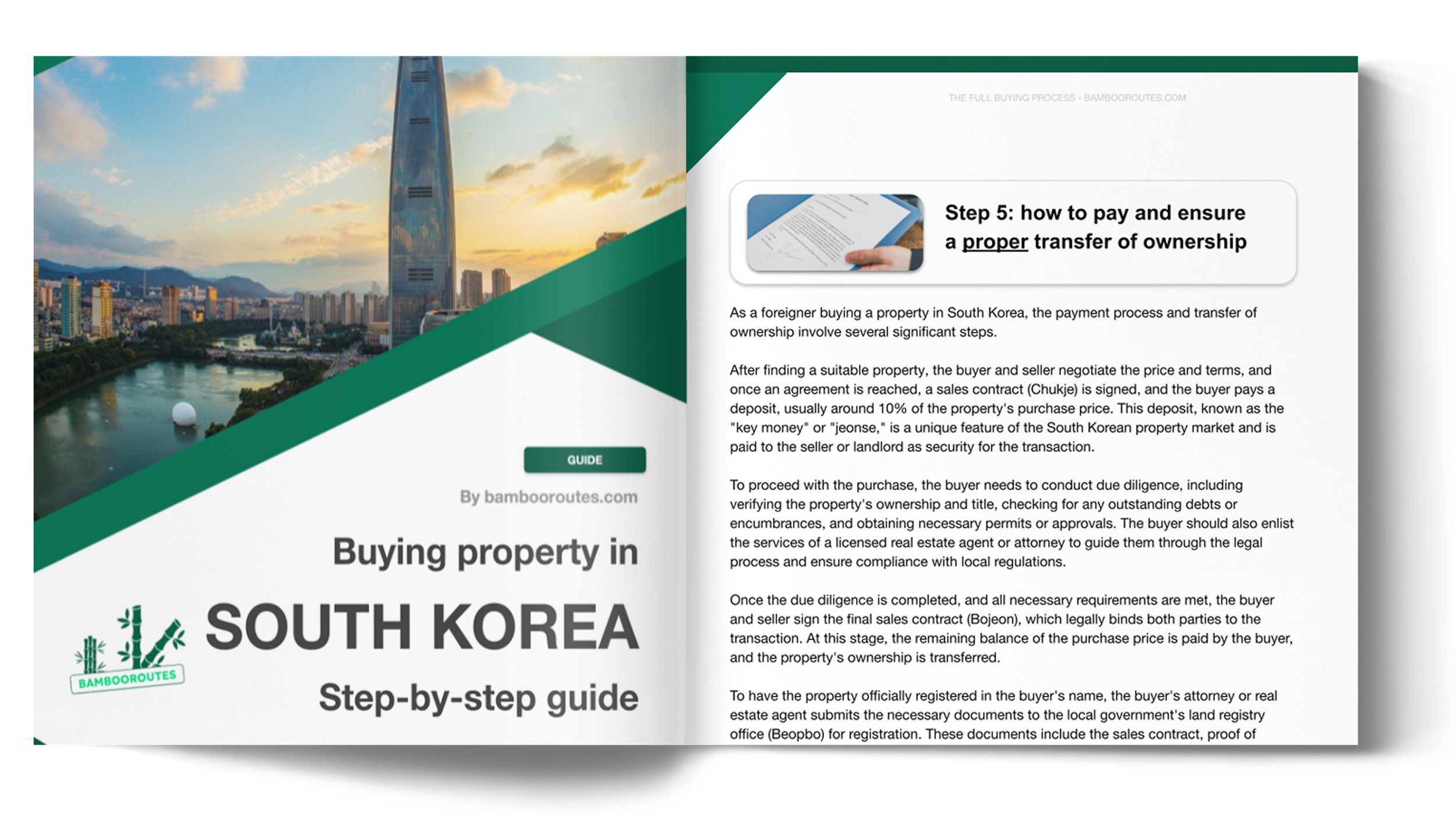
Everything you need to know before buying real estate is included in our South Korea Property Pack
Buying property in Daejeon as a foreigner in 2026 is legally possible, but the real risks come from paperwork traps, unverified intermediaries, and deals that look legitimate but hide serious problems.
This guide covers the specific scams, grey areas, and insider knowledge that foreign buyers need to avoid getting burned in Daejeon's real estate market.
We constantly update this blog post to reflect the latest regulations and enforcement trends in Daejeon.
And if you're planning to buy a property in this place, you may want to download our pack covering the real estate market in Daejeon.

How risky is buying property in Daejeon as a foreigner in 2026?
Can foreigners legally own properties in Daejeon in 2026?
As of early 2026, foreigners can legally buy and own residential property in Daejeon in their own name without needing a local partner or special permit.
The main condition that applies to foreigners buying property in Daejeon is that you must report the transaction to local authorities within 60 days and comply with foreign exchange documentation requirements for the funds you bring into Korea.
Since direct ownership is allowed in Daejeon, most foreigners simply purchase property in their personal name rather than using complex legal structures like corporations or trusts.
However, starting in late 2025, the Ministry of Land, Infrastructure and Transport (MOLIT) now requires foreign buyers to submit funding plans when reporting their transactions, which means more paperwork and scrutiny than before.
[VARIABLE FOREIGNER-RIGHTS]What buyer rights do foreigners actually have in Daejeon in 2026?
As of early 2026, foreigners in Daejeon have the same legal buyer rights as Korean citizens, including the right to enforce contracts, demand property disclosures, and register ownership with the court registry.
If a seller breaches a contract in Daejeon, foreign buyers can pursue legal action through Korean courts to recover deposits, claim damages, or force completion of the sale, though this process requires proper documentation and can take months.
The most common right that foreigners mistakenly assume they have in Daejeon is the ability to easily recover money after wiring funds based on informal promises or incomplete paperwork, when in reality your protection depends entirely on having proper contracts and registry records in place first.
How strong is contract enforcement in Daejeon right now?
Contract enforcement in Daejeon is relatively strong compared to many countries, with South Korea ranking well on global rule of law indicators and having functional courts that process real estate disputes, similar to what you would expect in Germany or Japan rather than emerging markets.
The main weakness foreigners should know about in Daejeon is that enforcement becomes slow and expensive if you sign a poorly drafted contract or skip registry verification, because the system assumes you did your due diligence before closing.
By the way, we detail all the documents you need and what they mean in our property pack covering Daejeon.
Buying real estate in Daejeon can be risky
An increasing number of foreign investors are showing interest. However, 90% of them will make mistakes. Avoid the pitfalls with our comprehensive guide.

Which scams target foreign buyers in Daejeon right now?
Are scams against foreigners common in Daejeon right now?
Scams targeting foreigners in Daejeon are less common than in Seoul or tourist-heavy areas, but transaction irregularities and compliance issues do happen, with MOLIT investigating over 1,000 suspicious real estate deals nationwide in late 2025.
The property transactions most frequently targeted by scammers in Daejeon are smaller units like villas and officetels, especially those marketed aggressively to foreigners who cannot read Korean documents.
Foreign buyers most commonly targeted in Daejeon are those who rely on a single intermediary, do not verify documents independently, and feel pressured to close quickly because "someone else will buy it tomorrow."
The single biggest warning sign that a deal may be a scam in Daejeon is when the other party resists letting you pull the official registry document yourself from iROS, or only provides screenshots and PDFs instead of verifiable originals.
What are the top three scams foreigners face in Daejeon right now?
The top three scams foreigners face in Daejeon are fake or unauthorized sellers (someone who is not the real owner or has hidden encumbrances), unlicensed broker assistants who disappear when problems arise, and inflated pricing based on fake comparable sales data.
The most common scam in Daejeon unfolds when a foreigner interacts with a helpful "agent" who shows properties and negotiates, but this person turns out to be an unlicensed assistant rather than the responsible licensed broker, so when something goes wrong there is no one accountable.
The most effective protection against each scam in Daejeon is: for fake sellers, always pull the registry document yourself from iROS on the day of signing; for unlicensed brokers, confirm the licensed agent's name is on your contract; and for fake pricing, verify actual transaction prices on MOLIT's official disclosure system instead of trusting listing sites.

We did some research and made this infographic to help you quickly compare rental yields of the major cities in South Korea versus those in neighboring countries. It provides a clear view of how this country positions itself as a real estate investment destination, which might interest you if you’re planning to invest there.
How do I verify the seller and ownership in Daejeon without getting fooled?
How do I confirm the seller is the real owner in Daejeon?
The standard verification process in Daejeon is to pull the official property registry document (등기부등본) from iROS yourself, then match the registered owner's name against the seller's identification documents like their passport or Alien Registration Card.
The official document foreigners should check in Daejeon is the registry record from the Internet Registry Office (iROS), which shows the current owner, all liens, mortgages, seizures, and recent ownership transfers.
The most common trick fake sellers use in Daejeon is providing cropped screenshots or outdated PDFs of registry documents instead of letting you pull fresh originals, and while outright impersonation is rare, this document manipulation happens often enough that you should always verify independently.
Where do I check liens or mortgages on a property in Daejeon?
The official place to check liens or mortgages on a property in Daejeon is the Internet Registry Office (iROS) at iros.go.kr, which is the government portal that shows all encumbrances registered against the property title.
When checking for liens in Daejeon, you should specifically request the full registry document (등기부등본) and look for mortgages (근저당권), seizures (가압류), provisional attachments, and any pending transfers that might affect your purchase.
The type of encumbrance most commonly missed by foreign buyers in Daejeon is tenant deposit priority (전세권), where existing tenants have legal claims that must be paid out before you get clear title, something that does not always appear obvious on a quick document review.
It's one of the aspects we cover in our our pack about the real estate market in Daejeon.
How do I spot forged documents in Daejeon right now?
The most common type of forged document in Daejeon property scams is a manipulated registry screenshot or PDF where key information like liens or owner names has been altered, and while full forgeries are rare, doctored digital copies happen often enough that you should never accept them as proof.
Red flags that indicate a document may be forged in Daejeon include receiving images or PDFs with no verifiable issuance reference number, hearing excuses like "we cannot access iROS right now," and seeing mismatched spellings between Korean and English name variants that conveniently block verification.
The official verification method in Daejeon is to pull documents yourself directly from iROS for registry records and Gov24 for other civil documents, rather than accepting any document forwarded by a broker or seller.
Get the full checklist for your due diligence in Daejeon
Don't repeat the same mistakes others have made before you. Make sure everything is in order before signing your sales contract.
What "grey-area" practices should I watch for in Daejeon?
What hidden costs surprise foreigners when buying a property in Daejeon?
The three most common hidden costs foreigners overlook in Daejeon are acquisition tax (around 1% to 3% of the purchase price, or roughly 3 million to 10 million KRW / 2,200 to 7,500 USD / 2,000 to 7,000 EUR for a typical apartment), brokerage fees with VAT added on top of the quoted rate, and unpaid building management fees that become your problem at closing.
The hidden cost most often deliberately concealed by sellers or agents in Daejeon is outstanding management fees or special assessment charges for building repairs, and while not extremely common, this sometimes happens when sellers rush to close before these obligations become your responsibility.
If you want to go into more details, we also have a blog article detailing all the property taxes and fees in Daejeon.
Are "cash under the table" requests common in Daejeon right now?
Cash under the table requests are less common in mainstream Daejeon apartment transactions in early 2026, but they still appear occasionally in smaller deals involving villas, older buildings, or situations where the seller proposes under-reporting the price to reduce taxes.
The typical reason sellers give for requesting undeclared cash in Daejeon is to lower the official transaction price on paper, which reduces acquisition tax for the buyer and capital gains tax for the seller.
If foreigners agree to an undeclared cash payment in Daejeon, they face serious legal risks including tax penalties, potential criminal charges for tax evasion, and losing legal protection if a dispute arises because the true transaction terms are not documented.
Are side agreements used to bypass rules in Daejeon right now?
Side agreements to bypass official rules are not extremely common in Daejeon's mainstream apartment market, but they do appear occasionally, especially for handling fixtures, options, or informal promises about tenant situations that sellers do not want in the official contract.
The most common type of side agreement in Daejeon involves separate receipts for furniture or appliances to adjust the official price, or handshake promises about when current tenants will vacate that are not written into the registered contract.
If authorities discover a side agreement in Daejeon, foreigners can face penalties for false reporting, lose legal protection for any terms not in the official contract, and in serious cases be subject to investigation under Korea's increasingly strict transaction monitoring regime.

We made this infographic to show you how property prices in South Korea compare to other big cities across the region. It breaks down the average price per square meter in city centers, so you can see how cities stack up. It’s an easy way to spot where you might get the best value for your money. We hope you like it.
Can I trust real estate agents in Daejeon in 2026?
Are real estate agents regulated in Daejeon in 2026?
As of early 2026, real estate agents in Daejeon are regulated under the Licensed Real Estate Agents Act, which requires brokers to pass a national examination, register with local authorities, and carry professional liability insurance.
A legitimate real estate agent in Daejeon should hold a 공인중개사 (certified real estate agent) license, which is a national certification that you can verify through local government offices or by asking to see their registration documents.
Foreigners can verify whether an agent is properly licensed in Daejeon by asking to see the agent's license certificate, checking that their name appears on any contract you sign, and confirming their registration with the local district office if you have doubts.
Please note that we have a list of contacts for you in our property pack about Daejeon.
What agent fee percentage is normal in Daejeon in 2026?
As of early 2026, normal agent fees in Daejeon for residential purchases are legally capped and typically fall between 0.4% and 0.7% of the purchase price, depending on the transaction value.
The typical range covering most Daejeon apartment transactions is 0.4% to 0.6% for properties in common price bands, with the exact cap set by government regulations based on the sale price.
In Daejeon, the buyer typically pays the brokerage fee for their side of the transaction, and if someone quotes you a fee materially above the official cap, you should ask them to show the legal basis in writing.
Get the full checklist for your due diligence in Daejeon
Don't repeat the same mistakes others have made before you. Make sure everything is in order before signing your sales contract.
What due diligence actually prevents disasters in Daejeon?
What structural inspection is standard in Daejeon right now?
The standard structural inspection process in Daejeon for apartments is relatively informal compared to Western markets, with buyers typically relying on building age, management office records, and visual condition checks rather than hiring independent inspectors.
A qualified inspector in Daejeon should check foundations, walls for cracks or water damage, plumbing and drainage systems, electrical wiring, window seals, and evidence of water intrusion or mold behind cosmetic renovations.
In Daejeon, structural inspections can be performed by licensed building inspectors or construction engineers, though many Korean buyers simply rely on their own visual assessment and the building management office's maintenance records.
The most common structural issues that inspections reveal in Daejeon properties are water leakage and mold (especially in older buildings or after cosmetic repainting), poor insulation leading to condensation problems, and aging plumbing systems in buildings over 20 years old.
How do I confirm exact boundaries in Daejeon?
The standard process for confirming property boundaries in Daejeon is to pull the official registry document from iROS for ownership rights and cross-reference with cadastral records available through Gov24 or local land offices.
The official document showing legal boundaries of a property in Daejeon is the cadastral map (지적도) and land register (토지대장), which you can obtain from Gov24 or the local district office to see the official plot dimensions.
The most common boundary dispute affecting foreign buyers in Daejeon involves houses or villa plots where fence lines do not match official boundaries, or where neighboring structures encroach slightly onto the purchased land.
For houses or land purchases in Daejeon where boundaries matter, you should hire a licensed land surveyor (측량사) to physically verify the boundaries on the ground rather than relying solely on paper documents.
What defects are commonly hidden in Daejeon right now?
The top three defects sellers frequently conceal in Daejeon are water intrusion and mold hidden behind fresh paint (common), poor insulation causing condensation problems (common), and noise issues from unit location or nearby roads that are hard to assess in a daytime showing (sometimes happens).
Inspection techniques that help uncover hidden defects in Daejeon include visiting the property on a rainy day to check for leaks, using a moisture meter on walls, asking the building management office for maintenance history and planned major repairs, and visiting at different times to assess noise levels.

We have made this infographic to give you a quick and clear snapshot of the property market in South Korea. It highlights key facts like rental prices, yields, and property costs both in city centers and outside, so you can easily compare opportunities. We’ve done some research and also included useful insights about the country’s economy, like GDP, population, and interest rates, to help you understand the bigger picture.
What insider lessons do foreigners share after buying in Daejeon?
What do foreigners say they did wrong in Daejeon right now?
The most common mistake foreigners say they made when buying property in Daejeon is trusting the intermediary or agent more than the official registry, accepting document screenshots instead of pulling originals themselves from iROS.
The top three regrets foreigners mention after buying in Daejeon are rushing because of pressure tactics ("someone else will buy it tomorrow"), misunderstanding how seriously Korea treats reporting and compliance paperwork, and not getting professional translations of contracts before signing.
The single piece of advice experienced foreign buyers most often give to newcomers in Daejeon is to make iROS registry checks your absolute first step before any negotiation, and never proceed without fresh registry documents issued the same day.
The mistake foreigners say cost them the most money in Daejeon is wiring deposits or closing funds based on informal promises or "we will fix it later" assurances, only to find that recovering money through courts is slow and expensive even when you are legally right.
What do locals do differently when buying in Daejeon right now?
The key difference in how locals approach buying property in Daejeon compared to foreigners is that Korean buyers immediately check the MOLIT real transaction disclosure system to verify actual recent sale prices in the building, rather than trusting listing prices or agent claims about market value.
A verification step locals routinely take that foreigners often skip in Daejeon is visiting the building management office (관리사무소) to review the maintenance fee history, upcoming special assessments, and any ongoing disputes or major repair plans for the complex.
The local knowledge advantage that helps Daejeon residents get better deals is understanding which specific apartment complexes in areas like Dunsan-dong or Doan-dong have good management reputations, knowing the right season to buy (slower months mean more negotiating room), and recognizing when a listed price is above actual transaction prices in the official disclosure system.
Don't buy the wrong property, in the wrong area of Daejeon
Buying real estate is a significant investment. Don't rely solely on your intuition. Gather the right information to make the best decision.

What sources have we used to write this blog article?
Whether it's in our blog articles or the market analyses included in our property pack about Daejeon, we always rely on the strongest methodology we can … and we don't throw out numbers at random.
We also aim to be fully transparent, so below we've listed the authoritative sources we used, and explained how we used them and the methods behind our estimates.
| Source | Why it's authoritative | How we used it |
|---|---|---|
| Korea Real Estate Board (KREB) | Government-linked body that publishes official housing market statistics. | We used it to verify market trend claims and official price data. We also referenced it as the baseline for Korean media reporting on weekly price trends. |
| Ministry of Land, Infrastructure and Transport (MOLIT) | Central government ministry regulating housing and transactions. | We used it to explain legal requirements and enforcement focus. We also referenced it for foreign-buyer reporting rule changes. |
| MOLIT Real Transaction Disclosure System | Official government portal for disclosed real transaction prices. | We used it as the key tool to verify market prices and avoid fake comps. We recommend it as more reliable than listing sites. |
| Internet Registry Office (iROS) | Official portal for Korean real estate registry documents. | We used it as the core ownership verification mechanism. We explain how to check liens, mortgages, and transfers here. |
| Act on Report on Real Estate Transactions | The law governing reporting and transparency requirements. | We used it to explain what is mandatory in a purchase process. We also referenced it for paperwork requirements foreigners must follow. |
| Licensed Real Estate Agents Act | The law defining agent licensing and responsibilities. | We used it to explain how agent licensing works in Korea. We also used it to warn about unlicensed assistant risks. |
| World Justice Project Rule of Law Index 2025 | Widely used global benchmark for rule of law and civil justice. | We used it to assess contract enforcement strength at a country level. We compared Korea to other developed markets using this data. |
| Seoul Metropolitan Government Brokerage Fee Guide | Official government explainer of brokerage fee caps. | We used it to give accurate fee estimates and cap ranges. We also referenced it to help foreigners spot overcharging. |
| Chosun Biz | Major outlet reporting official MOLIT investigation counts. | We used it to quantify enforcement activity and avoid vague scam claims. We referenced it for the 1,000+ suspicious deals investigated. |
| Korea Consumer Agency (KCA) | Official consumer protection body tracking disputes. | We used it to identify common dispute patterns and complaint types. We also referenced it for consumer-risk framing of buyer protections. |

We created this infographic to give you a simple idea of how much it costs to buy property in different parts of South Korea. As you can see, it breaks down price ranges and property types for popular cities in the country. We hope this makes it easier to explore your options and understand the market.
Related blog posts