
Authored by the expert who managed and guided the team behind the Vietnam Property Pack
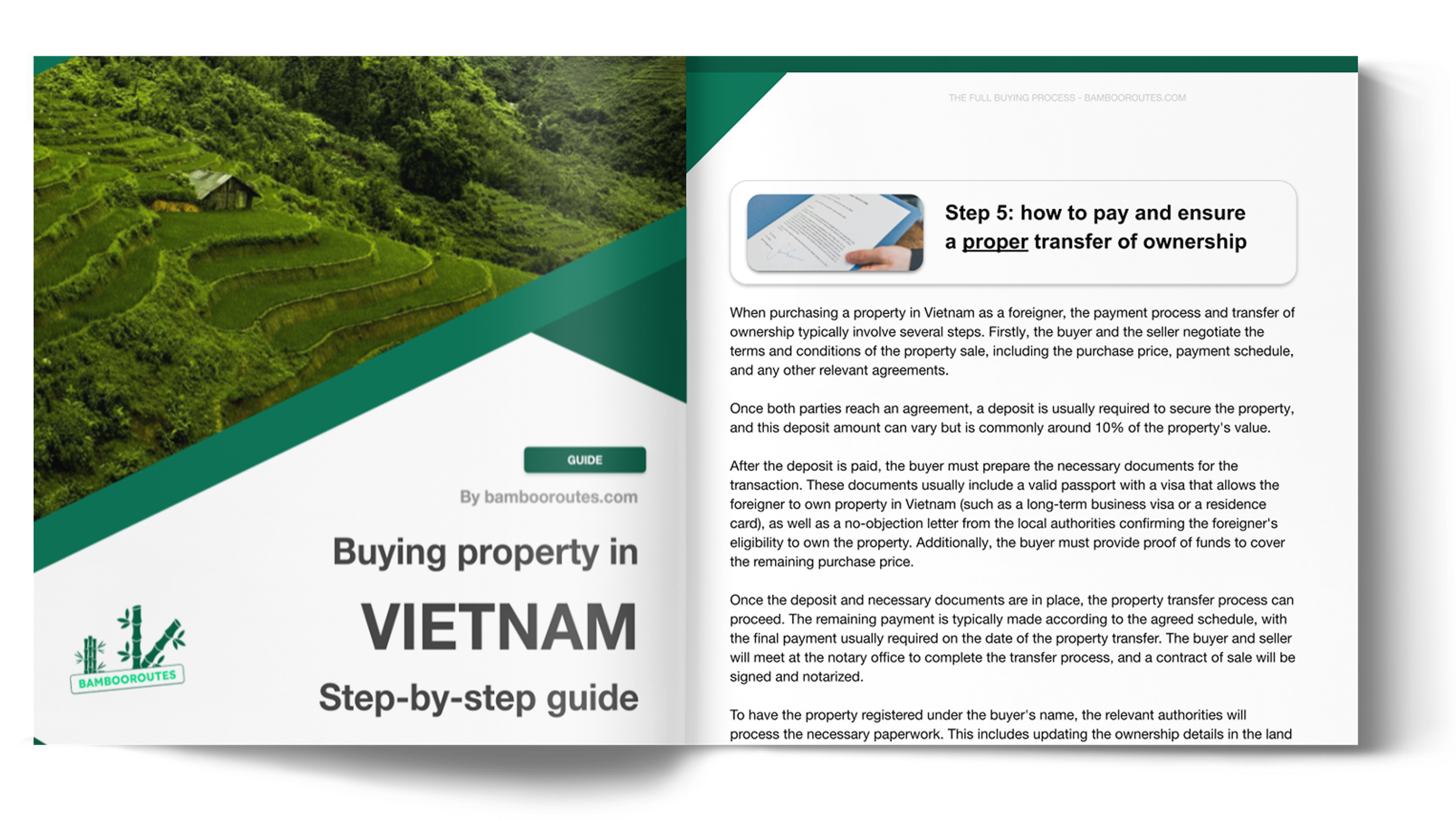
Everything you need to know before buying real estate is included in our Vietnam Property Pack
Can Tho is the largest city in the Mekong Delta and has become increasingly attractive to foreign buyers looking for affordable alternatives to Ho Chi Minh City and Hanoi.
Understanding the property ownership rules in Can Tho is essential because Vietnam's system works fundamentally different from Western countries, and getting it wrong can cost you your entire investment.
We constantly update this blog post to reflect the latest regulations, so you always have current information on what foreigners can and cannot buy in Can Tho.
And if you're planning to buy a property in this place, you may want to download our pack covering the real estate market in Can Tho.
Insights
- Foreign ownership in Can Tho condos is capped at 30% per building, but many projects in the Mekong Delta have not yet reached this limit, unlike crowded Ho Chi Minh City developments.
- Apartment prices in Can Tho in 2025 range from about 43 to 53 million VND per square meter (roughly $1,700 to $2,100 USD), which is about 40% lower than comparable units in Ho Chi Minh City.
- The 2% maintenance fund that foreigners must pay upfront when buying a condo in Can Tho is the single most overlooked cost, adding roughly $3,000 to $4,000 on a typical apartment purchase.
- Vietnam's Housing Law 2023 now allows foreigners to sell property to other foreigners, which was previously a grey area and significantly improves your exit strategy in Can Tho.
- No permanent residency or visa is legally required to buy property in Can Tho, but you do need proof of legal entry into Vietnam and a valid passport.
- The 50-year ownership limit in Can Tho can be extended once for another 50 years, but the extension is not automatic and requires meeting specific conditions at renewal time.
- Defense and security zone restrictions in Can Tho mean that not every housing project is open to foreign buyers, and the provincial government maintains specific lists of eligible developments.

Can a foreigner legally own land in Can Tho right now?
Can foreigners own land in Can Tho in 2026?
As of early 2026, foreigners cannot legally own land in Can Tho because all land in Vietnam belongs to the people and is managed by the State, meaning individuals (including Vietnamese citizens) hold land-use rights rather than actual land ownership.
The main restriction for foreigners in Can Tho is that they are not eligible to receive land-use rights for residential land the way Vietnamese citizens can, which means you cannot buy a standalone plot of land and get the "Red Book" certificate in your name.
The closest legal alternative for foreigners in Can Tho is to purchase a qualifying residential home (typically an apartment or a house within an approved commercial housing project) under the Housing Law 2023, where you own the structure but the land component remains under Vietnam's state-administered land-use framework.
Vietnam does not currently impose nationality-based restrictions that favor or discriminate against specific foreign nationalities, so the rules apply equally to buyers from all countries as long as they meet the eligibility criteria and the property is in an area open to foreign ownership.
Can I own a house but not the land in Can Tho in 2026?
As of early 2026, Vietnam's legal framework explicitly allows foreigners to own houses and apartments in Can Tho while the underlying land remains under state administration through the land-use rights system, which is fundamentally different from freehold ownership in Western countries.
When a foreigner purchases a qualifying home in Can Tho, they receive a "Pink Book" (Certificate of Land Use Rights, Ownership of Houses and Other Land-Attached Assets) that confirms their ownership of the building structure for a period of up to 50 years, with one possible extension.
When the 50-year ownership term expires, foreigners in Can Tho must apply for an extension, and if they do not meet the conditions or fail to apply, the property ownership rights may not be renewed, which is why understanding the renewal process early is important.

We created this infographic to give you a simple idea of how much it costs to buy property in different parts of Vietnam. As you can see, it breaks down price ranges and property types for popular cities in the country. We hope this makes it easier to explore your options and understand the market.
Do rules differ by region or city for land ownership in Can Tho right now?
The core foreign ownership rules in Can Tho are set at the national level through the Housing Law and Land Law, but the specific application varies locally because provinces are responsible for identifying which housing projects are open to foreign buyers based on defense and security screening.
In Can Tho, areas near military installations or designated security zones may be restricted for foreign ownership, and the city's People's Committee maintains lists of commercial housing projects where foreigners are permitted to buy.
This regional variation exists because Vietnam's defense and security ministries provide guidance to local authorities, and provinces like Can Tho then compile and publish lists of eligible projects, meaning you cannot assume every new development is automatically open to foreign buyers.
We cover a lot of different regions and cities in our pack about the property market in Can Tho.
Can I buy land in Can Tho through marriage to a local in 2026?
As of early 2026, marriage to a Vietnamese citizen can expand your property rights in Can Tho because the Housing Law states that foreigners married to Vietnamese nationals and living in Vietnam may own houses with rights similar to Vietnamese citizens, including potentially indefinite ownership rather than the standard 50-year limit.
If you purchase property through a Vietnamese spouse in Can Tho, you should ensure proper documentation establishes the property as marital property, including a clear prenuptial or postnuptial agreement that specifies ownership interests, which protects both parties legally.
In the event of divorce in Can Tho, Vietnamese family law governs the division of marital assets, and without proper documentation establishing your interest, a foreign spouse may have limited legal recourse if the property is registered solely in the Vietnamese partner's name.
There is a lot of mistakes you can make, we cover 99% of them in our list of risks and pitfalls people face when buying property in Can Tho.

We have made this infographic to give you a quick and clear snapshot of the property market in Vietnam. It highlights key facts like rental prices, yields, and property costs both in city centers and outside, so you can easily compare opportunities. We’ve done some research and also included useful insights about the country’s economy, like GDP, population, and interest rates, to help you understand the bigger picture.
What eligibility and status do I need to buy land in Can Tho?
Do I need residency to buy land in Can Tho in 2026?
As of early 2026, you do not need Vietnamese permanent residency to purchase qualifying housing in Can Tho because the Housing Law allows foreign individuals who are permitted to enter Vietnam legally to own residential property within approved projects.
The primary documentation you need is a valid foreign passport and proof of legal entry into Vietnam (such as an entry stamp or visa), though having a longer-term visa or temporary residence card can make the administrative process smoother when dealing with banks and notaries.
Yes, it is legally possible to buy property in Can Tho remotely without being physically present by using a properly notarized and authenticated power of attorney, though this typically takes longer and involves higher legal fees, and most experienced buyers still recommend at least one in-person visit for due diligence.
Do I need a local tax number to buy lands in Can Tho?
In practice, foreigners buying property in Can Tho should expect to obtain a Vietnamese tax identification number (TIN) because it is required for processing registration fees, taxes, and issuing your ownership certificate.
Obtaining a tax number in Can Tho typically involves applying at the local tax office with your passport and supporting documents, and the process generally takes a few days to a couple of weeks depending on the workload and completeness of your application.
While not strictly mandatory in all cases, opening a local Vietnamese bank account is highly recommended for property purchases in Can Tho because large payments require traceable bank transfers, and developers typically request payment through Vietnamese banking channels.
Is there a minimum investment to buy land in Can Tho as of 2026?
As of early 2026, Vietnam does not impose a formal minimum investment threshold for foreigners buying residential property in Can Tho, so your purchase amount depends on market prices rather than government-mandated minimums.
Since there is no minimum investment rule, the entry price in Can Tho depends entirely on what type of property you choose, with apartments in commercial projects typically starting around 2 to 3 billion VND (approximately $80,000 to $120,000 USD or 75,000 to 110,000 EUR) for a modest unit.
Are there restricted zones foreigners can't buy in Can Tho?
Yes, Can Tho has restricted zones where foreigners cannot purchase property, primarily areas designated as defense or national security zones by Vietnam's Ministry of Defense and Ministry of Public Security.
The specific types of restricted zones in Can Tho include areas near military bases, strategic infrastructure, and any locations classified as sensitive for national security, though the exact boundaries are not always publicly disclosed in detail.
To verify whether a specific property in Can Tho falls within a restricted zone, you should request confirmation from the developer (who is required to verify foreign eligibility) and check with the local Department of Construction, which maintains lists of projects approved for foreign ownership.
Can foreigners buy agricultural, coastal or border land in Can Tho right now?
Foreigners in Can Tho face significant restrictions on purchasing agricultural, coastal, or strategically located land, with agricultural land being almost entirely off-limits to non-Vietnamese individuals under current law.
Agricultural land in Can Tho (which includes much of the Mekong Delta's rice paddies and farmland) is reserved for Vietnamese citizens and domestic entities, and foreigners cannot acquire land-use rights for agricultural purposes.
While Can Tho is an inland river city rather than coastal, the principle applies: any waterfront or strategically important land near the Mekong River may face additional scrutiny or restrictions similar to coastal areas in other provinces.
Land near national borders is strictly controlled throughout Vietnam, though this is less relevant to Can Tho specifically since it is located in the central Mekong Delta rather than near Cambodia or other borders.
Get fresh and reliable information about the market in Can Tho
Don't base significant investment decisions on outdated data. Get updated and accurate information with our guide.

What are the safest legal structures to control land in Can Tho?
Is a long-term lease equivalent to ownership in Can Tho right now?
A long-term lease in Can Tho is not legally equivalent to ownership because a lease gives you contractual use rights while ownership (even the 50-year leasehold structure for foreigners) provides registered property rights that appear on the official certificate and cadastral records.
For foreigners buying residential property in Can Tho, the maximum "ownership" period is 50 years under the Housing Law, which can be extended once for another 50 years (potentially totaling 100 years), though this extension is not automatic and requires application and approval.
Yes, foreigners can legally sell, transfer, or bequeath their property rights in Can Tho to other eligible parties, and the Housing Law 2023 specifically clarified that foreigners can now sell to other foreigners within the quota limits, which improves liquidity compared to the previous legal framework.
Can I buy land in Can Tho via a local company?
Foreigners can access land-use rights in Can Tho through a locally registered company, particularly a foreign-invested enterprise (FIE), but this structure involves leasing land from the State for specific approved purposes rather than simple residential ownership.
A foreign-owned company in Can Tho can hold land-use rights, but there is no requirement for a local Vietnamese partner in many business structures after recent investment law reforms, though the complexity of corporate compliance, accounting, and tax filings makes this approach impractical for someone simply wanting to buy one home to live in.
What "grey-area" ownership setups get foreigners in trouble in Can Tho?
Grey-area ownership arrangements are relatively common in Can Tho and throughout Vietnam, often used by foreigners who do not understand the legal restrictions or who are trying to circumvent them, which creates significant risk.
The most common grey-area structures in Can Tho include nominee arrangements (where a Vietnamese friend or partner holds the title while you provide the money), handwritten contracts without proper notarization, and purchasing "future property" in projects that lack proper approvals for foreign sales.
If Vietnamese authorities discover that a foreigner is using an illegal ownership structure in Can Tho, the consequences can include voiding of the transaction, loss of the property with limited legal recourse, and potential fines or deportation in severe cases.
By the way, you can avoid most of these bad surprises if you go through our pack covering the property buying process in Can Tho.

We did some research and made this infographic to help you quickly compare rental yields of the major cities in Vietnam versus those in neighboring countries. It provides a clear view of how this country positions itself as a real estate investment destination, which might interest you if you’re planning to invest there.
How does the land purchase process work in Can Tho, step-by-step?
What are the exact steps to buy land in Can Tho right now?
The typical process for a foreigner buying property in Can Tho involves: verifying the project is approved for foreign ownership, confirming quota availability, signing a reservation agreement and paying a deposit, signing the notarized Sale and Purchase Agreement (SPA), making payments according to the contract schedule, completing handover, paying taxes and fees, and finally applying for the ownership certificate (Pink Book).
The entire purchase process in Can Tho typically takes 4 to 12 weeks for a new developer unit from deposit to contract completion, though the actual issuance of the ownership certificate can take several additional months depending on administrative processing times.
Key documents you will sign during a Can Tho property purchase include a reservation or deposit agreement, the formal Sale and Purchase Agreement (which must be notarized), handover acceptance documents, tax declaration forms, and the application for the ownership certificate.
What scams are common when it comes to buying land in Can Tho right now?
What scams target foreign land buyers in Can Tho right now?
Scams targeting foreign property buyers in Can Tho are less common than in major cities like Ho Chi Minh City, but they do exist, particularly as more development projects launch in the Mekong Delta region.
The most common scams in Can Tho include fake or forged ownership certificates, selling units in projects that have not received proper approval for foreign ownership, collecting multiple deposits on the same unit, and selling property that is under dispute or has undisclosed liens.
The top warning signs of a fraudulent deal in Can Tho are: pressure to pay quickly without time for due diligence, reluctance to provide official documentation, prices significantly below market rates, and requests to pay in cash or to personal accounts rather than company accounts.
Foreigners who fall victim to property scams in Can Tho can pursue legal action through Vietnamese courts, but the process is slow, expensive, and outcomes are uncertain, which is why prevention through proper due diligence is far more effective than trying to recover losses afterward.
We cover all these things in length in our pack about the property market in Can Tho.
How do I verify the seller is legit in Can Tho right now?
The most reliable way to verify a seller in Can Tho is to check that the seller's identity matches the name on the ownership certificate, confirm they have legal authority to sell (or proper power of attorney if using a representative), and verify the developer's business registration and project approvals if buying new.
To confirm the title is clean in Can Tho, you should request a copy of the ownership certificate, verify it matches official records through the local land registration office, and ensure there are no ongoing legal disputes or claims against the property.
You can check for existing liens or mortgages on a Can Tho property by requesting the seller to provide a bank clearance letter (if previously mortgaged), verifying with the local land registration office, and including a clause in your contract requiring the seller to clear any encumbrances before transfer.
For verifying seller legitimacy in Can Tho, a qualified Vietnamese lawyer who specializes in real estate transactions is the most essential professional because they can conduct proper due diligence, verify documents with government offices, and protect your interests in the contract.
How do I confirm land boundaries in Can Tho right now?
The standard procedure for confirming boundaries in Can Tho is to review the cadastral map and technical description in the ownership certificate, then physically inspect the property to ensure it matches the documented measurements and location.
Official documents to review for boundary verification in Can Tho include the cadastral map (ban do dia chinh), the ownership certificate's technical description section, and any survey documents from the local Department of Natural Resources and Environment.
Hiring a licensed surveyor is recommended but not legally required for boundary verification in Can Tho, particularly for landed property purchases where boundary disputes are more common than with apartment units.
Common boundary problems foreign buyers encounter in Can Tho include discrepancies between documented and actual measurements, encroachments by neighboring properties, and outdated cadastral information that has not been updated to reflect physical changes on the ground.
Buying real estate in Can Tho can be risky
An increasing number of foreign investors are showing interest. However, 90% of them will make mistakes. Avoid the pitfalls with our comprehensive guide.

What will it cost me, all-in, to buy and hold land in Can Tho?
What purchase taxes and fees apply in Can Tho as of 2026?
As of early 2026, total purchase taxes and fees for property in Can Tho typically range from about 3% to 7% of the property value depending on whether you are buying new from a developer or on the secondary market, with new purchases generally having higher total costs due to VAT.
For a typical Can Tho property purchase, closing costs for foreigners generally fall between 3% and 5% for resale transactions, or 13% to 18% when buying new from a developer (which includes the 10% VAT on new commercial housing).
The main individual costs in Can Tho include: 10% VAT on new properties (around 250 million VND on a 2.5 billion VND apartment), 0.5% registration fee (about 12.5 million VND, or roughly $500 USD / 460 EUR), 2% maintenance fund for apartments (50 million VND, or about $2,000 USD / 1,850 EUR), and notary fees of 0.05% to 0.1% (roughly 1.25 to 2.5 million VND).
Foreigners pay the same tax rates as Vietnamese citizens in Can Tho, with no additional surcharges specifically for foreign ownership, though the total costs can feel higher because foreigners often need more legal support to navigate the process.
What hidden fees surprise foreigners in Can Tho most often?
Hidden or unexpected fees in Can Tho typically add an extra 2% to 4% beyond what buyers initially budget, with the 2% maintenance fund for apartments being the single largest "surprise" at around 50 million VND ($2,000 USD / 1,850 EUR) on a typical 2.5 billion VND unit.
The specific fees that foreigners most often overlook when buying in Can Tho include: the 2% apartment maintenance fund (paid upfront to a common fund), ongoing monthly management fees (typically 15,000 to 25,000 VND per square meter, or $30 to $50 USD per month for a standard apartment), and bank transfer fees for international payments.
Most of these hidden fees appear at different stages: the maintenance fund is due at handover, monthly management fees start immediately after handover, and informal "paperwork handling" fees charged by some intermediaries can appear throughout the process if you are not careful.
To protect yourself from unexpected fees in Can Tho, request a complete written breakdown of all costs from the developer or seller before signing anything, verify each fee against official rates, and use a lawyer who can identify non-standard or inflated charges.

We made this infographic to show you how property prices in Vietnam compare to other big cities across the region. It breaks down the average price per square meter in city centers, so you can see how cities stack up. It’s an easy way to spot where you might get the best value for your money. We hope you like it.
What sources have we used to write this blog article?
Whether it's in our blog articles or the market analyses included in our property pack about Can Tho, we always rely on the strongest methodology we can and we don't throw out numbers at random.
We also aim to be fully transparent, so below we've listed the authoritative sources we used, and explained how we used them and the methods behind our estimates.
| Source | Why It's Authoritative | How We Used It |
|---|---|---|
| Vietnam Land Law 2024 | The core national law defining land-use rights in Vietnam. | We used it to confirm that land is state-owned and foreigners cannot hold direct land-use rights. We referenced it to explain the legal foundation of Vietnam's property system. |
| Vietnam Housing Law 2023 | The national law setting rules for foreign residential ownership. | We used it to establish foreign eligibility, ownership quotas, and the 50-year term limit. We referenced it for marriage-related ownership rights and transfer rules. |
| Decree 95/2024 | The Government's official implementation decree for the Housing Law. | We used it to explain how restricted zones work and how provinces identify foreign-eligible projects. We referenced it for practical buyer checklists. |
| Decree 10/2022 | The official decree setting registration fee frameworks. | We used it to anchor the 0.5% registration fee. We referenced it for calculating all-in purchase costs. |
| Vietnam Briefing | A Dezan Shira publication providing expert legal analysis. | We used it for tax rate verification and legal updates. We cross-referenced their guidance on foreign buyer obligations. |
| Savills Vietnam | A major global real estate consultancy with local expertise. | We used it to explain maintenance fund and service fee structures. We referenced their market practice insights for practical cost guidance. |
| Circular 02/2016/TT-BXD | Ministry of Construction rulebook for apartment building management. | We used it to ground the 2% maintenance fund requirement. We referenced it to separate one-off costs from ongoing fees. |
| VietnamPlus | Official state news agency reporting on Ministry of Construction data. | We used it for Can Tho-specific apartment price ranges. We referenced their market updates for current pricing context. |
| Global Property Guide | An established international property research platform. | We used it for Vietnam-wide price trends and comparisons. We referenced their data to contextualize Can Tho within the national market. |
| Viettonkin Consulting | A Vietnam-focused consulting firm with real estate expertise. | We used it for step-by-step purchase process guidance. We referenced their due diligence recommendations for buyer protection advice. |
Get the full checklist for your due diligence in Can Tho
Don't repeat the same mistakes others have made before you. Make sure everything is in order before signing your sales contract.
Related blog posts